Mahender Makhijani Arrest: Is Banking Fraud Finally Being Exposed?
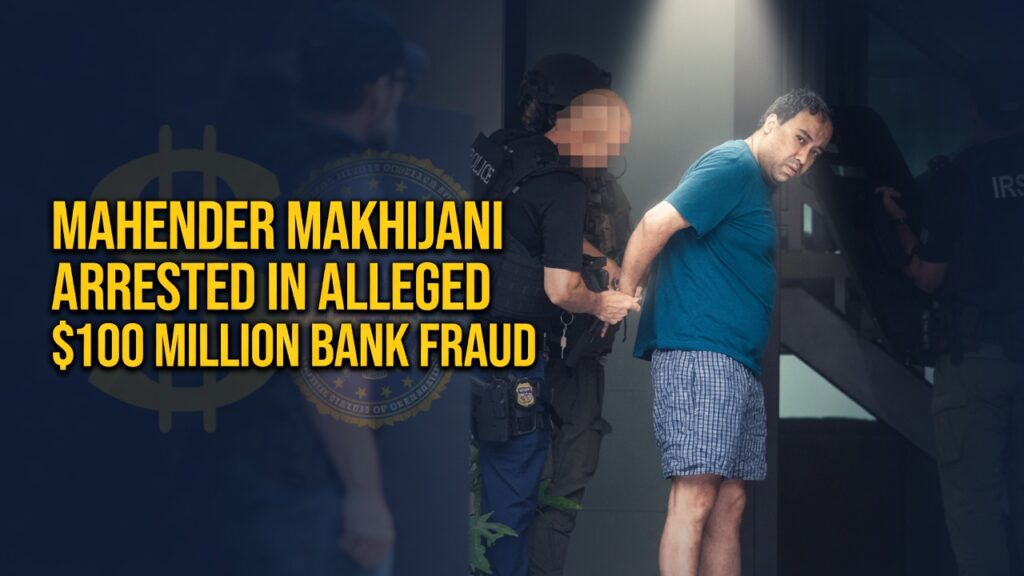
As federal prosecutors pursue allegations involving nearly $100 million, many Americans are asking a simple question: who protects the integrity of the financial system when trust is abused?
The case against a California businessman arrives at a time when federal authorities are emphasizing financial crime enforcement, raising broader questions about accountability, transparency, and the consequences of deception.
Something big just happened.
Support Independent Local Journalism
TheTownHall.News is a non-profit reader-supported journalism. Just $5 helps us hire local reporters, investigate important issues, and hold public officials accountable across Alameda County. If you believe our community deserves strong, independent journalism, please consider donating $5 today to support our work.Federal authorities announced the arrest of Mahender Makhijani, 44, in connection with an alleged bank fraud scheme that prosecutors say exposed a lender to losses approaching $100 million. According to the U.S. Department of Justice, the case centers on allegedly falsified real estate loan documents submitted between September 2024 and April 2025.
Why does this matter right now? Because confidence in the banking system depends on honest information, accurate records, and accountability when those standards are violated.
What Are Federal Prosecutors Alleging?
According to the Department of Justice, Makhijani controlled Newport Beach-based Cantor Group V LLC under a lending agreement that required the company to pledge only first-lien real estate loans.
Prosecutors allege that title policies were falsified to make it appear that Cantor Group held first-priority positions when other creditors actually stood ahead in line.

Authorities further claim that altered documents were created using Adobe software and that metadata was manipulated before records were submitted to the bank. Investigators say spreadsheets and conference calls also contained misleading information intended to reassure the lender.
Makhijani has been charged through a federal criminal complaint and remains presumed innocent unless proven guilty in court.
“A healthy economy depends on trust. When lenders are deceived, everyone pays the price.”
Why Does First-Lien Status Matter So Much?
Yes, it matters enormously.
A first lien gives a lender priority over other creditors if a property goes into default. Banks often rely heavily on that position when determining risk and approving large loans.
Support Independent Local Journalism
TheTownHall.News is a non-profit reader-supported journalism. Just $5 helps us hire local reporters, investigate important issues, and hold public officials accountable across Alameda County. If you believe our community deserves strong, independent journalism, please consider donating $5 today to support our work.If prosecutors’ allegations are ultimately proven, the lender involved may have believed it possessed stronger collateral protections than actually existed.
That concern explains why financial fraud investigations often attract multiple agencies and substantial resources.
$100 million.
The question many Americans are asking: how could a discrepancy of that size allegedly continue for months?
Is This the Accountability Moment Many Americans Have Been Waiting For?
Federal investigators appear to believe so.
The case involves participation from the FBI, IRS Criminal Investigation, the FDIC Office of Inspector General, the Federal Housing Finance Agency Office of Inspector General, and the Federal Reserve and CFPB Office of Inspector General.
Such coordination reflects the seriousness with which financial crimes are treated when they potentially affect lending institutions and broader market confidence.
Supporters of aggressive enforcement argue that equal application of the law strengthens public trust and discourages future misconduct.
If financial records can allegedly be manipulated without consequences, how can citizens trust the institutions that depend on them?
“Nearly $100 million was allegedly placed at risk. Accountability matters because trust matters.”
What Do the Numbers Actually Tell Us?
The available facts come directly from federal court filings and Justice Department statements.
According to prosecutors, the alleged misconduct occurred from September 2024 through April 2025. Officials say the victim bank would have declared the loans in default had it known the true position of competing creditors.
The Department of Justice also noted that related civil litigation had already been filed in Los Angeles Superior Court during 2025.
If convicted, Makhijani faces a statutory maximum sentence of 30 years in federal prison.
Maximum penalties do not guarantee a specific sentence, but they illustrate how seriously Congress treats bank fraud offenses.
Who Is Really Paying for Financial Fraud?
Ultimately, supporters of stricter enforcement say ordinary Americans bear the costs.
Banks exposed to losses often tighten lending standards. Businesses may find financing harder to obtain. Consumers can experience ripple effects through higher costs and reduced access to credit.
Critics of corporate misconduct argue that financial deception rarely affects only wealthy institutions.
“If trust disappears from the financial system, who ultimately pays the price?”
What Do Supporters of This Policy Actually Believe?
Supporters of aggressive federal fraud enforcement contend that strong investigations protect honest businesses and maintain confidence in the banking system.
They argue that complex financial crimes require extensive federal resources and interagency cooperation because the consequences can spread far beyond a single lender.
Critics sometimes worry that federal agencies possess too much power or that prosecutors can overreach.
Those concerns deserve consideration. However, supporters counter that due process protections remain intact. Criminal defendants retain the presumption of innocence, the right to challenge evidence, and the right to trial.
In other words, accountability and constitutional protections are not mutually exclusive.
Why Are Americans Paying Close Attention to Cases Like This?
Public trust in institutions has become an increasingly important issue.
Many Americans believe rules should apply equally regardless of wealth, status, or corporate position. High-profile fraud investigations often generate intense interest because citizens want reassurance that misconduct will be addressed consistently.
Whether the allegations are ultimately proven remains for the courts to decide.
But the broader principle resonates across political lines: transparency matters, and accountability matters.
KEY QUESTIONS
- How did prosecutors uncover the alleged discrepancies?
- Will additional charges or defendants emerge during the investigation?
- What safeguards could prevent similar cases in the future?
Conclusion: Will Americans Continue Demanding Accountability?
The allegations against Mahender Makhijani remain just that—allegations.
Yet the case highlights a larger question about responsibility, trust, and the importance of enforcing rules fairly. Financial systems function only when lenders, borrowers, and institutions can rely on accurate information.
As the judicial process moves forward, Americans will be watching closely.
The real question isn’t whether accountability matters—it’s whether citizens will continue demanding it.
Still have questions? Stay informed and subscribe for daily coverage.
Think others need to hear this? Share the article.
Want to make your voice count? Contact your elected representatives and support policies that promote transparency and financial accountability.
The lingering question remains: if trust is lost, who restores it?