Avenal Recall Investigation: DA Serves Search Warrants at 7 Sites
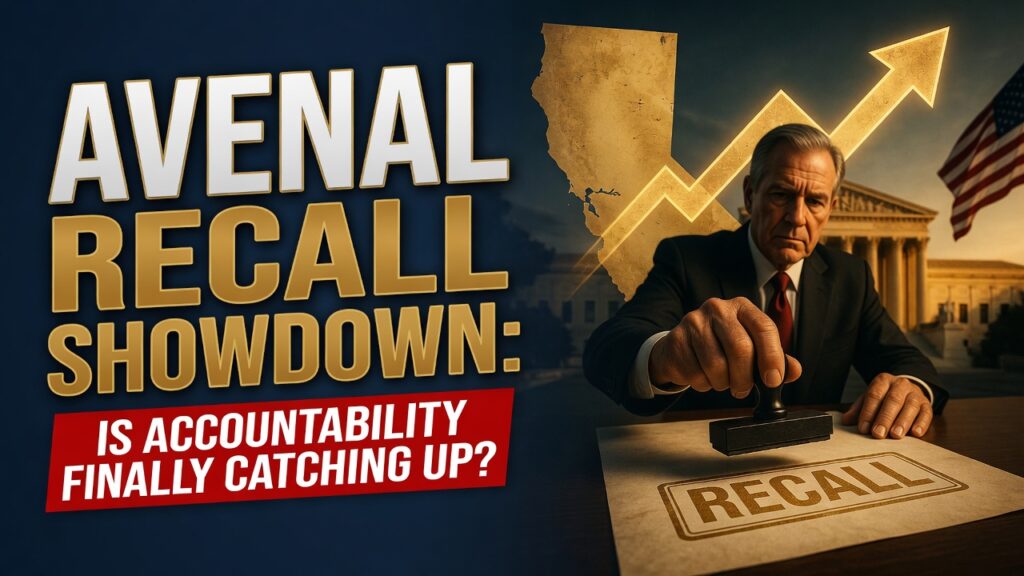
As investigators fan out across a small California city, the residents who voted to remove their leaders a year ago are asking a simple question: who is actually in charge — and who will finally answer for it?
Search warrants don’t lie. On Wednesday morning, investigators from the Kings County District Attorney’s Office fanned out across Avenal, serving warrants at seven locations — City Hall among them.
The timing could not be sharper. For more than a year, this farming town of roughly 13,000 has been locked in a standoff after voters recalled four of its five council members — only to watch those officials refuse to leave. Now, with law enforcement at the door and a court date days away, the question residents have shouted for months is finally being tested in the open.
Support Independent Local Journalism
TheTownHall.News is a non-profit reader-supported journalism. Just $5 helps us hire local reporters, investigate important issues, and hold public officials accountable across Alameda County. If you believe our community deserves strong, independent journalism, please consider donating $5 today to support our work.What Actually Happened in Avenal This Week?
On July 1, the Kings County District Attorney’s Office, assisted by the Sheriff’s Office, served search warrants at seven Avenal locations, including City Hall and a community center. Authorities described the operation only as part of an ongoing investigation and released no further details — not what they were seeking, not what was seized, not whether anyone was arrested. City Manager Antony López was reportedly seen outside during the activity. City Hall was expected to reopen Thursday. To be precise about the facts: the DA has not publicly tied the warrants to the recall fight. But residents who watched the searches unfold drew their own conclusions, describing law enforcement activity at properties they associated with recalled city leaders.
If your city council lost a recall by more than 73 percent and simply refused to leave, would anyone hold them accountable — or would you be told to wait?
Why Did Avenal Vote to Remove Its Leaders?
The revolt didn’t come from nowhere. In an April 28 special election, Avenal voters recalled Mayor Alvaro Preciado and council members Leticia Gamez, Pablo Hernandez, and David Reynosa — each by margins exceeding 73 percent [Kings County Registrar, via ABC30]. Kings County certified the results in May. Only one member, Ricardo Verdugo, kept his seat. The spark was a fight over fire protection. Earlier in 2026, the county terminated Avenal’s fire services agreement following a safety dispute, briefly leaving the city scrambling for coverage and leaning on volunteers. Residents questioned the transition — and the leadership behind it. What began as a public-safety worry became a referendum on trust.
The Standoff That Followed
Here is where the story turns extraordinary. Instead of stepping aside, three recalled officials voted at a June 11 meeting to keep themselves in office, arguing the election was invalid because Kings County — not the City Council — had administered it. Business continued. The council even approved a city budget while recall supporters presented a restraining order. Verdugo, the lone survivor, reportedly cast “no” votes down the agenda in protest of colleagues who, in the plainest terms, were voting to overrule the voters who had fired them.

When voters remove their leaders by three-to-one margins and those leaders simply vote themselves back in, what exactly is left of the ballot box?
Who Is Really Paying the Price Here?
The residents are. Every day the standoff drags on, Avenal’s government operates under a legal cloud, spending public money the District Attorney has warned may be unauthorized. DA Sarah Hacker and Sheriff Dave Putnam cautioned the recalled officials months ago that continuing to act as elected leaders — or to authorize public spending — could carry consequences. Hacker had already filed a Brown Act lawsuit in December over transparency concerns. For a town where roughly a quarter of the population is housed at Avenal State Prison and agriculture drives the economy, functional, accountable government isn’t abstract. It’s the difference between services delivered and services stalled.
73 percent. That was the minimum margin by which voters removed four officials [Kings County Registrar] — so the question Avenal keeps asking is this: at what point does a certified election actually count?
What Do Supporters of the Recalled Officials Actually Believe?
This is the counterargument, and it deserves a fair hearing. The recalled officials contend the election itself was flawed — that because Kings County, rather than the city, ran the recall, the results shouldn’t stand. Mayor Preciado has framed his refusal as principled, arguing that if the election had been lawful from the start, he wouldn’t still be in his seat. The city has also condemned what it called racist and disparaging remarks directed at its Latino council members and staff during public comment, insisting harassment has no place in civic debate. Those concerns are worth taking seriously. Ugly rhetoric in a public meeting is never acceptable, and questions about who administers an election are legitimate to raise — in court. But there’s a critical distinction. The proper venue for an election challenge is a judge, not a self-executed veto from the dais. The recalled officials asked the courts to stop the vote before it happened; California’s 5th District Court of Appeal declined. The election proceeded, the county certified it, and the voters’ verdict was recorded. Disagreeing with an outcome is a right. Overriding it is something else entirely.
Four Avenal officials were recalled by more than 73 percent — then voted to keep themselves in power. The courts, not the council, will now decide who governs.
Is This the Accountability Moment Voters Have Waited For?
Maybe. Attorney General Rob Bonta has authorized a quo warranto action — a rarely used legal tool that lets a court decide whether officials are lawfully holding office. Bonta wrote that the case raises “a substantial legal issue” worth resolving in the public interest. A University of Notre Dame election law professor called such actions unusual in modern disputes, making Avenal a genuine test of what recall power still means. The hearing has now been moved up to July 9. Paired with Wednesday’s warrants, the machinery of accountability is, at last, in motion. Whether it delivers is another matter.
Support Independent Local Journalism
TheTownHall.News is a non-profit reader-supported journalism. Just $5 helps us hire local reporters, investigate important issues, and hold public officials accountable across Alameda County. If you believe our community deserves strong, independent journalism, please consider donating $5 today to support our work.Key Questions This Story Raises
- If a certified recall can be ignored by the very officials it removed, what protects any future election result?
- Should taxpayers be on the hook for spending approved by leaders a court may rule were never authorized to govern?
- When procedural objections surface only after a 73 percent defeat, are they a defense of the law — or a defense of power?
The Question That Lingers
Avenal is small, but the question it poses is not. If elected officials can lose decisively, be certified out of office, and still cling to power until a judge pries them loose, then the recall — one of the few direct checks voters hold — becomes a suggestion rather than a mandate. Wednesday’s warrants and next week’s hearing may finally force an answer. The real question isn’t whether Avenal’s standoff ends — it’s whether the voters’ verdict still means anything when the people it removed simply refuse to go.
What do you think — has accountability finally arrived in Avenal, or is it already too late? Share this and tell us where you stand. Still have questions? Subscribe for daily coverage as the July 9 hearing approaches. And if you want your voice counted, Kings County residents can contact the Board of Supervisors or attend the next public meeting to weigh in on the crisis directly.