Psilocybin and Alzheimer’s Families: What Is Washington Hiding?
As a single case report ignites hope for millions of dementia caregivers, a harder question is emerging: why does federal policy still have no answer for the families most desperate for one?
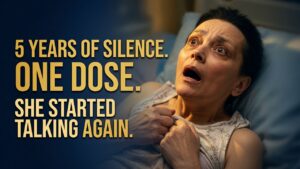
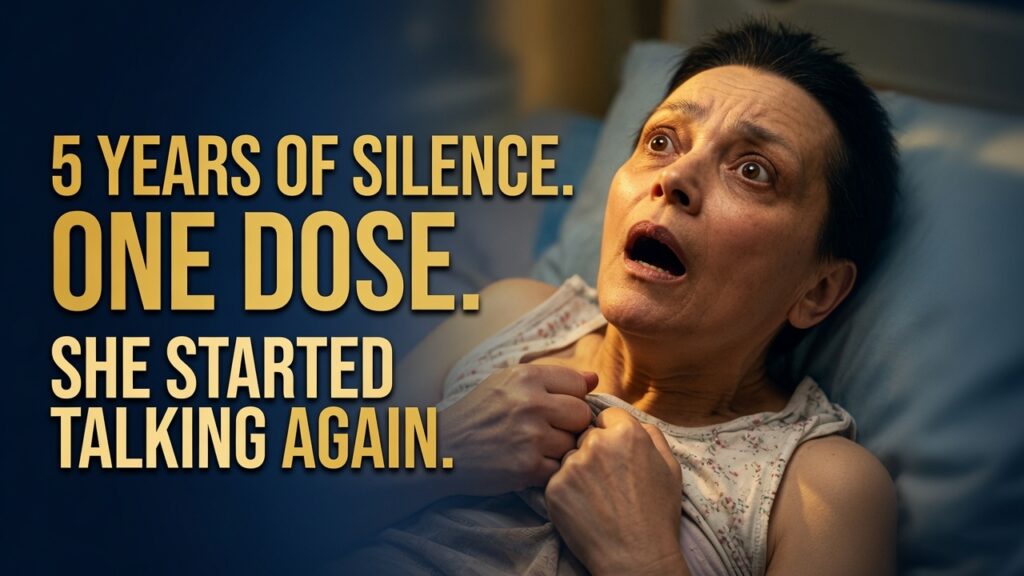
An 80-year-old woman spoke again after a decade of silence. She had lived with Alzheimer’s for ten years, the last five spent largely mute, incontinent, and dependent on caregivers for every basic task. Then, under close medical supervision in São Paulo, Brazil, she took a high dose of psilocybin mushrooms — and hours later, she was dressing herself and holding full conversations again.
The case, published this spring in the peer-reviewed journal Frontiers in Neuroscience, landed just weeks after President Trump signed an executive order fast-tracking federal review of psychedelic drugs. For families watching a parent or spouse disappear into advanced Alzheimer’s, the timing raised an obvious question. So far, Washington hasn’t answered it.
Support Independent Local Journalism
TheTownHall.News is a non-profit reader-supported journalism. Just $5 helps us hire local reporters, investigate important issues, and hold public officials accountable across Alameda County. If you believe our community deserves strong, independent journalism, please consider donating $5 today to support our work.What Actually Happened in Brazil?
The patient was a Japanese-American woman with roughly ten years of progressive Alzheimer’s, including five years of near-total verbal shutdown, chronic incontinence, and dependent mobility. Researchers led by psychiatrist Marcos Lago gave her 5 grams of psilocybin-containing mushrooms in a supervised clinical setting. The acute reaction was intense — heavy sweating, suspected hyperthermia, and a prolonged deep-sleep-like state — but when she woke, she recognized family members and spoke in full sentences for the first time in years.
A woman silent for five years spoke again within hours of a single supervised dose — so why can’t more families even ask the question? A month later, continence and mobility gains had held. A second, smaller 3-gram dose brought more humor, more expressive conversation, and one spontaneous line researchers recorded directly: “It is pleasant to come here.” The authors are careful to note this is one uncontrolled case with no brain imaging or biomarker confirmation — not proof of a cure. But it’s serious enough that it can’t be waved away either.
The Cost of Doing Nothing
$400 billion. That’s the projected 2026 total for Alzheimer’s health care, long-term care, and hospice costs in the United States [industry/federal cost estimate], on top of nearly 13 million unpaid family caregivers logging an estimated 19 billion hours of care a year. The question nobody in Washington seems eager to answer: if the fiscal and human toll is this large, why is the research pipeline for late-stage patients still this small?
Existing FDA-approved Alzheimer’s drugs — donepezil, memantine, aducanumab, lecanemab, and others — target early-to-moderate disease and modestly slow decline. None of them are built for the five-years-mute, wheelchair-dependent stage this case report describes. That’s not a hidden conspiracy. It’s a gap that fiscal conservatives and caregiving families alike should be asking Congress about directly.

Who Is Washington Leaving Behind?
Trump’s April 2026 executive order directs the FDA to fast-track Breakthrough Therapy-designated psychedelics through Commissioner’s National Priority Vouchers, sets up a Right to Try pathway for eligible patients, and allocates $50 million in federal research matching funds. It’s a genuinely significant deregulatory move — but it’s built almost entirely around veterans’ PTSD, treatment-resistant depression, and suicide prevention. Alzheimer’s and dementia patients are not mentioned in the order or in the FDA’s own announcement of it.
That’s a legitimate policy choice, not necessarily malice. Veterans’ suicide rates are a documented crisis. But it means the accelerated pathway everyone is celebrating right now was never built with a Japanese-American grandmother in mind — or the millions of families like hers.
Why Are Courts Already Blocking This Door?
Here’s the part that should trouble limited-government advocates most: even where a legal pathway already exists, regulators have shut it down. Psilocybin’s eligibility under the federal Right to Try Act — the law meant to let dying patients try experimental treatments without waiting on Washington — has been contested by the DEA for years, and doctors and patients who sued over it lost. The Ninth Circuit ruled against them last year.
If the law already promises terminally ill Americans the right to try, why does a federal agency still get the final word on whether that promise means anything?
So a Right to Try law exists. A president just signed an order expanding psychedelic access. And courts have still upheld the DEA’s authority to keep the exact substance in this case report out of reach for exactly the kind of patient it might help most.
Support Independent Local Journalism
TheTownHall.News is a non-profit reader-supported journalism. Just $5 helps us hire local reporters, investigate important issues, and hold public officials accountable across Alameda County. If you believe our community deserves strong, independent journalism, please consider donating $5 today to support our work.Is There a Model Regulators Are Ignoring?
Canada runs a Special Access Program that lets physicians request case-by-case authorization for otherwise-unapproved drugs, including psilocybin, when a patient faces a serious or life-threatening condition and conventional treatment has failed. It’s not a free-for-all — it requires physician sign-off and documented medical need. The U.S. has no comparable mechanism a family could invoke for a loved one with advanced dementia. That’s a policy choice Congress could revisit without waiting on a single additional clinical trial.
What Do Supporters of This Policy Actually Believe?
Defenders of the current, cautious approach make a fair point, and it deserves a straight answer rather than dismissal. The Alzheimer’s Association and multiple outside researchers have stressed that this is one uncontrolled case with no imaging, no standardized cognitive testing, and no control group — and that unsupervised use in a medically fragile older adult is genuinely dangerous, given the hyperthermia and cardiovascular strain observed even under clinical supervision. Geriatric specialists have gone as far as warning families explicitly not to try anything like this at home.
That caution is reasonable, and it should be repeated loudly: this case report is not a treatment protocol, and self-medicating a loved one with an unregulated “heroic dose” could kill them. But caution about unsupervised use is a different argument from caution about funding controlled, supervised research — and right now, federal scheduling makes even the second kind of caution nearly impossible to act on inside the United States.
Is it fiscally responsible, or even compassionate, to spend $400 billion a year managing a disease while the regulatory door to promising research stays bolted shut?
Key Questions This Story Raises
- Why does the current psychedelic-access executive order say nothing about Alzheimer’s or dementia patients?
- If Right to Try is the law of the land, why can a federal agency still override it in court?
- Should Congress build a Canadian-style case-by-case access program for patients who’ve exhausted every approved option?
Families are watching loved ones vanish while the fastest-moving deregulatory effort in a generation passes them by — shouldn’t that count for something in Washington?
The Real Question Families Are Left With
Nobody serious is arguing that one case report should send grandmothers to the mushroom aisle. The science is early, the risks are real, and the researchers who ran this study said so themselves. But the deeper issue isn’t the drug — it’s a regulatory system that just proved it can move fast when the political will exists, and chose not to move for this population at all.
The real question isn’t whether psilocybin cures Alzheimer’s. It’s whether the families spending $400 billion a year and 19 billion unpaid caregiving hours will ever get a straight answer on why the fastest path to hope in a generation left them off the list.
Still have questions about where this goes next? Stay informed — subscribe for daily accountability coverage. Think other caregivers need to see this? Share the article. Want your voice to count? Contact your member of Congress and ask directly whether Right to Try protections should extend to patients like the one in this case.