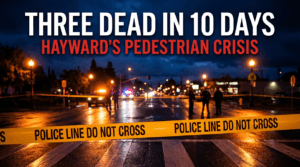
Hayward’s Deadly Week: Three Pedestrians Killed in 10 Days Expose a City That Forgot Its Core Duty
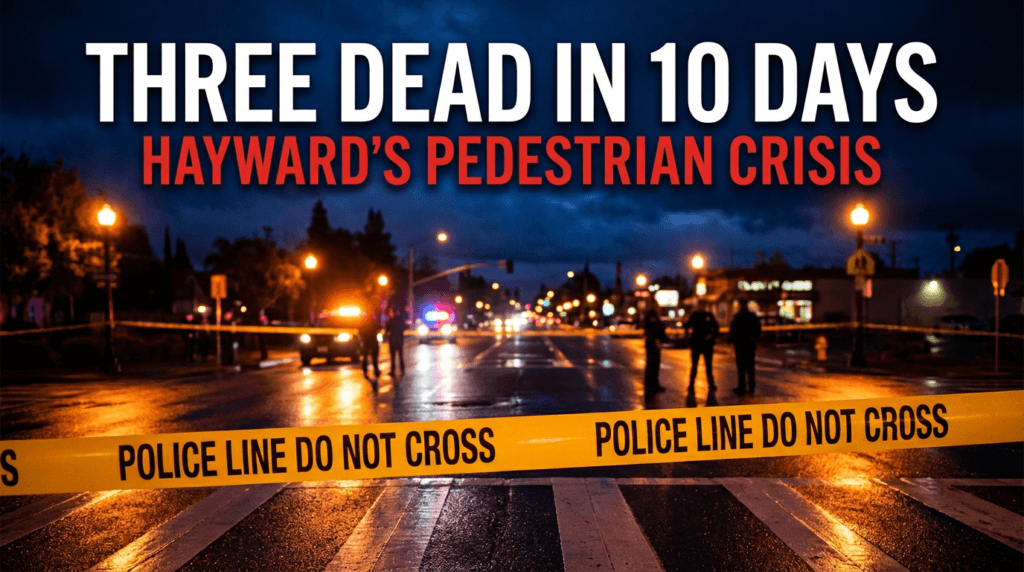
In fewer than ten days, three women are dead on the streets of Hayward, California. A six-year-old boy is recovering from facial fractures after being struck in a crosswalk while walking with his grandmother. The drivers stayed at the scene. Drugs and alcohol were not factors. And yet, three families are shattered — not by criminal acts, but by a city that appears unable to keep its own sidewalks and crosswalks safe.
The question every Hayward resident should be asking is simple: What exactly is City Hall doing with our money?
The Facts: A Timeline of Tragedy
The grim sequence began on Saturday, February 7, when a woman in her 30s or 40s was struck and killed near the intersection of Foothill Boulevard and B Street at approximately 6:40 a.m. The driver, a 56-year-old Hayward resident, remained at the scene and cooperated with investigators. The Hayward Police Department confirmed it was the city’s first fatal traffic collision of 2026.
Just one week later, on Saturday, February 14, a 59-year-old woman and her 6-year-old grandson were struck in a crosswalk near West Tennyson Road and Baldwin Street at around 6:21 p.m. The woman died at a local hospital. The boy sustained severe facial fractures but is expected to survive and has been reunited with family members. The driver, a 60-year-old Hayward resident, stayed on the scene and cooperated fully with police.
Then on Tuesday, February 17, the third fatality occurred. Jill Lanto, 59, was struck and killed near the 23000 block of Mission Boulevard at approximately 9:21 p.m. According to the East Bay Times, Lanto was walking in a crosswalk but against traffic signals when she was hit by an Acura SUV traveling northbound. The 27-year-old driver, who was not a Hayward resident, remained at the scene and cooperated with investigators.
In none of these cases were drugs or alcohol believed to be a factor. All three drivers cooperated. All three pedestrians are dead or gravely injured.
Personal Responsibility Matters — But So Does Infrastructure
Conservatives rightly emphasize personal responsibility. In the third incident, police noted that Lanto was walking against a traffic signal — a reminder that pedestrians bear a duty to follow the rules of the road. No government program can substitute for individual awareness and good judgment. That principle is non-negotiable.
But personal responsibility is a two-way street. Drivers have a responsibility to remain vigilant. Pedestrians have a responsibility to obey signals. And government has a responsibility to ensure that the infrastructure it builds and maintains with taxpayer dollars actually works — that crosswalks are visible, that lighting is adequate, that intersections are designed to protect human life.
When three fatal pedestrian collisions happen in ten days across a city of 150,000 people, we are no longer looking at isolated lapses in judgment. We are looking at a pattern. And patterns demand answers from the people in charge.
Follow the Money: A $30 Million Deficit and Misplaced Priorities
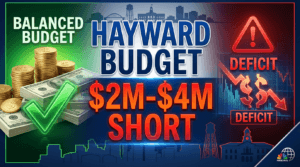
Here is where the story turns from tragic to infuriating. The City of Hayward is staring down an approximately $30 million structural budget deficit. In August 2025, the city announced it would hold vacant most unfilled staff positions and reduce other expenses to restore fiscal health. The mayor and city council members agreed to a 6.5 percent pay cut for the current fiscal year — a gesture of shared sacrifice that, while commendable, does little to address the underlying rot.
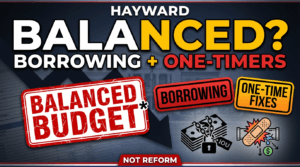
According to reporting from The Town Hall News and the California Policy Center, Hayward’s fiscal crisis is largely self-inflicted — the product of overestimated revenues, underestimated expenses, and an estimated $597 million in unfunded net liabilities, driven heavily by pension obligations for police and fire unions. The city formed a “budget war room” to revise the fiscal year 2026 budget, but residents are right to ask: while the war room meets, who is watching the crosswalks?
Mayor Mark Salinas is scheduled to deliver the 2026 State of the City address on March 12, where the budget deficit will be a central topic. Meanwhile, the city is eyeing new taxes and fee hikes to close the gap — meaning Hayward residents may soon be asked to pay more for a government that is demonstrably failing to deliver on its most basic obligation: public safety.
This is the core conservative critique of bloated municipal government. It is not that government should do nothing. It is that government should do first things first. Before launching equity initiatives, climate action plans, and eGift card programs, a city must ensure that a grandmother and her six-year-old grandson can cross the street without being killed.
California’s Pedestrian Crisis: A Statewide Failure
Hayward’s deadly February did not occur in a vacuum. California recorded 1,106 pedestrian fatalities in 2023 — the highest number of any state in the nation, according to NHTSA data. While that figure represented an 8.8 percent decline from 1,213 deaths in 2022, it remains staggeringly high. Pedestrians now account for 27 percent of all motor vehicle fatalities in California, more than double the 12.6 percent share recorded in 2017.
Nationally, a pedestrian was killed every 72 minutes in 2023. The Governors Highway Safety Association projected 7,148 pedestrian deaths nationwide in 2024 — a slight decline, but still nearly 20 percent above pre-pandemic levels.
These numbers tell a clear story: despite billions in state and federal transportation spending, American streets are becoming more dangerous for people on foot. California’s Active Transportation Program recently received 300 applications totaling $2.5 billion in funding requests — evidence of enormous demand — yet available funding falls far short.
The question is not whether money is being spent. It is whether it is being spent wisely, on proven safety measures like better crosswalk lighting, signal timing, and road design — or whether it is being funneled into bureaucratic overhead and ideologically fashionable programs that do nothing to prevent the next collision.
What Hayward Needs: Back to Basics
The conservative vision for local government is not complicated. It starts with fiscal accountability: stop spending money you do not have. It demands transparency: tell taxpayers exactly where every dollar goes and why. And above all, it insists on prioritization: the first duty of any city government is to protect the life and safety of its residents.
Hayward needs an honest, line-by-line audit of how its transportation and public safety dollars are being allocated. It needs to determine whether the intersections where these three women were killed have adequate lighting, signal timing, and crosswalk visibility — and if not, why not. It needs to hold its leadership accountable for a budget that is hemorrhaging money while residents are dying in crosswalks.
None of this requires radical new legislation. None of it requires raising taxes on working families already squeezed by California’s crushing cost of living. It requires competence, discipline, and a willingness to put core services ahead of political vanity projects.
A Call to Action
Three women are dead. A child is healing from injuries no six-year-old should endure. The people of Hayward deserve better — better infrastructure, better fiscal management, and better leadership.
If you live in Hayward, attend the State of the City address on March 12 and demand answers. Ask Mayor Salinas how many more pedestrians must die before basic street safety becomes a budget priority. Contact the Hayward Police Department’s Traffic Bureau at 510-293-7066 if you have information about any of these collisions.
And if you believe that local government should be held to the same standard of accountability that we expect of ourselves as citizens — share this article. Stay informed. Show up. Because when government fails at its most fundamental job, it falls to the people to set it right.