Pras Michel Begins 14-Year Federal Prison Sentence for Foreign Election Money Scheme
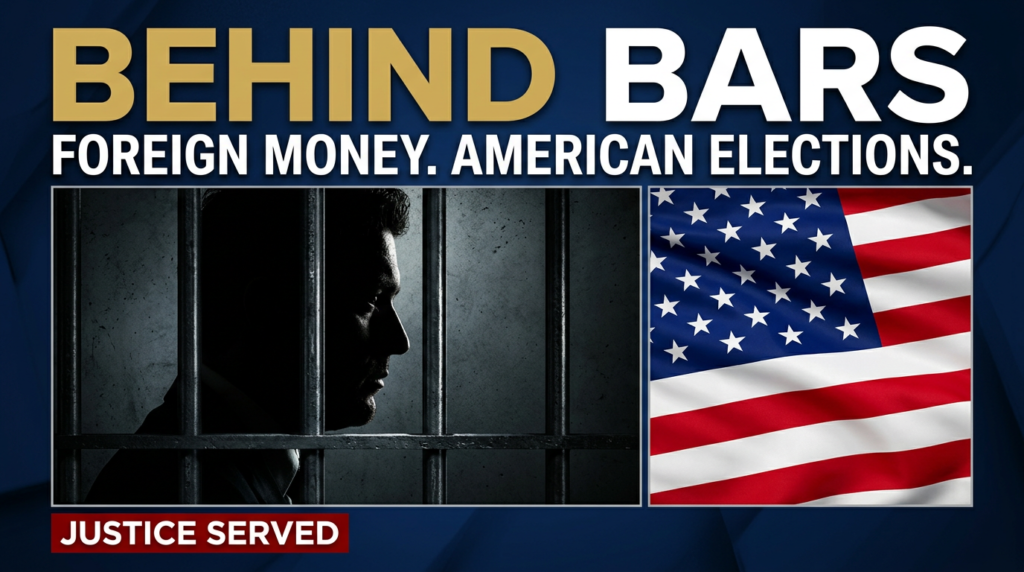
Grammy-winning artist Prakazrel “Pras” Michel has traded the stage for a federal prison cell — and his case is a stark reminder that no one, regardless of fame, wealth, or political connections, is above the law. This is a story about money, power, foreign influence, and the integrity of American democracy.
On April 30, 2026, Prakazrel “Pras” Michel — one-third of the iconic 1990s hip-hop group the Fugees — walked through the gates of the Federal Correctional Institution in Safford, Arizona, to begin serving a 14-year federal prison sentence. No fanfare. No last-minute reprieve. Just accountability, long overdue.
Michel, 53, had spent years fighting a sprawling federal case that exposed one of the most audacious foreign influence schemes in recent American political history — one that touched a presidential election, a foreign financial fugitive, and even the government of China. His story is not just about celebrity downfall. It is about the fragility of election integrity, the danger of foreign money in American politics, and what happens when the rule of law finally catches up.
Support Independent Local Journalism
TheTownHall.News is a non-profit reader-supported journalism. Just $5 helps us hire local reporters, investigate important issues, and hold public officials accountable across Alameda County. If you believe our community deserves strong, independent journalism, please consider donating $5 today to support our work.A Web of Foreign Money and Political Access
The case against Michel reads less like a celebrity scandal and more like a geopolitical thriller. At its center is Low Taek Jho — better known as “Jho Low” — a Malaysian financier accused of masterminding the theft of an estimated $4.5 billion from 1MDB, Malaysia’s state investment fund, in one of the largest financial frauds in history.
Federal prosecutors alleged that Jho Low paid Michel approximately $20 million in 2012 with a specific goal: arrange a photo opportunity with then-President Barack Obama. That access, prosecutors argued, was then leveraged into something far more serious — an $800,000 illegal donation to Obama’s 2012 presidential reelection campaign, funneled through a network of straw donors to conceal its foreign origin.
This is not a technicality. Routing foreign money into a U.S. presidential election — through fake domestic donors — is a federal crime. It corrupts the democratic process and undermines every American voter’s right to elections free from foreign interference.
Ten Counts, One Verdict: The Justice System Worked
In April 2023, after a federal trial, a jury convicted Michel on 10 criminal counts, including:

- Money laundering
- Conspiracy to defraud the United States
- Witness tampering
- Illegal foreign lobbying
- Violations of the Foreign Agents Registration Act (FARA)
- Acting as an unregistered agent of the People’s Republic of China
That last charge adds a chilling dimension. Beyond the Obama campaign donations, prosecutors alleged that Michel worked at the behest of the Chinese government to help pressure U.S. officials to extradite a Chinese dissident living on American soil. A U.S. citizen, leveraging his connections, allegedly doing the bidding of Beijing.
He was formally sentenced to 14 years in federal prison in October 2025. The surrender date was pushed back twice — first to March, then again by 30 days — before Michel finally reported on April 30.
“No amount of celebrity, wealth, or political connection should shield anyone from the consequences of corrupting American elections.”
The AI Lawyer Debacle: A Defense That Raised More Questions Than Answers
Perhaps no subplot in this case better illustrates its extraordinary nature than what became known as the “AI lawyer controversy.” Six months after his conviction, Michel filed for a new trial, claiming his former attorney, David Kenner, had used an unproven artificial intelligence tool to write the closing arguments presented to the jury — resulting in what Michel’s team described as a deeply flawed and incoherent defense.
The judge denied the request.
Whatever the merits of that claim, it raises a serious question: if the defense was as compromised as Michel’s team alleges, why did jurors still convict on all 10 counts? The evidence, apparently, spoke for itself. The facts of the case were compelling enough to overcome any shortcomings in courtroom presentation.
Support Independent Local Journalism
TheTownHall.News is a non-profit reader-supported journalism. Just $5 helps us hire local reporters, investigate important issues, and hold public officials accountable across Alameda County. If you believe our community deserves strong, independent journalism, please consider donating $5 today to support our work.Michel’s spokesperson, Erica Dumas, confirmed that an appeal is being actively prepared, stating: “The FARA-related charges that led to his conviction are being vigorously contested on appeal, and his legal team believes the record will show that his rights were violated and the truth was obscured.”
The appeal is, by all accounts, in its earliest stages. Michel will serve his sentence while that process unfolds.
Why This Case Matters Far Beyond One Celebrity
It would be convenient to reduce this story to celebrity gossip — a famous rapper who made bad choices and paid the price. But that reading badly misses the point.
The Pras Michel case is a blueprint for how foreign actors — whether state-sponsored or otherwise — attempt to buy access and influence inside American democracy. The alleged scheme didn’t happen in the shadows of some obscure political backroom. It allegedly targeted the sitting President of the United States. It allegedly used American citizens as conduits for foreign money. And it allegedly served the interests of both a fugitive Malaysian financier and the Chinese Communist Party.
For citizens who believe in election integrity, the case is a warning. For those who champion fiscal accountability, it is a reminder of how illicit foreign wealth can distort political outcomes. For advocates of law and order, it is proof — however slow in coming — that the system can and does hold powerful people accountable.
The indictment came in 2019. The conviction came in 2023. The sentencing came in 2025. Michel walked through those prison gates in 2026. Justice is not always swift. But in this case, it arrived.
What Critics Get Wrong
Some voices have argued that Michel is a victim of prosecutorial overreach — that the FARA charges in particular were applied too broadly, and that the sentence is disproportionate to the offense. His appellate team will test those arguments in court, as is their right.
But consider the totality: ten counts. A unanimous jury verdict. Allegations not just of campaign finance violations, but of witness tampering — an active effort to obstruct the investigation itself — and of serving as an unregistered foreign agent for China. This was not a paperwork error or a misunderstood political donation. This was, according to prosecutors and a jury of Michel’s peers, a multi-year criminal conspiracy involving foreign governments and stolen billions.
Skepticism of government power is healthy and necessary in a free society. But accountability for those who allegedly abuse their access to subvert that same society is not overreach — it is justice functioning as designed.
“When foreign money enters American elections, every voter loses — regardless of party.”
Key Takeaway
The Pras Michel case is a landmark reminder that election integrity is not a partisan issue — it is a foundational principle of self-governance. Foreign money in American elections, whether funneled through celebrities, corporations, or shell companies, represents a direct attack on the democratic process. Michel’s 14-year sentence sends a clear message: the consequences of betraying that process are severe, and no amount of fame or political proximity provides immunity.
Conclusion: The Price of Betraying Public Trust
Pras Michel rose to global fame in the late 1990s as a founding member of one of hip-hop’s most celebrated acts. That legacy now shares space with a federal conviction, a 14-year prison term, and a cautionary tale about the corruption that festers when money, power, and foreign influence collide.
The Federal Correctional Institution in Safford, Arizona is not where most people imagined the Fugees story would end. But the rule of law is not concerned with narrative tidiness. It is concerned with accountability — and on April 30, 2026, accountability showed up.
The appeal will proceed. The courts will do their work. But today, the message is unmistakable: in America, no one is above the law. Not celebrities. Not political donors. Not those who serve as instruments of foreign governments.
That principle is worth defending — loudly, and at every opportunity.
Stay Informed. Stay Engaged.
This story is still developing. If you believe in election integrity, transparent governance, and the rule of law, share this article with your network. Subscribe to our newsletter for independent coverage of the stories that matter. And engage — in your community, at the ballot box, and in the civic conversations that shape our democracy.
Democracy doesn’t protect itself. We do.