Walz Used Taxpayer Money to Block a Federal Fraud Investigation — DOJ’s New Fraud Chief Is Watching
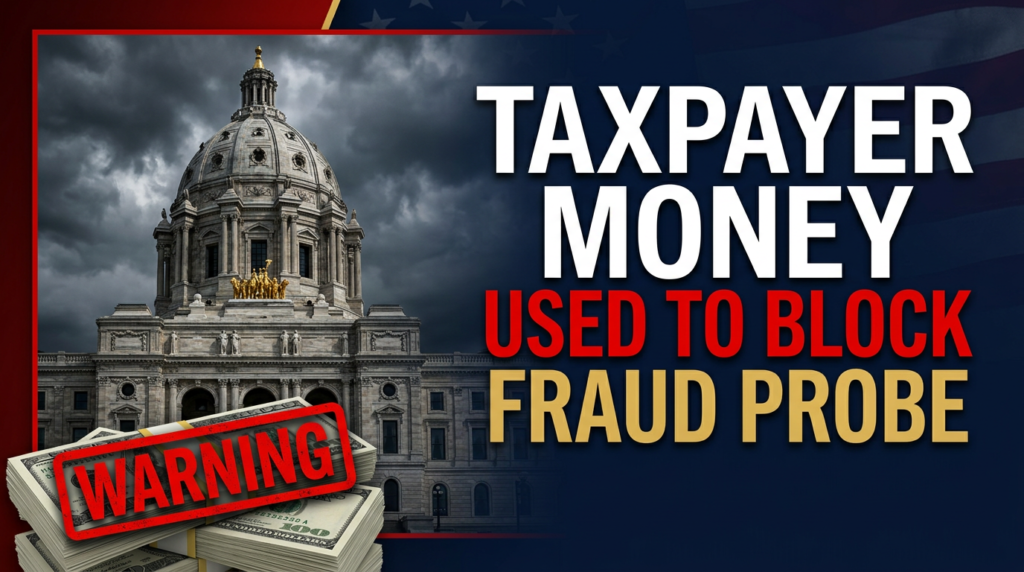
Minnesota’s governor authorized spending public funds to sue the federal government over fraud enforcement — just as the newly confirmed DOJ fraud chief declared the state his national blueprint for accountability.
There is a particular kind of audacity in using stolen money to fight the people trying to recover it. Whether that is exactly what happened in Minnesota is now a central question in Washington — and the answer is not flattering to Governor Tim Walz.
In early March, Minnesota’s Attorney General Keith Ellison, acting in coordination with the Walz administration, filed a federal lawsuit against the Trump administration to block the withholding of Medicaid funds. The reason those funds were withheld? The federal government says Minnesota has been “substantially out of compliance” with requirements to detect, report, and prosecute fraud. In other words: Minnesota taxpayers are now funding a legal battle to stop the federal government from demanding Minnesota crack down on fraud that cost those same taxpayers billions of dollars.
Support Independent Local Journalism
TheTownHall.News is a non-profit reader-supported journalism. Just $5 helps us hire local reporters, investigate important issues, and hold public officials accountable across Alameda County. If you believe our community deserves strong, independent journalism, please consider donating $5 today to support our work.How We Got Here: A Scandal Years in the Making
The roots of this story go back to a daycare funding fraud scandal that federal prosecutors say may have drained billions of dollars from taxpayer-funded programs since 2018. The scheme involved the systematic abuse of federal childcare and nutrition assistance programs, with funds intended for children allegedly diverted at scale.
A state audit — conducted not by federal investigators but by Minnesota’s own auditors — found that the state’s Department of Human Services had both the authority and the information to pursue fraud cases for years. It did not act. Whistleblowers raised alarms. According to House Oversight Committee Chairman James Comer, those warnings were ignored.
Governor Walz, when confronted with federal prosecutors’ estimates of billions in fraudulent charges, called the figures “speculative.” He later said he would “take accountability” — a phrase that has yet to translate into meaningful consequences for those who allowed the fraud to fester on his watch.
$2.25 Billion on the Line — and a Lawsuit to Keep It Flowing
The Trump administration’s response has been direct. Vice President JD Vance stated the administration decided to “temporarily halt certain amounts of Medicaid funding to ensure that the state of Minnesota takes its obligations seriously to be good stewards of the American people’s tax money.”

Two separate funding actions are now in play. Approximately $250 million in Medicaid matching funds were deferred pending a fraud compliance review. Separately, the federal government notified Minnesota it could withhold up to $2 billion for failing to meet federal fraud prevention standards.
Rather than accelerating compliance, the Walz administration’s response was to sue. The lawsuit, filed in federal court, asks a judge to temporarily block the funding deferral and declares the federal government has “weaponized Medicaid against Minnesota as political punishment.”
That framing deserves scrutiny. The federal government is not withholding funds arbitrarily — it is conditioning billions of dollars in taxpayer money on the requirement that Minnesota demonstrate it is actually fighting fraud. Characterizing basic accountability as “weaponization” is a rhetorical move, not a legal argument.
“Using public money to sue the government that’s trying to protect public money — that’s not a defense. That’s a tell.”
Colin McDonald: The Man Who Made Minnesota His Mission
The story took a new turn on April 29, when the Senate confirmed Colin McDonald 52–47 as the first-ever Assistant Attorney General for National Fraud Enforcement — the head of the Trump DOJ’s newly created National Fraud Enforcement Division.
McDonald did not mince words during his confirmation hearings. He called the fraud uncovered in Minnesota “pivotal” and said the new division would seek to scale those investigative methods nationwide. The crackdown on Minnesota’s fraud networks, he told senators, would serve as the blueprint for protecting taxpayer-funded programs across every state in the country.
Support Independent Local Journalism
TheTownHall.News is a non-profit reader-supported journalism. Just $5 helps us hire local reporters, investigate important issues, and hold public officials accountable across Alameda County. If you believe our community deserves strong, independent journalism, please consider donating $5 today to support our work.President Trump reinforced the point bluntly: “My administration has uncovered fraud schemes in states like Minnesota and California, where these thieves have stolen hundreds of billions of taxpayer dollars.”
McDonald is now confirmed, operational, and has publicly identified Minnesota as ground zero for his enforcement mission. The state’s lawsuit to block federal oversight now lands directly in his crosshairs.
Why This Issue Matters Beyond Minnesota
It would be easy to treat this as a regional political story. It is not.
Minnesota’s fraud scandal is the most visible example of a structural failure that exists wherever federal dollars flow through state governments with minimal oversight. The daycare and nutrition program fraud exposed in Minnesota exploited gaps that exist in dozens of states. McDonald’s confirmation signals that the federal government intends to close those gaps — and that states which resisted accountability will face heightened scrutiny.
For fiscal conservatives and anyone who believes in responsible government, the principle here is foundational: federal program dollars are not state property. They are taxpayer money held in trust, disbursed under conditions. When a state fails those conditions — through negligence, incompetence, or something worse — the federal government is not only within its rights to act, it has an obligation to do so.
The Walz administration’s decision to litigate rather than comply accelerates that reckoning.
The Other Side of the Argument
Minnesota officials are not without a counterargument. Deputy Health Commissioner John Connolly has stated the state submitted a corrective action plan and is meeting its milestones. The state’s own data shows its Medicaid payment error rate in 2025 was 2%, well below the national average of 6%.
The lawsuit also warns of real consequences for real people: Connolly called the potential impact of losing federal Medicaid funds “catastrophic,” noting that over a million Minnesotans — half of them children — could face disruption in care.
These concerns deserve to be taken seriously. No one benefits from healthcare systems collapsing, and the state’s corrective compliance data is worth reviewing on the merits.
But here is where the argument breaks down: if Minnesota is genuinely in compliance and acting in good faith, the appropriate response is to demonstrate that in court through evidence — not to seek an injunction blocking federal oversight before that evidence is reviewed. The speed with which Ellison moved to block federal involvement, rather than cooperate with it, does not read like the conduct of a state with nothing to hide.
The question isn’t whether Minnesota’s Medicaid recipients deserve support. They do. The question is why the governor’s first instinct was to sue the fraud investigators, not to help them.
The Accountability Reckoning Is Coming
For years, large-scale fraud in federally funded social programs was treated as an unfortunate but inevitable byproduct of bureaucratic complexity. The McDonald confirmation changes that calculus entirely. There is now a presidentially created, Senate-confirmed division of the Justice Department with an explicit mandate to pursue exactly these cases — and a confirmed chief who has named Minnesota as his model.
The Walz administration has spent taxpayer dollars on a lawsuit to delay that accountability. That lawsuit is now a matter of public record. The question Minnesota voters — and American taxpayers — should be asking is straightforward: if the state was properly managing these funds, why is it fighting so hard to stop someone from looking?
Government at every level works better when it is transparent, when it respects the money it holds in trust, and when accountability has consequences. The Colin McDonald era at the DOJ is a signal that the days of billion-dollar fraud with no federal reckoning may be coming to an end.
Key Takeaway
Minnesota used taxpayer money to file a lawsuit blocking federal fraud oversight — weeks after the Senate confirmed a new DOJ fraud chief who called Minnesota’s scandal the blueprint for a national crackdown. The Walz administration’s legal strategy has turned a state compliance dispute into a national story about whether government officials face real consequences for enabling the theft of public funds.
Stay Informed. Speak Up. Share This Story.
Stories like this one only gain traction when citizens stay engaged. If you believe taxpayer accountability matters — at every level of government — share this article with your network, subscribe to independent news coverage, and make your voice heard at the ballot box. Democracy works when informed citizens demand it does.