Why Alabama Judge Yashiba Blanchard Was Suspended: Inside the Court Crisis
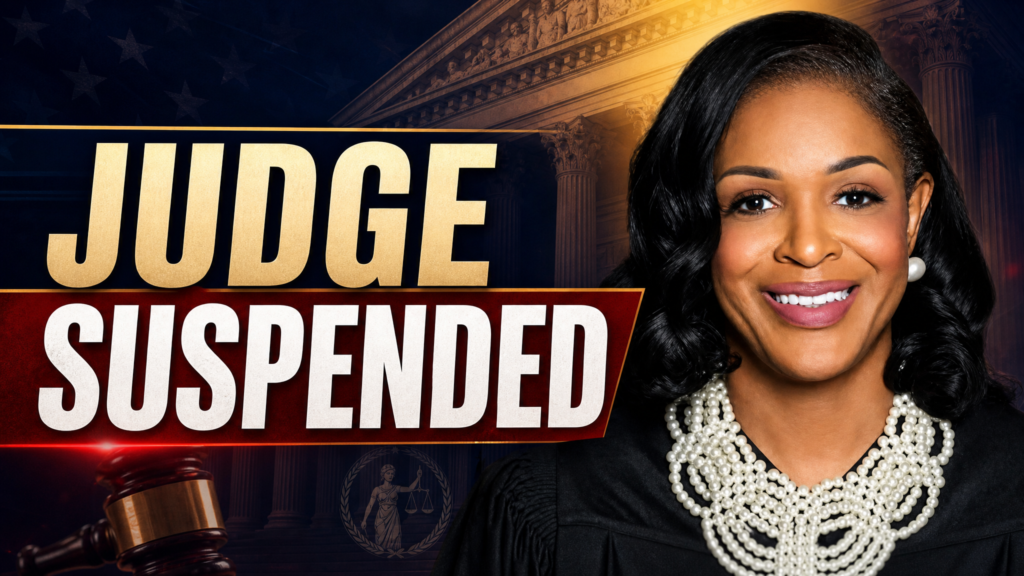
A judge’s automatic suspension after a 120-page misconduct complaint is more than a local scandal. It is a test of whether public office still means duty, discipline, and respect for the people forced to depend on government institutions.
The suspension of Jefferson County Probate Judge Yashiba Blanchard landed with the force of a political bombshell, but the deeper story is not about gossip or courthouse drama. It is about what happens when a public official is accused of treating judicial power like a personal possession rather than a public trust. According to Alabama news reports, Blanchard was automatically suspended after the Judicial Inquiry Commission filed a 120-page complaint with the Court of the Judiciary alleging repeated failures in duty, bias against lawyers, retaliation against staff, and severe delays in probate and mental-health cases. Source
What makes this story especially potent is that the allegations touch one of the few government functions citizens cannot simply walk away from. Families rely on probate court when a loved one dies, when a guardianship must be established, when estates need resolution, and when mental-health commitment cases require prompt legal action. When that system breaks down, ordinary people pay in time, money, stress, and in some cases, personal suffering. That is why this case matters far beyond Jefferson County. Source
Support Independent Local Journalism
TheTownHall.News is a non-profit reader-supported journalism. Just $5 helps us hire local reporters, investigate important issues, and hold public officials accountable across Alameda County. If you believe our community deserves strong, independent journalism, please consider donating $5 today to support our work.Why This Issue Matters Now
The core fact is important: Blanchard has not been finally removed from office, but she was immediately sidelined from the bench because Alabama law provides for automatic temporary suspension when the Judicial Inquiry Commission brings a formal case to the Court of the Judiciary. That means the state’s judicial discipline system viewed the allegations as serious enough to trigger immediate action before a final ruling. Source
That distinction matters because accountability and due process are not opposites. A judge is entitled to defend herself. The public is entitled to protection while that process unfolds. Alabama’s system, at least on paper, is designed to preserve both principles at once. Retired Probate Judge Sherri Friday was appointed to handle probate duties temporarily, and retired Judge Carole Smitherman was appointed to serve temporarily in the election role tied to the office. The government did what citizens should expect: stabilize the institution first, sort out the merits next. Source Source
Public office is not a private entitlement.
What the Complaint Actually Alleges
The complaint, as summarized by local reporting, levels seven broad charges against Blanchard: failure to diligently discharge judicial duties, failure to follow the law, bias against attorneys appearing before her, failure to recuse from a case in which she had previously served as an attorney, harassment and retaliation against court staff, allowing subordinates to engage in intimidation, and failure to maintain professional competence in judicial administration. These are not narrow technical disputes. They describe an alleged breakdown in judgment, management, and basic judicial temperament. Source

The most politically and morally explosive allegation involves involuntary commitment hearings. Multiple outlets report the complaint says Blanchard told staff on one occasion she was late to an involuntary-commitment docket because she had “three dogs to walk.” Reports also say one patient remained hospitalized for an additional two weeks after a hearing was canceled, with hospital officials warning that the delay created unnecessary costs, emotional distress, and even public-safety concerns by disrupting access for other patients. In another example cited by 1819 News, a respondent allegedly went 18 days before getting a hearing even though state law requires a probable-cause hearing within seven days when liberty is restricted. Source Source Source
Due process delayed is justice denied.
Why Delayed Hearings Should Alarm Every Citizen
Some readers may be tempted to see a probate-court controversy as niche or technical. It is not. Probate judges handle matters at the intersection of law, liberty, incapacity, and family security. When mental-health hearings are delayed, patients may remain hospitalized longer than necessary, families lose time they cannot recover, and hospitals absorb costs that often ripple outward to taxpayers and the wider health-care system. When estate and conservatorship cases are delayed, widows, children, and vulnerable adults are left in limbo while legal fees grow. Source
This is where the story connects directly to values many Americans still expect from public servants: discipline, punctuality, restraint, and seriousness. Government is already intrusive enough in family life, mental-health law, and estate administration. The bare minimum citizens should demand is that officials entrusted with that power perform their duties with rigor and humility. If the complaint’s allegations are proven, the issue is not merely inefficiency. It is contempt for the very people the court exists to serve. Source
The Taxpayer and Institutional Cost of Court Mismanagement
The complaint also describes alleged staff bullying, retaliatory transfers, and administrative confusion inside the probate system. AL.com and BirminghamWatch report that employees were allegedly threatened over complaints to human resources, and some staff were reassigned from the busier Birmingham office to Bessemer despite operational concerns. One reported incident described an employee seeking reassignment because her sister was dying of cancer; according to the complaint summaries, Blanchard did not respond, and the employee later could not reach the hospital in time to say goodbye. Source Source
Support Independent Local Journalism
TheTownHall.News is a non-profit reader-supported journalism. Just $5 helps us hire local reporters, investigate important issues, and hold public officials accountable across Alameda County. If you believe our community deserves strong, independent journalism, please consider donating $5 today to support our work.Even if one sets aside the emotional dimension, the fiscal and civic cost is obvious. Delayed hearings mean more billable legal hours, prolonged hospital stays, duplicated court work, and a backlog that consumes staff time and public resources. Court dysfunction is not free. Taxpayers fund the machinery. Families finance the delay. Public confidence absorbs the damage. Source Source
What Critics Get Wrong About Accountability
Some will argue that the coverage itself risks prejudging the case. That concern is fair up to a point. Blanchard is accused, not convicted, and the Court of the Judiciary exists to evaluate evidence, not headlines. Reports say she declined comment when first contacted, and under the process described by AL.com, she has time to respond before a hearing proceeds. Source
But insisting on due process does not require pretending the allegations are trivial. It is possible to say both that a judge deserves a fair hearing and that the public deserves honesty about the gravity of the complaint. In fact, mature self-government depends on that balance. The worst response would be the cynical one: shrugging off courthouse misconduct because all institutions disappoint sooner or later. Law and order begins with expecting the law’s own officers to meet the standard. Source
Key Takeaway
The Yashiba Blanchard case is about more than one judge.
It is about whether public institutions still reward competence, enforce standards, and protect citizens when power is abused or neglected.
If courts lose that discipline, families, patients, taxpayers, and the rule of law all lose with them.
What Happens Next in the Yashiba Blanchard Case
The immediate next step is procedural, not political. The case moves through Alabama’s judicial discipline process, where the Court of the Judiciary can ultimately remove, censure, or suspend a judge without pay if the allegations are sustained. As of the most recent reporting I reviewed, no final ruling had been issued, and no later disposition had overtaken the initial suspension coverage. Source
Meanwhile, Blanchard’s troubles do not end with the disciplinary complaint. AL.com reports that she is also tied to separate litigation, including an election-related lawsuit filed by a former state House candidate and an earlier dispute involving Hand Arendall that reached the Alabama Supreme Court over her authority in conservatorship-related audits. Those matters are distinct from the ethics case, but together they deepen the larger impression of a public office consumed by conflict rather than service. Source Source
The lesson for citizens is simple. Institutional decay rarely announces itself with a single dramatic moment. More often, it shows up as delay, arrogance, excuses, and the quiet suffering of people told to wait while the system protects itself. That is why stories like this matter, and why they should be debated honestly, shared widely, and followed closely. Stay informed, share this article if you think judicial accountability still matters, support independent journalism that keeps local power under scrutiny, and stay engaged in the civic life that makes reform possible.