Parkinson Stem Cell Therapy: Japan ’s Critical Turning Point
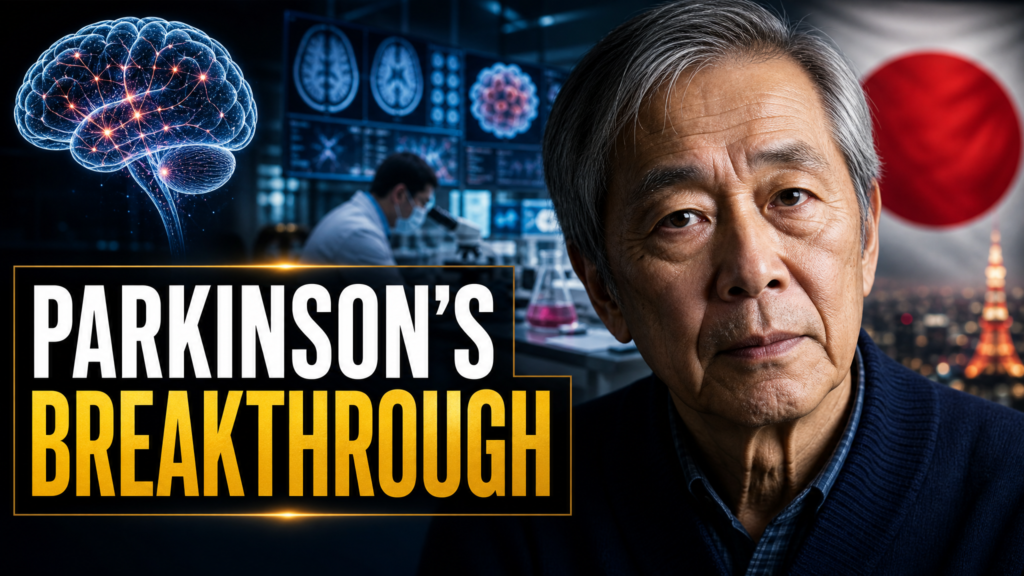
Japan’s approval of a first-of-its-kind Parkinson’s cell therapy is a genuine medical milestone. It is also a test of whether regulators, taxpayers, and families will get the transparency they deserve before hope is sold as certainty.
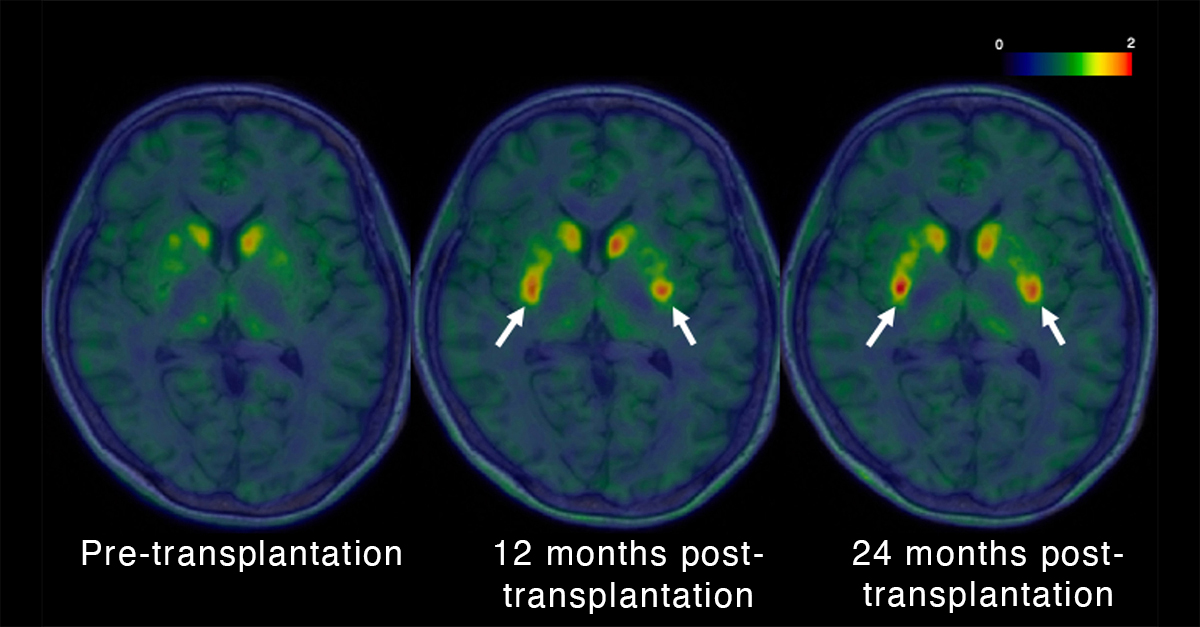
PET imaging from the Kyoto/CiRA trial summary showed dopamine production from transplanted cells. Source
Japan just changed the Parkinson’s debate. That is not hype. In March 2026, Sumitomo Pharma announced that AMCHEPRY® (raguneprocel) received conditional and time-limited approval in Japan for Parkinson’s patients whose motor symptoms are not adequately controlled by standard drugs, including levodopa [company release]. Source
Support Independent Local Journalism
TheTownHall.News is a non-profit reader-supported journalism. Just $5 helps us hire local reporters, investigate important issues, and hold public officials accountable across Alameda County. If you believe our community deserves strong, independent journalism, please consider donating $5 today to support our work.That matters far beyond Japan. For decades, families have watched Parkinson’s chip away at mobility, speech, confidence, and independence while medicine mostly offered symptom management. Now a therapy built from induced pluripotent stem cells — the Nobel Prize-winning technology pioneered by Shinya Yamanaka — has crossed the line from clinical promise to limited real-world approval. The breakthrough is real. So is the obligation to examine it with discipline, honesty, and respect for the public that will ultimately bear the risks and costs. Source Source
Why This Issue Matters Now
The pivotal shift came in April 2025, when a Kyoto University Hospital team published a phase I/II trial in Nature. Seven Parkinson’s patients, ages 50 to 69, received bilateral transplants of iPS-cell-derived dopaminergic progenitor cells and were followed for 24 months [peer-reviewed clinical trial]. Researchers reported no serious adverse events, no tumor-like overgrowth on imaging, and PET evidence that the transplanted cells were producing dopamine. Among six patients evaluated for efficacy, four improved in off-medication motor scores and five improved in on-medication motor scores [peer-reviewed clinical trial]. Source
7 patients. 24 months. 0 serious adverse events. [peer-reviewed clinical trial] Source
Those findings are important because they move the field past theory. Parkinson’s is driven in part by the loss of dopamine-producing neurons. Most existing treatments try to compensate chemically. This therapy aims to replace damaged cells directly. That is why so many headlines called it historic — and fairly so. Reuters reported in February 2026 that a Japanese health ministry panel had endorsed the treatment, paving the way for what it described as the world’s first medical products based on iPS technology. Source

Japan’s approval proves regenerative medicine is real — and proves the public deserves honest answers about cost, risk, and results.
The Breakthrough Is Real — and So Are the Limits
The temptation now is obvious: declare victory, move on, and let marketing do the rest. That would be irresponsible. The Nature study showed encouraging biological and clinical signals, including a 44.7% increase in a PET marker of dopamine synthesis in the putamen over 24 months [peer-reviewed clinical trial]. But it was also a small, open-label, non-randomized trial. That means the study was designed first to explore safety and feasibility, not to settle every question about long-term benefit, durability, or broad population-level effectiveness. Source
That caution is not anti-science. It is pro-accountability. The Michael J. Fox Foundation called the approval a major scientific milestone while also stressing that the therapy is not a cure, that patients will likely still need levodopa, and that more data are required to confirm meaningful clinical benefit and long-term safety. Parkinson’s UK made a similar point, noting that the approval is conditional and that monitoring will continue for years before longer-term use is settled. Source Source
Medical innovation deserves applause. Regulatory shortcuts deserve scrutiny.
If transplanted cells can restore dopamine, regulators must also restore trust.
The Number That Should Alarm Every Taxpayer
Here is the number that should sharpen public attention: seven. Seven patients formed the core study behind the approval pathway [peer-reviewed clinical trial]. That does not invalidate the science. It does mean citizens have every right to ask hard questions before a cutting-edge therapy moves into broader care systems, especially in systems where public reimbursement may follow. Source
Support Independent Local Journalism
TheTownHall.News is a non-profit reader-supported journalism. Just $5 helps us hire local reporters, investigate important issues, and hold public officials accountable across Alameda County. If you believe our community deserves strong, independent journalism, please consider donating $5 today to support our work.Medical News Today quoted Japanese surgeon Hiroshi Kawaguchi warning that the evidence behind the approval remains limited, with only seven to eight patients in the key studies for Parkinson’s and heart failure, short follow-up, and no randomized control groups [medical news interview]. The same report noted that Japan’s conditional pathway can allow treatments to enter clinical practice while confirmatory evidence is still being gathered — effectively shifting part of the evidence-generation process into routine care. That is not necessarily reckless. But it is undeniably a major regulatory gamble, one taxpayers and patients should be told about plainly. Source
For readers who care about limited government and fiscal accountability, this is the central point. Public institutions should make room for innovation, but they should never ask families to subsidize uncertainty without transparent reporting, rigorous post-market studies, and clear benchmarks for success or failure. Hope cannot become a blank check. Source Source
Key Takeaway
- Japan’s Parkinson’s approval is a genuine medical breakthrough built on serious science.
- The evidence is promising but still limited, and the approval is conditional — not final proof of a cure.
- Patients and taxpayers deserve transparency, post-market accountability, and honest debate before early promise becomes policy.
What Supporters of This Policy Argue
Supporters of Japan’s approach argue that this is exactly what forward-looking medicine should do. They say patients with progressive neurological disease cannot wait forever for perfect data, especially when current treatments lose effectiveness over time. They also argue that conditional approval does not mean the science stops; it means real-world evidence can continue to accumulate while patients gain access to a promising therapy under supervision. There is force to that argument. Source Source
But that case only holds if the public side of the bargain is honored. Conditional approval must mean hard reporting requirements, full disclosure of adverse events, honest communication about uncertainty, and a willingness to pull back if outcomes disappoint. Nature reported that some researchers are concerned Japan’s approval pathway may be moving first-of-their-kind stem-cell products forward on minimal clinical-trial data. If the rules are loosened in the name of compassion but never tightened in the name of evidence, public trust will erode fast — and deservedly so. Source
This is where free speech and open scientific debate matter. A real breakthrough does not fear scrutiny. It survives it.
How This Affects Families and Communities
For families living with Parkinson’s, the emotional stakes are obvious. A therapy that might restore some motor function is not an abstract policy seminar; it is the difference between walking steadily, speaking clearly, or remaining independent longer. That is why this story has spread so quickly and why many readers will be inclined to share only the hopeful part. They should share the hopeful part. They should also share the honest part. Source Source
There is another reason families should pay close attention. The Michael J. Fox Foundation warned readers not to confuse rigorously studied therapies like raguneprocel with stem-cell treatments marketed by private clinics and medical spas that lack this level of testing and approval. In plain English, when a real breakthrough arrives, imitators arrive too. Law, consumer protection, and basic civic responsibility all demand a clear line between legitimate medicine and expensive false hope. Source
Share this if you believe medical hope should come with medical honesty. Tag someone who needs to see this.
What Happens If Nothing Changes
If this therapy works over time, it could mark the beginning of a new chapter in regenerative medicine. If oversight weakens, however, the same story could become a cautionary tale about how excitement outran evidence. That is the fork in the road now. One path leads to disciplined innovation: transparent follow-up, real-world data, and careful expansion. The other leads to politicized science, public confusion, and a system that spends first and asks questions later. Source Source
Independent journalism has a role here, too. News outlets should resist both lazy cynicism and breathless boosterism. The public deserves reporting that can hold two thoughts at once: this breakthrough is promising, and this policy deserves scrutiny. A free society does not weaken science by asking hard questions. It protects science from becoming propaganda.
Conclusion
Japan’s approval of Parkinson’s stem cell therapy is one of the most important medical stories in the world right now. It deserves attention because it may open a path toward repairing, not merely managing, a devastating disease. It also deserves scrutiny because conditional approval built on limited evidence places a heavy burden on regulators, companies, and public institutions to be transparent, disciplined, and worthy of trust. Source Source
Stay informed. Share this article. Support independent journalism that refuses to trade accuracy for applause. And if this issue matters to your family, contact your health representative or local lawmaker and ask one simple question: what safeguards are in place when breakthrough therapies move from trials into public care?
Hope is powerful; accountable truth is what makes it last.