Lipfendra Cost 2026: What the New Cholesterol Pill Really Prices Out
As the FDA approves the first pill version of a breakthrough cholesterol drug, millions of Americans are asking: who actually gets to benefit from a medical win — and who gets left holding the bill?
A new cholesterol pill just cleared the FDA. Patients still can’t easily afford it.
On July 16, 2026, the FDA approved Lipfendra, the first oral PCSK9 inhibitor ever cleared for high cholesterol.It is a genuine medical advance, cutting LDL, the so-called “bad” cholesterol, by up to 60 percent without the injections that PCSK9 drugs have always required. But the achievement comes with a price tag that puts it out of reach for millions of the very patients it was designed to help, and that gap says as much about how American healthcare works as it does about the science.
What Makes Lipfendra Different From a Statin?
Statins have dominated cholesterol treatment for decades by blocking an enzyme the liver uses to manufacture cholesterol, according to the American Heart Association. That mechanism works, but it is also why some patients report muscle pain and stop taking their medication altogether. Lipfendra, sold under the generic name enlicitide, takes a different approach entirely.
Instead of shutting down cholesterol production, Lipfendra blocks a protein called PCSK9. Normally, PCSK9 attaches to LDL receptors on liver cells and marks them for destruction, according to the FDA. Fewer receptors means less capacity to clear LDL cholesterol from the bloodstream. By blocking PCSK9, Lipfendra leaves more of those receptors intact, so the liver simply clears out more bad cholesterol on its own. In two large clinical trials involving more than 3,200 adults already on maximally tolerated statins, the drug reduced LDL cholesterol by 56 to 59 percent compared to placebo, according to the FDA.
Support Independent Local Journalism
TheTownHall.News is a non-profit reader-supported journalism. Just $5 helps us hire local reporters, investigate important issues, and hold public officials accountable across Alameda County. If you believe our community deserves strong, independent journalism, please consider donating $5 today to support our work.Is This Really a Breakthrough or Just Marketing?
The science holds up. PCSK9 inhibitors have existed since 2015, but only as injections that many patients found inconvenient or difficult to access through insurance. Lipfendra is the first version taken as a once-daily pill, according to Merck, the manufacturer. That alone is a meaningful shift for patients who have avoided the injectable versions.
What the approval does not yet prove is whether Lipfendra actually prevents heart attacks or strokes. A larger cardiovascular outcomes trial is still underway. The LDL reduction numbers are real and significant, but reporters and patients alike should resist the temptation to treat a cholesterol number as a guarantee of fewer heart attacks until that data exists.
Who Is Actually Paying the Price for This Innovation?
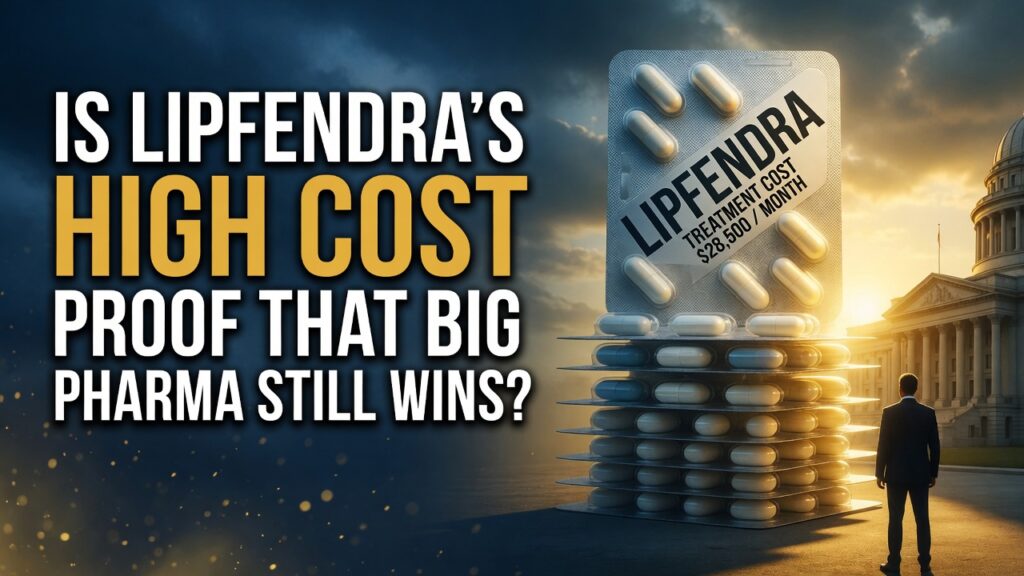
Here is where the story turns from medicine to money. Lipfendra is expected to carry a list price of $10.50 per pill, or roughly $315 for a 30-day supply, according to Yahoo Finance. That is a steep discount compared to the $500 to $600 a month that injectable PCSK9 inhibitors typically cost. But $315 a month is still a serious burden for a working family already stretched by grocery bills, rent, and gas prices.
$315 a month. The question nobody in the pharmaceutical industry wants to answer directly: how many patients will simply go without?
The Centers for Disease Control and Prevention estimates that only about half of the 47 million American adults who could benefit from cholesterol medication are actually taking it. A KFF poll released in March found that 59 percent of Americans are worried about the rising cost of prescription drugs, the highest level of concern since the survey began in 2018. Nearly half of adults in lower- and middle-income households reported skipping doses or not filling prescriptions because of cost, according to the same KFF research.

A pill that lowers LDL by 60 percent means nothing to a patient who cannot afford to fill the prescription.
That is not a knock on Merck’s science. It is a question about a system where insurance coverage, not clinical effectiveness, often decides who actually gets treated.
Did Washington Actually Speed This Up — Or Just Get Out of the Way?
There is a genuinely encouraging piece of this story that deserves more attention than it has gotten. The FDA approved Lipfendra through the Commissioner’s National Priority Voucher program, a streamlined pathway that cut review time from the typical six to twelve months down to just one to two months, according to Yahoo Finance. That is limited-government policy working as intended: faster review without cutting corners on the two large, randomized trials that generated the safety and efficacy data.
If a federal agency can approve a real medical breakthrough in weeks instead of a year, why does so much of government still move at a crawl?
Merck has also said it plans to offer Lipfendra through the TrumpRx direct-to-consumer discount program, though a specific price under that channel has not yet been released. If that model delivers on its promise, it would represent exactly the kind of market-based, patient-facing solution that sidesteps insurance bureaucracy rather than expanding it. That is worth watching closely in the months ahead, and worth holding accountable if the discount never materializes.
What Do Supporters of Current Drug Pricing Actually Believe?
Defenders of the current system make a fair point worth engaging honestly. Drug development is enormously expensive, and PCSK9 inhibitors required years of trials and billions of dollars in research investment before ever reaching a pharmacy shelf. Without the promise of a return on that investment, companies like Merck would have little incentive to develop next-generation treatments at all. Cash-pay and discount options, including GoodRx and Cost Plus Drugs, already help some patients pay less than the list price, and payment assistance programs exist for low-income households through Medicaid and manufacturer-sponsored programs.
Support Independent Local Journalism
TheTownHall.News is a non-profit reader-supported journalism. Just $5 helps us hire local reporters, investigate important issues, and hold public officials accountable across Alameda County. If you believe our community deserves strong, independent journalism, please consider donating $5 today to support our work.That argument has real merit, and it is why blunt price controls often produce fewer new drugs rather than cheaper ones. But it does not fully answer why a country that already spends more per capita on healthcare than any other developed nation still leaves half of eligible patients untreated. Faster, leaner regulatory approval — like the pathway that got Lipfendra to market in record time — does more to close that gap than mandates ever have. The lesson from Lipfendra’s launch is not that innovation is the problem. It is that the system built around distributing that innovation still needs fixing.
Is Lower-Cost Innovation the Answer We’ve Been Waiting For?
Lipfendra proves that meaningful medical progress and faster government review are not mutually exclusive. If a breakthrough drug works but only the insured can access it, did Big Pharma really solve the problem? It also proves that a scientific win does not automatically translate into a win for the patient holding the pharmacy bill. The real test of this drug will not be measured in LDL percentages. It will be measured in how many of the 47 million eligible Americans can actually get it into their medicine cabinet.
Key Questions This Story Raises:
- Will insurers cover Lipfendra broadly, or will coverage gaps push patients back toward cheaper, harder-to-tolerate statins?
- Can the TrumpRx discount program actually deliver a price low enough for uninsured patients to afford it?
- If faster FDA review works this well, why hasn’t it become the standard path for every promising new drug?
The question that should follow every headline about this breakthrough is simple: will Lipfendra change outcomes for the millions who need it, or will it become another example of American healthcare innovation outpacing American healthcare affordability?
What do you think — is the TrumpRx pricing model the fix patients have been waiting for, or just another promise that needs to be tracked? Share this article and let us know.
Still have questions about how drug pricing actually works? Stay informed with daily coverage from The Town Hall News. Think your neighbors need to see this? Share it. Want your voice to count on healthcare costs? Contact your congressional representative and ask where they stand on transparent drug pricing, or attend your next county health board meeting to raise the issue directly.