Camille Johnston Removed as Ray County Prosecutor Over Misconduct Claims
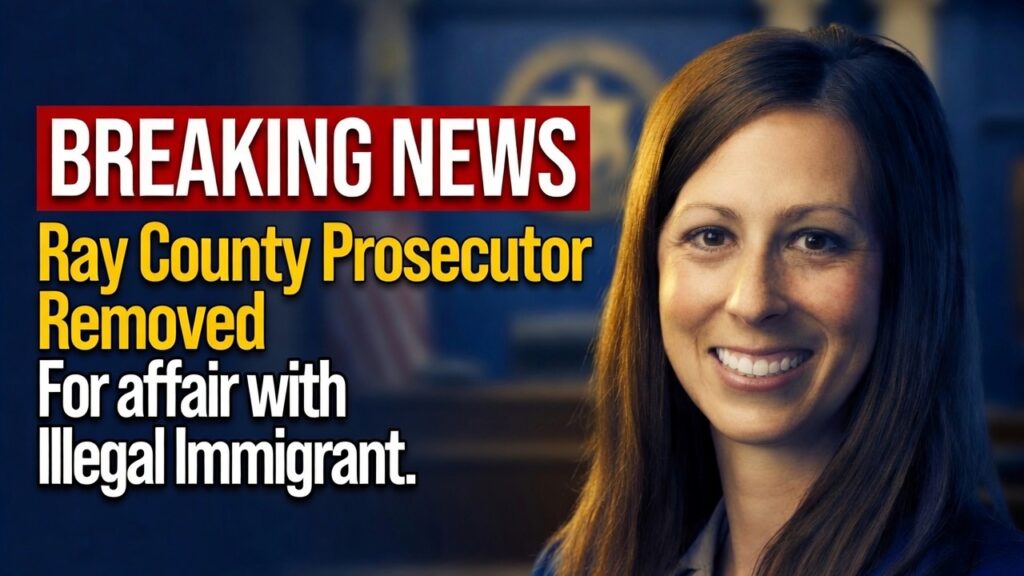
As Missouri’s attorney general moves to permanently strip Camille Johnston of her office, residents of Ray County are left asking a harder question: how long was the public trust for sale, and who was watching?
A prosecutor is supposed to protect the public. Was this one protecting herself?
On July 16, Missouri Attorney General Catherine Hanaway filed a petition accusing Ray County Prosecutor Camille Johnston of a stunning breach of duty. A judge signed off the same day, immediately and temporarily removing Johnston from office — a rare and serious step that signals just how alarming the allegations are.
Support Independent Local Journalism
TheTownHall.News is a non-profit reader-supported journalism. Just $5 helps us hire local reporters, investigate important issues, and hold public officials accountable across Alameda County. If you believe our community deserves strong, independent journalism, please consider donating $5 today to support our work.What Exactly Is Johnston Accused Of?
According to the AG’s petition, Johnston engaged in romantic relationships with three people who created direct conflicts with her job. The first was a criminal defense attorney representing multiple defendants in cases she herself was prosecuting. The second was a “prospective defendant” — and when a staffer discovered the relationship, the petition alleges Johnston fired that employee rather than address the conflict.
The third relationship is the one drawing the most attention. Johnston allegedly became romantically involved with a man identified in court filings as “J.G.,” an undocumented immigrant from Mexico who has been in the country illegally since 2019 and who was under investigation for felony sexual assault in her own county.
Did a Prosecutor Help a Suspect Flee the State?
This is where the allegations move from troubling to potentially explosive. Per the petition, Johnston did not disclose J.G.’s whereabouts when he was identified as a suspect. She allegedly visited him after he fled to Mississippi, vacationed with him in Florida, and — most seriously — provided him the title to her personal vehicle.
The filing states that assistance was given “with knowledge that he would likely return to his native country,” language prosecutors say points to deliberate help in avoiding accountability. If a prosecutor allegedly helped a sexual assault suspect escape justice, who exactly was she working for?

It’s worth being precise here: these are allegations laid out in a civil petition, not a criminal conviction. J.G. has not been convicted of the sexual assault he was under investigation for, and Johnston has not been criminally charged over her conduct. Her attorney declined to comment when reached by reporters Friday.
Why Does This Case Matter Right Now?
Missouri used a legal tool called quo warranto — one of the state’s oldest mechanisms, dating back nearly two centuries — to yank Johnston from office before the case is even fully litigated. That is not a step attorneys general take lightly. It requires a judge to agree the allegations are serious enough to justify immediate action.
A prosecutor sworn to enforce the law allegedly helped a suspect vanish — and it took an outside intervention to stop her. For a state that has spent years debating border enforcement and public safety, a local prosecutor allegedly shielding an undocumented suspect under investigation for a violent crime cuts to the center of that debate.
Who Was Supposed to Be Watching the Watcher?
Prosecutors hold enormous, largely unchecked power at the local level. They decide who gets charged, how aggressively, and what deals get offered. That power depends entirely on public trust — and that trust depends on prosecutors having no personal stake in the outcome of their own cases.
The petition paints a picture of an office where that boundary collapsed repeatedly, not once. A defense attorney with active cases before her. A defendant she was supposed to prosecute. A sexual assault suspect she allegedly helped stay hidden. Each relationship alone would raise questions. Three, according to the filing, is what prompted the state to intervene.
Support Independent Local Journalism
TheTownHall.News is a non-profit reader-supported journalism. Just $5 helps us hire local reporters, investigate important issues, and hold public officials accountable across Alameda County. If you believe our community deserves strong, independent journalism, please consider donating $5 today to support our work.“When an elected official treats public office like their personal playground, betraying the public trust, ignoring legal obligations, and putting self-interest first, removal isn’t a suggestion, it’s a necessity.”
That line, from Attorney General Hanaway’s own statement, frames this as more than a personnel dispute. It’s a test of whether local accountability structures actually work.
What Do the Numbers Actually Tell Us?
Three. That’s the number of alleged conflict-of-interest relationships laid out in the state’s petition against a single sitting prosecutor. The question no one in Ray County wants to answer: how many cases did she oversee while those conflicts existed?
What Happens If No One Speaks Up?
The petition also alleges Johnston created “an atmosphere of fear and intimidation” by berating staff — and that she fired an employee specifically after that employee uncovered one of the relationships. If true, that means the one person who tried to flag the problem internally was punished for it, not the official who allegedly caused it.
That detail matters beyond this one case. It’s a pattern accountability advocates have raised for years: whistleblowers inside government offices often pay a higher price than the officials they expose. Local county officials noted this is the second time quo warranto has been used in Ray County recently, though a spokesperson cautioned against reading too much into that coincidence.
What Do Supporters of Due Process Actually Believe?
To be fair, some will argue Johnston deserves the same presumption of innocence she was elected to uphold for others. She has not been criminally charged, and the petition represents one side’s allegations, not a proven record. Her attorney has yet to respond in court, and Missouri law gives her 10 days to formally answer the petition before a scheduling hearing is even set.
That caution is reasonable, and it’s worth holding onto. The civil process exists precisely so these claims get tested, not assumed. But the fact that a judge granted immediate, temporary removal — before Johnston even had a chance to respond — suggests the court found the allegations serious enough that the risk of leaving her in office outweighed waiting for a full hearing. Due process protects the accused. It does not require ignoring a judge’s own assessment of urgency.
What Comes Next for Ray County?
Johnston now has 10 days to respond to the petition. If she does, a judge will schedule a hearing on the merits. Until then, county officials say career staff inside the prosecutor’s office are expected to keep active cases moving. The county has not announced an interim replacement.
For residents, the practical stakes are immediate: every case that office is handling — from misdemeanors to the sexual assault investigation at the center of this scandal — now proceeds under a cloud, with the public left to wonder how many decisions were shaped by conflicts no one caught until a whistleblower’s firing brought it into the open.
Is This Missouri’s Accountability Moment?
Quo warranto is not a tool state attorneys general reach for casually. Its use here signals that Missouri’s checks on local officials can still function when they’re triggered. But it also raises an uncomfortable question: how many similar situations exist in county offices across the state that never make it to a courtroom?
The real question isn’t whether Camille Johnston broke the public’s trust — it’s how many other local officials are counting on nobody ever finding out.
What do you think — should states be doing more to audit conflicts of interest in local prosecutors’ offices before a whistleblower has to force the issue? Share this article and let us know.
Still have questions about how this case unfolds? Stay informed — subscribe for daily coverage from The Town Hall News. Want to make your voice count? Contact the Missouri Attorney General’s office or your local county commission to ask what oversight exists for prosecutors in your own county.