Has the Creator Economy Gone Too Far With Underage Influencers?
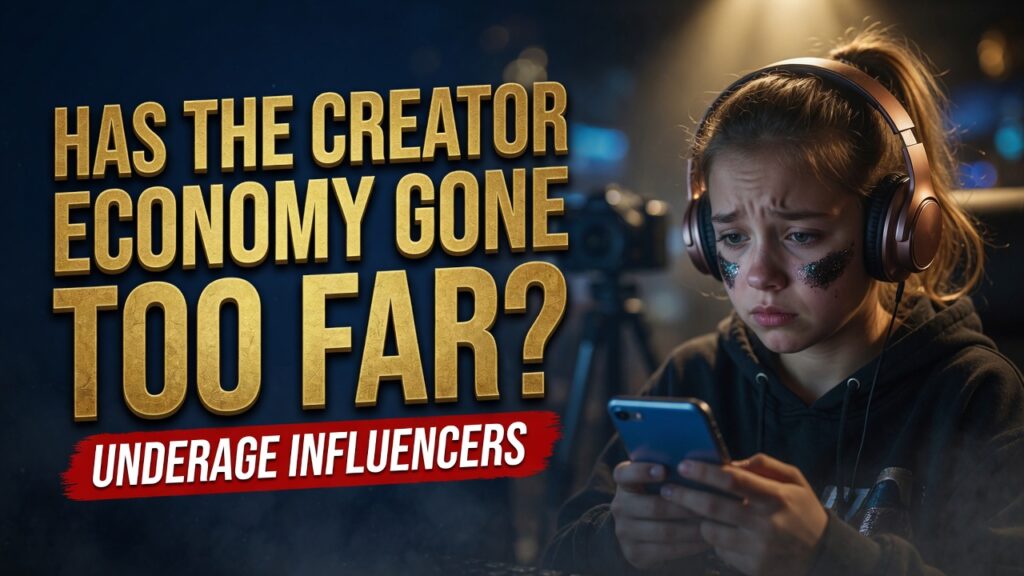
A federal lawsuit accuses a Lucy Guo-founded platform of profiting from explicit content tied to a minor. As the case moves through court, parents are asking a harder question: how many other teenagers are exposed the same way, right now, in plain sight?
Would you know if your teenager had a following worth monetizing? A subscription platform called Passes built a business model around exactly that question — and now finds itself the subject of a federal class action alleging it allowed illegal content involving a minor to circulate for profit.
The lawsuit, filed in February 2025 and now proceeding in the U.S. District Court for the Central District of California, was brought by a young woman named Alice Rosenblum. Passes and its founder, billionaire entrepreneur Lucy Guo, have denied every allegation. But the underlying dispute has reopened a debate the tech industry would rather avoid: what happens when a business model built for adults gets applied to kids with a following.
Support Independent Local Journalism
TheTownHall.News is a non-profit reader-supported journalism. Just $5 helps us hire local reporters, investigate important issues, and hold public officials accountable across Alameda County. If you believe our community deserves strong, independent journalism, please consider donating $5 today to support our work.What Does the Lawsuit Actually Allege?
According to the complaint, Rosenblum was recruited as a teenager to create content for Passes, a subscription platform where creators sell exclusive photos, videos, and livestreams to paying subscribers. The suit claims she was approached at 17 by talent agent Alec Celestin, who is linked to Guo and holds an equity stake in Passes, along with Lani Ginoza, the company’s former director of talent — and that both allegedly encouraged her to produce sexually explicit material and upload it to the platform’s paywalled “vault.” Forbes
The complaint, filed in the Southern District of Florida, names Passes Inc., Guo, two associated business entities, and Celestin and Ginoza, alleging violations of federal child exploitation statutes 18 U.S.C. §§ 2252 and 2252A. It claims the defendants recruited young women they knew to be minors to create explicit content before they turned 18, then distributed that material to paying subscribers both before and after the creator reached adulthood. PR NewswireMorningstar
Who Is Denying What?
Guo has been unequivocal in her denial. In a March 2025 post on X, she called the lawsuit “utterly meritless” as it relates to her and Passes, stating she had zero direct contact with Rosenblum — no calls, texts, or emails — and said Passes has consistently acted on violations, including fake IDs and parent-created accounts, both proactively and when flagged. A Passes spokesperson separately told TechCrunch there is “no record or recollection” of Guo ever interacting with Rosenblum. In a motion to dismiss, lawyers for Guo and Passes went further, calling the suit a “transparent attempt” by plaintiff’s attorneys to reach the “deep pockets” of a successful startup and its wealthy founder, and disputed that Celestin and Ginoza acted with the company’s knowledge at all. Yahoo! + 2
A federal lawsuit now accuses a billionaire-founded platform of profiting from a minor’s exploitation — and the company says the whole thing is a shakedown.

That is the core tension of this case: a plaintiff alleging systemic failure, and a company insisting it did everything right.
Why Did This Case Just Change Courts?
In September 2025, the presiding judge granted part of the defendants’ motion to dismiss on the grounds of improper venue, ordering the case transferred out of Florida to the Central District of California, where Celestin and Ginoza reside. The case is now active there under a new docket number. A venue transfer is not a ruling on the merits — it does not mean the underlying allegations were rejected — but it does mean the litigation is effectively restarting in a new jurisdiction, with fresh procedural steps ahead. UniCourt
Discovery has already produced friction. Court records show Rosenblum’s attorneys filed a motion in August 2025 to compel Guo to respond more fully to written interrogatories, suggesting the two sides are still fighting over basic fact-finding almost a year into the case. UniCourt
Why Are Platforms Like This Even Legal for Teens?
This is the part most parents don’t know. Passes is not the only platform built on this model. A rival called BrandArmy markets itself as a “safe for work” alternative that explicitly offers minors their own “Junior Channels,” letting under-18 creators monetize subscribers with parental sign-off. The content itself may be restricted to non-nude material, but the fan signup age is still only 18 — meaning any adult on the internet can subscribe directly to a minor’s channel. QustodioQustodio
Should any adult on the internet be allowed to pay for exclusive access to a child?
This is not a hypothetical raised by activists. It is the literal structure of the business model, sitting in the platforms’ own terms of service.
Support Independent Local Journalism
TheTownHall.News is a non-profit reader-supported journalism. Just $5 helps us hire local reporters, investigate important issues, and hold public officials accountable across Alameda County. If you believe our community deserves strong, independent journalism, please consider donating $5 today to support our work.If an adult stranger can pay for private access to your child’s account, is that really just “content creation” — or is it something else?
What Do the Numbers Actually Tell Us?
170 million. [industry reporting] That is the estimated user base of the adult-content subscription economy that platforms like Passes and BrandArmy were built to imitate. The question no lawmaker has answered: why was that model ever extended downward to minors in the first place?
Part of the answer is economic. Mainstream platforms like Patreon and Fanfix bar creators under 18 outright, and TikTok, YouTube, and Instagram restrict ad revenue-sharing for minors without parental consent — leaving teenagers who’ve already built large followings with almost no legal way to cash in on their own fame. Passes and similar platforms filled that gap. Whether they filled it responsibly is now a question for a federal court. Forbes
Who Is Really Paying for This Policy?
Not the venture capitalists. Guo, 30, recently became the world’s youngest self-made female billionaire, a milestone tied largely to her stake in Scale AI, the data-labeling company she co-founded years before launching Passes. The financial risk of an underregulated corner of the creator economy sits with families who may not fully understand what a “Junior Channel” or a “creator vault” actually is — until a lawsuit like this one puts it in a federal docket. Inc.com
What Do Supporters of This Platform Model Actually Believe?
Defenders of the creator-economy model raise a fair point worth engaging honestly: teenagers with genuine online followings currently have almost no legitimate way to monetize their own work. Banning them outright from every platform, the argument goes, just pushes ambitious young people toward less regulated, less trackable corners of the internet — group chats, private Telegram channels, offshore sites with no terms of service at all.
That’s a real trade-off, not a strawman. But it doesn’t answer the specific question this lawsuit raises: not whether teens should ever be allowed to build an online business, but whether any adult subscriber should be able to pay for exclusive, direct access to a minor’s account. Age-gating the creator without age-gating the audience isn’t a safety feature — it’s a marketing footnote. A platform can support youth entrepreneurship and still restrict who’s allowed to pay for private access to a child. Right now, several don’t.
Key Questions This Case Raises
- Did any Passes executive or agent know Rosenblum was a minor before she created content for the platform?
- Why does a “safe for work” competitor like BrandArmy still allow any adult to subscribe directly to a minor’s channel?
- Should federal law require stricter identity verification on both sides of these subscription platforms — creator and subscriber alike?
Is This the Accountability Moment Parents Have Been Waiting For?
The Rosenblum case is still active, contested, and unresolved. Nothing here has been proven in court, and the defendants deny wrongdoing across the board. But litigation has already forced disclosures — court filings, sworn interrogatories, a public denial from a billionaire founder — that likely never would have surfaced otherwise.
That’s the actual value of a case like this, win or lose: it forces a business model built quietly into a company’s terms of service out into daylight, where parents, regulators, and platforms have to answer for it directly.
Should any subscription platform be allowed to let adults pay for direct access to a minor’s account? That’s the question this lawsuit puts in front of a federal judge — and it’s the same question every parent should be asking about whatever app their teenager is using tonight.
Still Have Questions?
Stay informed — subscribe to The Town Hall News for ongoing coverage of this case as it moves through federal court. Think other parents need to see this? Share the article. Want your voice to count? Contact your representative and ask where they stand on age-verification requirements for creator subscription platforms — federal legislation on this exact gap is currently stalled in committee.