US Strikes in Iran Raise Ceasefire, Oil, and War-Risk Questions
The latest U.S. strikes in Iran may be framed as “defensive,” but the public still lacks clear answers about the mission, the risks, and the cost. As ceasefire talks wobble and oil markets react, Americans deserve more than carefully managed ambiguity.
War gets expensive fast.
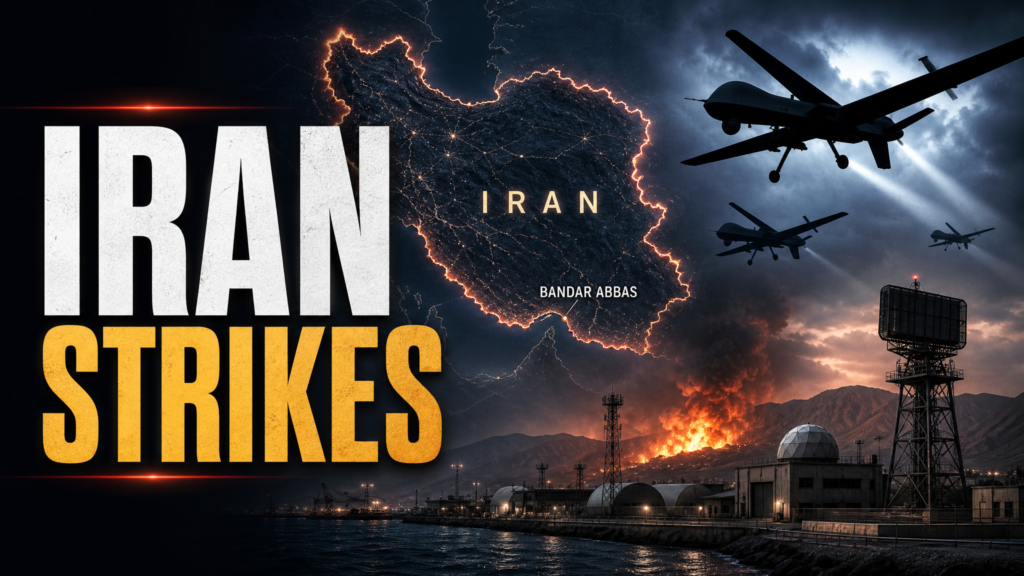
This week’s reports out of the Middle East were not routine battlefield updates. Reuters, AP, and the BBC all reported that U.S. forces carried out new actions tied to Iran: strikes on missile sites and boats said to be laying mines, the downing of Iranian drones, and a strike on a ground control station in Bandar Abbas that officials said was preparing to launch another drone. Washington says these were defensive moves. Tehran says they were a ceasefire violation. That gap is not a talking point. It is the story. Reuters Reuters AP News
Support Independent Local Journalism
TheTownHall.News is a non-profit reader-supported journalism. Just $5 helps us hire local reporters, investigate important issues, and hold public officials accountable across Alameda County. If you believe our community deserves strong, independent journalism, please consider donating $5 today to support our work.The deeper concern is not whether Iran poses real threats. The reporting strongly suggests it does. The deeper concern is whether “limited” action is becoming a substitute for a clear public strategy. A self-governing republic should not drift into higher-risk confrontation by increments while citizens are told only that the latest move was necessary, restrained, and temporary. Reuters BBC News
Key Takeaway
- The U.S. says the latest strikes were defensive, but Iran says they violated the ceasefire.
- Shipping risks in the Strait of Hormuz mean this is not a distant problem; it can hit energy and consumer prices quickly.
- Americans can support deterrence and still demand a defined objective, a clear threshold, and accountability.
Why the Strait of Hormuz Matters Now
This is not just another overseas flashpoint. It sits on one of the world’s most sensitive trade arteries. Reuters reported that about one-fifth of global trade in oil and liquefied natural gas usually moves through the Strait of Hormuz, and that traffic has already fallen sharply since the war began. When that chokepoint becomes unstable, the consequences do not stay in the Gulf. They move into fuel prices, shipping costs, fertilizer markets, grocery bills, and household budgets. Reuters
That is why the administration’s language matters so much. If the mission is narrow force protection, the public should hear what success looks like and what would trigger de-escalation. If the real mission is broader maritime coercion, nuclear pressure, or regional deterrence, Americans should hear that plainly too. Free people can handle hard truths. What they should not accept is strategic fog wrapped in reassuring adjectives.

A ceasefire is not a strategy if Washington keeps defining “defensive” one strike at a time.
“The first duty of a government is clarity when it asks its citizens to absorb more risk.”
What Happened This Week — And Why It Raised the Stakes
The reporting is remarkably consistent on the core events. Reuters said U.S. forces struck boats allegedly trying to lay mines and missile launch sites in southern Iran. AP then reported that U.S. Central Command forces also shot down four Iranian one-way attack drones and struck a ground control station in Bandar Abbas that was about to launch a fifth. The BBC reported the strikes targeted an area near Bandar Abbas and quoted U.S. officials describing them as self-defense. Reuters AP News BBC News
At the same time, diplomacy has not collapsed. Secretary of State Marco Rubio said a deal was still possible, though not imminent, and Reuters reported that talks involving Iranian officials and Qatari mediation were continuing over a framework tied to the Strait of Hormuz and later nuclear negotiations. Yet Iran’s foreign ministry called the new U.S. strikes a “gross violation” of the ceasefire, and the Revolutionary Guards said they reserved the right to retaliate. In other words, the negotiating table and the escalatory ladder are active at the same time. That is a formula for miscalculation, not confidence. Reuters BBC News
Americans can support the troops and still demand a clear mission, a legal rationale, and an exit plan.
The Number That Should Alarm Every Taxpayer
$100 a barrel. That’s where Brent crude traded after the latest strikes. [Reuters reporting] Reuters
Support Independent Local Journalism
TheTownHall.News is a non-profit reader-supported journalism. Just $5 helps us hire local reporters, investigate important issues, and hold public officials accountable across Alameda County. If you believe our community deserves strong, independent journalism, please consider donating $5 today to support our work.That number is not a cable-news prop. It is a warning. Every escalation near the Strait of Hormuz increases the odds that ordinary families will pay more for energy, goods, and food. A foreign-policy crisis becomes a kitchen-table crisis faster than most Washington strategists admit. Fiscal accountability is not only about Pentagon line items. It is also about the silent tax of instability imposed on workers, commuters, small businesses, truckers, and parents trying to balance a monthly budget.
And there is a civic point here too. Law and order abroad does not mean permanent improvisation at home. If U.S. forces must act, the public deserves transparent benchmarks: What is being protected, for how long, and at what acceptable risk? Limited government is not isolationism. It is the discipline of defining a mission before events define it for you.
If the Strait of Hormuz tightens further, working families will feel it long before Washington does.
What Supporters of This Policy Argue
Supporters of the current approach make a serious case. They argue that the U.S. cannot allow Iran to threaten shipping lanes, lay mines near a strategic waterway, or launch drones that endanger American forces and regional traffic. They also argue that measured strikes can preserve deterrence while diplomats pursue a broader deal. The reporting backs up part of that case: U.S. officials described the targets as imminent threats, and Rubio has said the strait must remain open “one way or the other.” Reuters AP News
But here is the flaw: deterrence without clarity can become escalation without consent. The administration may be right that some action was necessary. That does not answer the larger question of how many “necessary” actions it will take before the country is in something much bigger than advertised. Iran is already calling the strikes ceasefire violations. Reuters reports talks are continuing, but both Reuters and the BBC also suggest no final agreement is imminent. A policy can be tactically understandable and still strategically underexplained. Reuters BBC News
How This Affects Families, Communities, and Civic Trust
Most Americans will never see Bandar Abbas, but they will live with the consequences of decisions made around it. If energy prices rise, transportation costs rise. If shipping slows, shelves get pricier. If a fragile ceasefire breaks apart entirely, markets react first and voters learn the full stakes later. That is one reason public trust erodes: citizens sense that the real costs arrive before the real explanations do. Reuters
There is also a moral responsibility to the troops and their families. Sending Americans into higher-risk conditions without a plainly stated end state is not seriousness; it is avoidance. Personal responsibility applies to government too. Officials should tell the public what objectives are worth risking escalation for, what lines cannot be crossed, and what off-ramp still exists if diplomacy succeeds. That is not weakness. It is leadership.
Share this if you believe the country is strong enough to demand both deterrence and accountability.
What Happens If Nothing Changes
If the current pattern continues, Washington will keep describing each new action as narrow and necessary while the cumulative picture grows broader and more dangerous. Iran will keep testing limits. Markets will keep pricing in instability. Diplomats will keep negotiating under the shadow of events they do not fully control. And the American public will keep getting episodic explanations instead of a coherent doctrine. Reuters Reuters
This is where traditional civic values matter. A serious nation tells the truth about risk. It protects commerce without pretending markets are irrelevant. It supports peace talks without pretending force carries no escalatory logic. And it remembers that free citizens are not spectators. They are owed clarity before the next step, not after the fallout.
Conclusion
The latest U.S. strikes in Iran may prove justified on narrow tactical grounds. But tactical justification is not the same thing as strategic accountability. When ceasefire claims are disputed, oil markets jump, and negotiations remain unsettled, the burden on American leaders is simple: define the objective, explain the limits, and tell the public what success actually means. Reuters Reuters BBC News
Stay informed. Share this article. Support independent journalism that asks uncomfortable questions before policy hardens into precedent. And if you want one concrete step, contact your representative this week and ask a simple question: What is the clearly defined U.S. objective in Iran right now?
A republic drifts into danger when its leaders stop speaking plainly.
Related Video: US strikes Iran targets for second time in three days | BBC News