Blue Angels Flight Suit Contract Doubles — Where Did Oversight Go?
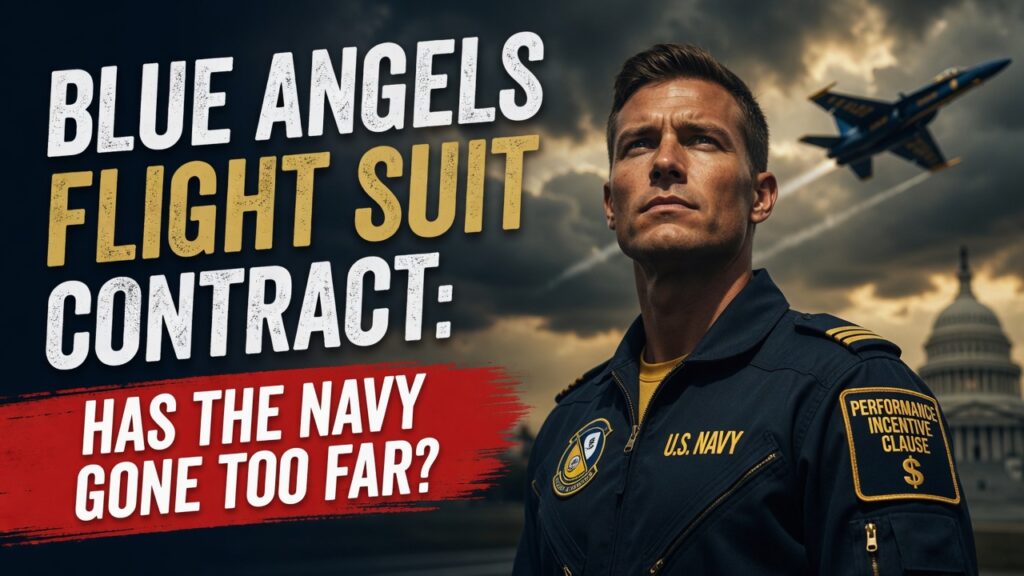
As the Navy quietly ends a 43-year relationship with a small Pensacola tailor, millions of taxpayer dollars are moving to a Virginia contractor few had heard of before this year — and no one at the Pentagon is explaining why.
A single phone call never came. That’s the detail at the center of a Navy contracting decision now raising real questions.
For 43 years, The Sewing Box, a small tailoring shop near Naval Air Station Pensacola, made every ceremonial flight suit worn by the Blue Angels. This year, without warning, that ended. The Navy awarded a new five-year, $1.69 million contract to Aquila International LLC of Dulles, Virginia — more than double what the Pensacola shop earned from the Blues since 2008, according to USAspending.gov data. For a program built on precision, transparency should not be optional.
Support Independent Local Journalism
TheTownHall.News is a non-profit reader-supported journalism. Just $5 helps us hire local reporters, investigate important issues, and hold public officials accountable across Alameda County. If you believe our community deserves strong, independent journalism, please consider donating $5 today to support our work.Who Actually Made This Decision?
The contract was awarded May 14 by Naval Supply Systems Command’s Fleet Logistics Center in San Diego, according to details posted on SAM.gov, the federal government’s official contracting portal. It is structured as a Firm-Fixed-Price, Indefinite Delivery, Indefinite Quantity agreement — standard language for a five-year deal covering construction, alteration, and repair of the Blue Angels’ custom flight suits.
On paper, that’s a routine procurement action. In practice, it ended a relationship that predates most of the pilots currently flying in formation. Candy Whitehurst, owner of The Sewing Box, says Navy personnel had always reached out personally when it was time to rebid the contract. This year, she says, nobody called.
“I would have never ever thought that my Blues would treat me like this,” Whitehurst told local ABC affiliate WEAR-TV. “Not in a million years.”
Where Did the Extra Money Go?
$1.69 million. The question no one at NAVSUP has answered yet: why did the cost of this contract more than double overnight?

The Sewing Box earned roughly $700,000 total from the Blue Angels account since 2008 — spread across seventeen years of steady, reliable work [USAspending.gov data]. Aquila International’s new deal is worth nearly $1.7 million over just five years. That is a significant jump in taxpayer cost for what is, functionally, the same scope of work: custom-fitted, flame-resistant ceremonial uniforms for a demonstration squadron.
Government contracts can legitimately increase in cost for many reasons — inflation, expanded scope, new compliance requirements. But when a program more than doubles in price while switching to an out-of-state vendor with a shorter public track record on this specific product, taxpayers deserve a clear explanation. So far, they haven’t gotten one.
What Happened to the Ownership Question?
Here’s where the story gets more complicated — and more interesting for anyone who cares about how the federal government actually spends money. Back in 2018, the Navy sought a sole-source contract specifically with The Sewing Box. The justification at the time was direct: the shop owned the design and pattern for the flight suits, and the Blue Angels could not simply take that design to another vendor.
If the government said in writing that only one shop could legally make these suits, what changed? That’s not a rhetorical flourish — it’s a documented contradiction the Navy has not yet addressed. WEAR-TV and other outlets have asked the Navy directly about who now owns the flight suit design and why production shifted to Virginia. As of this reporting, the Navy has not responded.
This is the kind of unanswered question that should concern anyone who believes government contracts ought to be awarded on clear, consistent, and publicly defensible terms — not on processes that quietly change without explanation.
Support Independent Local Journalism
TheTownHall.News is a non-profit reader-supported journalism. Just $5 helps us hire local reporters, investigate important issues, and hold public officials accountable across Alameda County. If you believe our community deserves strong, independent journalism, please consider donating $5 today to support our work.Who Is the New Contractor?
Aquila International is not entirely unknown to the Blue Angels. Todd Kelsey, the company’s principal, told WEAR News his firm has supplied the squadron with flight gloves, compression garments, and physical training gear since 2024. He says Aquila plans to manufacture the suits domestically and remains open to hiring local Pensacola-area businesses as subcontractors.
That’s a reasonable, good-faith response from a company that won a legitimate federal bid. Nothing here suggests Aquila did anything improper. The concern isn’t who won — it’s how the process worked, and why a 43-year local partner was cut out without so much as a phone call.
Is This the End of Small Business Access to Military Contracts?
This case fits a pattern worth watching. Small, specialized vendors — often the only ones with decades of institutional knowledge about a niche military product — can be quietly displaced when large contracts consolidate under bigger firms with more resources to navigate federal bidding processes. That’s not automatically wrong. Competition and cost discipline matter. But it should never come at the expense of basic transparency.
A 43-year relationship ended with silence instead of a phone call — is that how the federal government should treat the small businesses that serve it? When a shop that helped build the Blue Angels’ public image for four decades loses that work without a clear, public rationale, it’s fair to ask whether the bidding process protected taxpayers or simply protected itself from scrutiny.
What Do Supporters of This Decision Actually Believe?
Supporters of the Navy’s move make a reasonable argument: federal contracts should go through competitive bidding, and no vendor — regardless of history — is entitled to indefinite renewal. They’d point out that Aquila International already had an established relationship supplying other flight gear to the squadron, and that consolidating vendors can streamline logistics and improve accountability across a supply chain.
That argument has real merit. Competitive bidding exists precisely to prevent cozy, unchallenged relationships between government agencies and favored contractors. If Aquila submitted a stronger bid through a fair process, the Navy was right to consider it.
The problem isn’t competition — it’s the absence of explanation. A fair bidding process doesn’t require silence about the outcome. The Navy can defend this decision by simply answering the design-ownership question and clarifying why standard notification practices weren’t followed this year. Until it does, the fairness of the process remains an open question rather than a settled fact.
Why Does This Matter Beyond One Pensacola Shop?
This story is small in dollar terms next to the broader defense budget, but it’s a useful test case. It shows how quickly a federal contract can shift, how little explanation the public sometimes receives, and how a business that spent four decades building trust with a public institution can be replaced almost overnight.
“I would have never ever thought that my Blues would treat me like this. Not in a million years.”
Taxpayers fund the Blue Angels’ entire operation, from fuel to flight suits. That funding comes with an expectation: that contracting decisions, even small ones, follow a process the public can actually see and understand.
Key Questions This Story Raises
- Why did NAVSUP not follow its usual practice of notifying The Sewing Box before the bidding period closed?
- Who currently owns the flight suit design the Navy said in 2018 only The Sewing Box could legally produce?
- Why did the contract value more than double compared to the previous seventeen years of spending?
The Bottom Line
The Navy is entitled to change contractors. What it isn’t entitled to is silence. A 43-year business relationship ended this year without a phone call, without a public explanation, and without answers to a direct contradiction in the Navy’s own past justifications. That’s not a scandal by itself — but it is a legitimate accountability question, and it deserves a real answer.
So who is actually accountable here — the contracting officers who ran this bid, or the public affairs office that still hasn’t responded? The real question isn’t whether this contract was legal. It’s whether the process behind it can survive being explained in public.
Still have questions about how your tax dollars are being spent on federal contracts? Stay informed — subscribe for daily accountability coverage. Think others need to see this story? Share the article. Want your voice to count? Contact your representative on the House or Senate Armed Services Committee and ask them to request a public accounting of this contract’s bidding process