Houthi Pipeline Attack: Oil Prices Surge Past $100 a Barrel
As Yemen’s Houthi rebels tighten their grip on the Red Sea and a mysterious drone strike knocks out Saudi Arabia’s key oil pipeline, Americans are left asking a simple question: who is actually watching out for what happens at the pump?
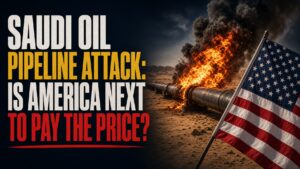
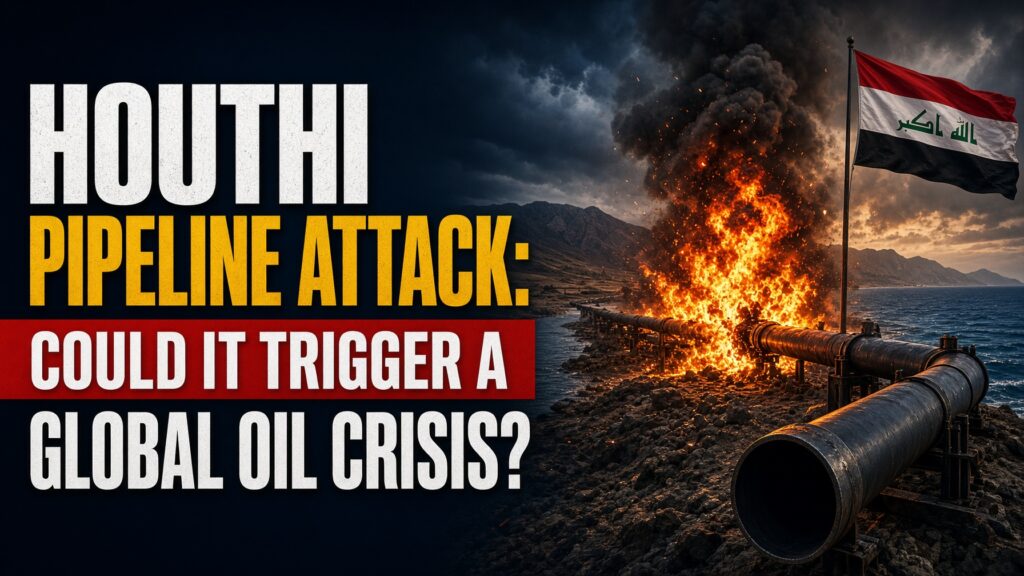
One pipeline attack just rattled global oil markets overnight. On September 10, drone strikes hit Saudi Arabia’s East-West Crude Oil Pipeline, the kingdom’s main artery for moving oil to the Red Sea without passing through the Strait of Hormuz — and within days, Brent crude closed above $100 a barrel for the first time since May [Reuters, CNBC].
The timing could not be worse. The strike landed in the middle of an already-escalating regional war, with Iran-aligned Houthi rebels in Yemen seizing strategic territory along the Bab el-Mandeb Strait and striking Saudi cities directly. For a White House and Congress that have spent months debating how deep America’s involvement in the Middle East should go, this is the moment the abstract debate turns into a number on a gas station sign.
Support Independent Local Journalism
TheTownHall.News is a non-profit reader-supported journalism. Just $5 helps us hire local reporters, investigate important issues, and hold public officials accountable across Alameda County. If you believe our community deserves strong, independent journalism, please consider donating $5 today to support our work.What Actually Happened This Week?
The escalation did not begin with the pipeline. On September 8, Houthi missiles and drones struck Abha Airport, an Aramco fuel terminal in Abha, King Khalid Air Base in Khamis Mushait, the Jizan oil refinery, and a fuel terminal in Najran, wounding 73 people, including children [Saudi state media, Associated Press]. Days later, on September 10 and 11, drone attacks traced to groups operating inside Iraq struck the East-West pipeline in Riyadh and Medina provinces, forcing Saudi Aramco to shut the line down as fires broke out at pumping stations [Saudi Ministry of Energy, satellite imagery].
By September 13, the Houthis had seized the Yemeni port city of Mokha along with Perim Island and the Hanish and Zuqar islands, consolidating control over the Bab el-Mandeb Strait — one of the world’s most important oil and shipping chokepoints [Foreign Policy]. A separate strike that same day wounded two more civilians and damaged a mosque in Saudi Arabia’s Jazan region [Saudi Civil Defence].
Why Should Americans Care About a Pipeline Half a World Away?
Because the oil market does not respect borders, and neither does your grocery bill. The East-West pipeline normally moves up to seven million barrels of crude a day from Saudi Arabia’s eastern fields to its Red Sea export terminal — a route built specifically to bypass the Strait of Hormuz [industry data, CNN Business]. With that route shut and the Houthis blockading Saudi shipping through Bab el-Mandeb, two of the region’s main relief valves are closing at once.
$105. That’s where Brent crude settled this week for the first time since May — and the question no one in Washington has answered is how much of that lands on your receipt at the pump.

Analysts warn the market could lose 120 million barrels of supply if the pipeline stays down for a month [Kpler]. Oil prices have already climbed roughly 80 percent this year amid the broader U.S.-Iran conflict, a trend that shows up directly in diesel costs, shipping rates, and the price of goods trucked to store shelves [market reporting].
Who Is Actually Behind the Attacks?
The Houthis have openly claimed the strikes on Saudi cities. The pipeline attack is murkier — no group has claimed it, but President Trump has pointed to Iran-backed militias operating inside Iraq, an accusation Iran’s foreign ministry has flatly denied [wire reporting]. If nobody will even claim credit for an attack that just moved the price of oil worldwide, how is anyone supposed to hold the responsible party accountable?
That ambiguity matters. A war fought through unclaimed drone strikes and deniable proxies is a war where accountability becomes nearly impossible to enforce.
Is the Bab el-Mandeb Chokepoint Now a Weapon?
It increasingly looks that way. The Houthis have reportedly barred Saudi vessels from Bab el-Mandeb entirely, describing it as an economic blockade [diplomatic sourcing, Jerusalem Post]. Ship-tracking data has already shown steep declines in traffic through the strait as tankers reroute or turn back rather than risk the passage [maritime intelligence firms].
Is a group with no navy and no air force now able to shut down one of the world’s most important shipping lanes on command?
That is not a rhetorical exaggeration. Bab el-Mandeb connects the Red Sea to the Gulf of Aden and, from there, to the Suez Canal — a route that carries a meaningful share of the world’s seaborne trade, not just Saudi oil.
Support Independent Local Journalism
TheTownHall.News is a non-profit reader-supported journalism. Just $5 helps us hire local reporters, investigate important issues, and hold public officials accountable across Alameda County. If you believe our community deserves strong, independent journalism, please consider donating $5 today to support our work.Has Washington’s Response Kept Pace With the Threat?
So far, the public response has been cautious. Saudi Arabia’s Crown Prince reportedly phoned President Trump directly to request military support, but American assistance has been limited to intelligence sharing rather than any combat commitment [diplomatic reporting]. Separately, a planned diplomatic meeting between Iran and Gulf Arab states in Oman was abruptly postponed after the pipeline attack, with Oman’s foreign minister citing a need for regional consensus [official statement].
Reports also indicate the U.S. has discussed facilitating Israeli intelligence-sharing with Saudi Arabia on Houthi military movements, mediated through U.S. Central Command [regional press reporting]. That cooperation may well be justified on the merits. But when American involvement in a foreign war expands — even in an intelligence-only capacity — the public deserves to know before it becomes a fact on the ground rather than after.
What Do Advocates of Staying Out of Middle East Wars Actually Believe?
This is a fair argument, and it deserves a real answer rather than a dismissal. Non-interventionists point out that decades of American entanglement in Middle Eastern conflicts have produced enormous costs without lasting resolution, and that “limited” intelligence-sharing arrangements have a well-documented history of quietly expanding into deeper commitments over time. They’re right to demand that any American role be openly justified, not assumed.
That caution is reasonable, but it is not the same as the case for doing nothing. Keeping a global oil chokepoint open is a direct American economic interest, given how quickly disruptions there show up in gas prices at home. The responsible position isn’t reflexive escalation or reflexive withdrawal; it’s insisting that whatever the administration does gets debated in the open, with Congress informed, rather than confirmed only after journalists report it.
Key Questions This Story Raises:
- Who is actually behind the drone attack on the East-West pipeline, and why has no group claimed responsibility for an attack with this much economic impact?
- How much of the Red Sea effectively closing to Saudi shipping will ultimately show up in the price Americans pay at the pump this winter?
- If the U.S. is quietly deepening military and intelligence cooperation with Saudi Arabia, shouldn’t Congress and the public be informed before it becomes an established fact rather than after?
Where Does This Leave American Consumers and Taxpayers?
Nobody in Washington set out to shut down a Saudi pipeline or hand a militia control of a global shipping lane. But the consequences of both are now landing on American consumers regardless of who intended what. Oil prices don’t ask permission before they rise — and right now, they’re rising faster than anyone in Washington seems willing to explain.
The deeper story isn’t really about one pipeline or one strait. It’s about whether the United States has a coherent, publicly accountable strategy for a region that keeps demonstrating how directly its instability reaches American wallets. Quiet intelligence arrangements and postponed diplomatic meetings are not a strategy — they’re a reaction.
So is this the moment Washington finally levels with the public about America’s stake in a war most Americans didn’t choose, or just another Middle East flashpoint that fades from headlines once oil prices stabilize? The real question isn’t whether a pipeline in Saudi Arabia matters to you — it’s whether anyone in Washington will tell you the truth about why, before you find out for yourself at the pump.
Still have questions about where this crisis is headed? Stay informed — subscribe for daily coverage of the policies and conflicts shaping your wallet. Think your neighbors need to see this? Share the article. Want your voice to count? Contact your member of Congress and ask whether the administration should be required to formally notify Congress before expanding any military or intelligence cooperation tied to this conflict.