James Comey Indictment: Case Status, Charges, and Trial Date Explained
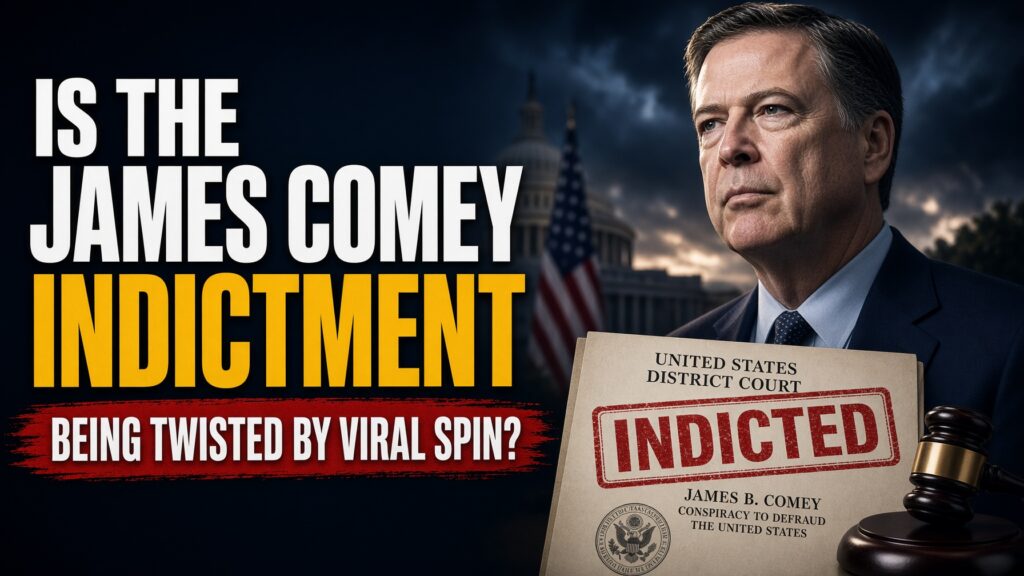
As the case against former FBI Director James Comey heads toward an October trial, a viral claim that he has already been convicted is spreading online — and it is not true. The real story is more complicated, and more important, than either side’s social media version of it.
A viral post claimed Comey had already been convicted. He has not.
That fabrication matters right now because Comey faces two separate federal cases, one collapsed on a technicality and under appeal, the other headed to trial on October 21, 2026. Getting the facts wrong does not serve accountability. It undermines it.
What Did the Viral Post Actually Claim?
A Republican congressional candidate posted a clip of FBI Director Kash Patel captioned “Kash Patel CONFIRMS felony convictions against James Comey,” calling it “MASSIVE for accountability.” The post spread quickly across X before fact-checkers stepped in. X’s own Community Notes system corrected the record within hours, clarifying that Patel had announced a grand jury indictment, not a conviction. Those are not interchangeable terms. An indictment means a grand jury found enough evidence to bring charges. A conviction means a jury found guilt beyond a reasonable doubt after a trial. Comey has pleaded not guilty in both cases, and neither has reached a jury verdict.
Support Independent Local Journalism
TheTownHall.News is a non-profit reader-supported journalism. Just $5 helps us hire local reporters, investigate important issues, and hold public officials accountable across Alameda County. If you believe our community deserves strong, independent journalism, please consider donating $5 today to support our work.What Did Kash Patel Actually Say?
At an April 28, 2026, press conference, Patel appeared alongside Acting Attorney General Todd Blanche and the U.S. Attorney for the Eastern District of North Carolina to announce that Comey had been indicted on two felony counts. Patel told reporters the investigation had taken nearly a year, describing career agents who “call the balls and strikes in the field” based on the facts and the law. He said the grand jury reviewed that evidence and returned a two-count indictment. Nowhere in that statement did Patel claim Comey had been convicted. The viral clip took an accurate announcement and slapped an inaccurate label on it — exactly the distortion that erodes trust in real reporting.
If a former FBI director really had been convicted of a felony, wouldn’t that be the biggest legal story of the year — not a rumor spread through a screenshot?
What Are the Actual Charges Against Comey?
Comey faces two distinct prosecutions, and conflating them has fueled much of the confusion. The first, filed in the Eastern District of Virginia in September 2025, charged Comey with making a false statement to Congress and obstructing a Senate Judiciary Committee proceeding tied to his 2020 testimony about FBI leaks. The second, filed in the Eastern District of North Carolina in April 2026, charged Comey with making a threat against the president after he posted a photo of seashells spelling “86 47” on a beach, which prosecutors call a coded threat. Comey’s attorneys counter that “86” is common slang for dismissal and carries no violent meaning in ordinary usage.
Why Was the First Case Dismissed?
The Virginia case did not collapse because a jury found Comey not guilty. It was dismissed in November 2025 after a federal judge ruled that Lindsey Halligan, the prosecutor who signed the indictment, had been unlawfully appointed. That is a procedural defect, not a verdict on the underlying allegations. The Department of Justice appealed in December 2025, and the case now sits before the Fourth Circuit Court of Appeals awaiting a ruling [court filings, Eastern District of Virginia docket].

Where Does the Second Case Stand Now?
The seashell case is further along and headed for a courtroom. After an initial trial date was pushed back, U.S. District Judge Louise Wood Flanagan set jury selection to begin October 21, 2026. Comey’s legal team has filed a motion to dismiss, arguing the post cannot meet the legal definition of a “true threat” under the First Amendment. Prosecutors maintain it was a serious expression of intent to harm the president. Either way, this case — unlike the Virginia matter — is on track to be tested in front of a jury this fall.
Two grand juries, two indictments, zero convictions — so why are so many people online already certain how this ends?
Is it accountability when the process actually plays out in court — or only when the outcome matches what you already believed?
Why Are So Many Americans Confused About the Facts?
Part of the answer is structural. Two cases, filed in two states, on two legal theories, create genuine confusion even for careful readers. Part of the answer is incentive. Viral posts that overstate a legal outcome generate more engagement than accurate but modest updates like “an appeals court is reviewing a dismissal.” Outlets chasing shares have every incentive to round up, not down. That dynamic cuts in every political direction, and it is exactly why sourcing discipline matters more, not less, on a high-profile prosecution.
Zero. That is the number of felony convictions James Comey currently has. The question worth asking is why that fact took a Community Notes correction to reach millions of readers instead of the original reporting.
What Do Supporters of This Prosecution Actually Believe?
Supporters of the Comey prosecutions make a specific argument worth engaging honestly. They believe a former FBI director who testified before Congress and later posted what they read as a coded threat against a sitting president should face the same legal process as any other citizen, not special deference. They point out that career prosecutors and agents, not political appointees alone, presented evidence to grand juries in two separate districts, and both found probable cause to indict. From that view, the Virginia dismissal is a process failure to be corrected on appeal, not evidence the underlying conduct was innocent.
Support Independent Local Journalism
TheTownHall.News is a non-profit reader-supported journalism. Just $5 helps us hire local reporters, investigate important issues, and hold public officials accountable across Alameda County. If you believe our community deserves strong, independent journalism, please consider donating $5 today to support our work.That argument deserves a fair hearing, but it should be held to the same standard applied to Comey’s defenders: an indictment is not proof of guilt, and a dismissal on procedural grounds is not proof of innocence. The Fourth Circuit’s ruling, and the October jury in North Carolina, will settle these cases. Press conferences and viral clips will not.
Key Questions This Story Raises
- Will the Fourth Circuit revive the Virginia case, or is it dead for good on the appointment issue?
- Can prosecutors convince a jury in October that a seashell photo meets the legal bar for a “true threat”?
- How much viral misinformation about high-profile prosecutions goes uncorrected because platforms only sometimes catch it?
What Happens If the Public Stops Checking the Facts?
When a false claim about a felony conviction spreads faster than the correction, who actually loses — Comey, the public, or the credibility of accountability journalism itself? If readers on every side of the political spectrum start treating viral clips as verified fact, real accountability stories lose their power. The next legitimate indictment, the next real conviction, gets buried under a pile of prior false alarms nobody bothered to correct. That is not a partisan problem. It is a credibility problem, and it belongs to anyone who cares about holding powerful people to the same legal standard as everyone else.
The Real Question Readers Are Left With
Comey has not been convicted of anything. He has been indicted twice, watched one case collapse on a technicality now under appeal, and is headed toward an actual jury in October. The question this story leaves behind is not whether Comey is guilty or innocent — a jury will eventually decide that. It is whether readers are willing to wait for the court to answer that question, or whether they will keep sharing whatever version arrives first. The real question isn’t whether the system will eventually deliver an answer — it’s whether anyone will still be listening when it does.
What do you think — should news outlets be held accountable for spreading unverified legal claims, or is this just the cost of a fast-moving news cycle? Share this article and let us know.
Still have questions about how this case unfolds? Stay informed — subscribe for daily coverage. Think others need to see the facts before they share the next viral clip? Share this article. Want to make your voice count? Contact your senators on the Judiciary Committee and ask whether they support full public release of court filings in both Comey cases as they proceed.