Judge Kimya Holmes House: The COVID-Fraud Gift Timeline Explained
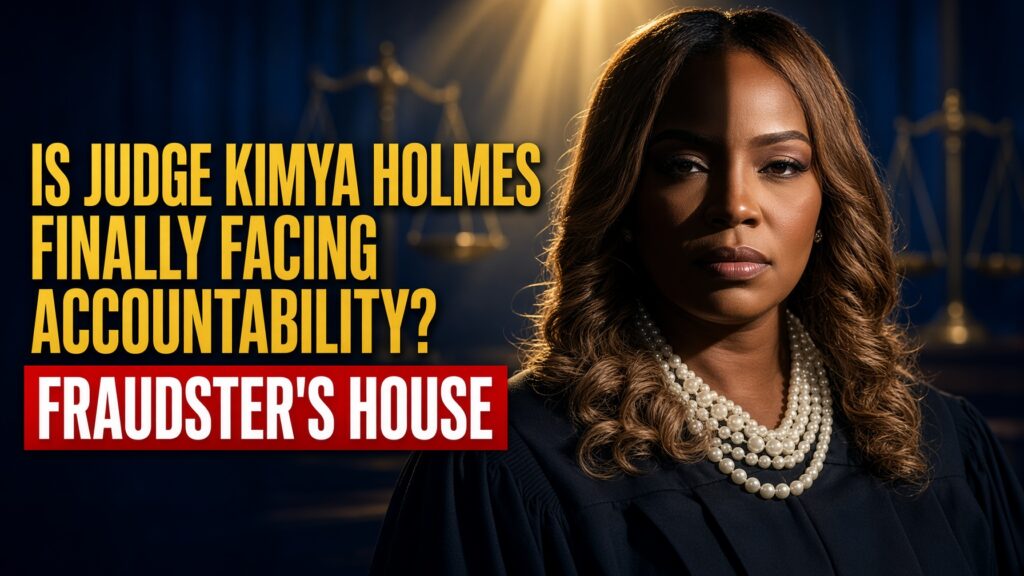
As a federal judge admits he felt “duped,” New Orleans voters are asking a harder question — did a sitting criminal court judge quietly benefit from the same kind of fraud she’s sworn to punish?
A convicted fraudster gave a sitting judge a $765,000 house. That single fact should stop anyone in their tracks.
The timing matters more than the price tag. Accountant Arthur Allen was charged in December 2025 with fraudulently collecting more than $712,000 in pandemic-relief funds through a Paycheck Protection Program loan. Within weeks of that charge, records show he finished handing full ownership of a home in the gated English Turn community to his then-fiancée, Orleans Parish Criminal Court Judge Kimya Holmes — a judge now asking the same voters he defrauded to reelect her.
Support Independent Local Journalism
TheTownHall.News is a non-profit reader-supported journalism. Just $5 helps us hire local reporters, investigate important issues, and hold public officials accountable across Alameda County. If you believe our community deserves strong, independent journalism, please consider donating $5 today to support our work.What Do the Property Records Actually Show?
Public land records lay out a timeline that speaks for itself. Allen bought the 4,400-square-foot English Turn home on November 24, taking out a $726,750 mortgage in his own name, and transferred a 50 percent ownership interest to Holmes that same day [Orleans Parish land records]. He donated his remaining half of the property to her on January 9 — less than a month after he was charged with lying to the Small Business Administration to collect a forgivable COVID-relief loan.
The deed of donation itself states the plainest possible motive: Allen gave Holmes the property “in consideration of the love and affection he has for Kimya M. Holmes and to improve her financial condition.” A man facing federal fraud charges handed a sitting criminal court judge a $765,000 house — and called it a gift of love. Whatever the personal relationship, the paper trail is now a matter of public record, not private business.
Why Does This Matter for a Sitting Judge?
Judges are the institution voters trust to hold fraudsters accountable. Holmes presides over criminal cases in Orleans Parish and has built her reelection campaign in part on her trial record, reporting more felony jury trials than any judge in Louisiana in 2024 and 2025 [court records cited in reporting]. That record is real. It also raises the obvious question: does accepting a fraud defendant’s house complicate the independence the public expects from the bench, even absent any criminal wrongdoing by the judge herself?
Is it really “nothing to be ashamed of” when the timeline of the gift lines up almost exactly with the timeline of the fraud charge? Holmes has said publicly that she has “nothing to hide or be ashamed of,” and no reporting has accused her of participating in, knowing about, or benefiting financially from Allen’s crime itself. But personal responsibility in public office isn’t only about criminal liability — it’s about judgment, and judgment is exactly what voters are being asked to evaluate in November.

What Does Holmes Say Happened?
Holmes’s own account complicates the picture rather than simplifying it. She says she didn’t begin dating or become engaged to Allen until 2025 — roughly four years after his fraudulent PPP loan was obtained — and that she didn’t learn about the federal charges against him until he pleaded guilty in April 2026. By then, she says, the couple had already broken up, around Mardi Gras 2026.
That defense depends entirely on trust in the timeline she’s presented. Public records, photographs, and social media posts reviewed by WWL Louisiana reportedly show Holmes remained connected to Allen well after the date she says the relationship ended — including after she formally qualified for reelection in August [WWL Louisiana investigative reporting]. Two things can be true here: her legal exposure may be zero, and the political question of what she knew, and when, can still be entirely unresolved.
Who Is Actually Paying for This Mortgage?
This is where the story stops being about romance and starts being about accountability. The $726,750 mortgage on the English Turn house remains in Allen’s name in public land records, even though Holmes now owns the property outright. Holmes has said in a statement that she has agreed to “gradually take on” the mortgage and full financial responsibility for the home, with Allen’s obligations ending November 1.
712,212 dollars. That’s the amount of taxpayer-funded pandemic relief Allen admitted to fraudulently obtaining — the question no one has fully answered is why a judge accepted a $765,000 property from the man who took it [federal court records]. A gradual transfer of mortgage responsibility doesn’t erase the fact that, for months, a sitting judge lived in a house financed by debt tied to a man under federal fraud investigation.
Did the Federal Judge Even Know?
Perhaps the most striking twist in this story has nothing to do with Holmes directly — it involves the federal judge who sentenced Allen. US District Judge Jay Zainey had reviewed more than a dozen letters of support for Allen and appeared ready to consider a lighter sentence. Then he saw WWL Louisiana’s investigation into the house transfer.
Support Independent Local Journalism
TheTownHall.News is a non-profit reader-supported journalism. Just $5 helps us hire local reporters, investigate important issues, and hold public officials accountable across Alameda County. If you believe our community deserves strong, independent journalism, please consider donating $5 today to support our work.“Quite candidly, sir, I feel duped.”
Zainey said those words directly to Allen at sentencing, according to court reporting, after pressing him repeatedly on why he transferred a $700,000-plus property to a sitting judge while criminal charges were pending against him [court transcript reporting]. Rather than granting leniency, Zainey sentenced Allen to two years in federal prison. If a federal judge can be “duped” by a defendant’s own hidden dealings, how many similar arrangements never make it into a news investigation at all?
Is This About One Judge, or a Bigger Pattern?
Zoom out, and the specifics of this case point to a broader accountability gap. Financial disclosure rules for elected judges vary widely by state, and Louisiana’s requirements did not surface this property transfer — a journalist’s investigation did. That is not a technical footnote. It’s the entire reason the public knows about this at all.
Nobody in Louisiana’s judicial ethics apparatus flagged this deal before a local news investigation did. That should trouble anyone who believes limited government works only when its watchdogs actually watch. A system that relies on reporters to catch what regulators miss is a system where accountability is optional, not built in.
What Do Supporters of Judge Holmes Actually Believe?
Holmes’s defenders make a case that deserves a fair hearing, not a dismissal. They argue that a judge’s romantic relationships are not automatically disqualifying, that Holmes has not been charged with any crime, and that punishing her politically for a partner’s hidden fraud risks holding public officials responsible for choices they didn’t make and couldn’t have known about. Her strong trial record, they note, is a matter of public record too.
That argument has real weight — nobody disputes that Holmes faces no criminal charges here. But the defense rests almost entirely on the claim that she didn’t know about the fraud until Allen’s guilty plea, and that the relationship had already ended by then. The gap between that claim and the continued public connections reporters found afterward is exactly what voters are entitled to weigh for themselves before Election Day, without assuming the most charitable version is automatically the correct one.
Key Questions This Story Raises:
- Why did Louisiana’s judicial ethics and financial disclosure rules fail to surface a $765,000 property transfer from a fraud defendant to a sitting judge?
- If a federal judge felt “duped” by Allen’s dealings, should Louisiana’s judicial oversight bodies open their own review of Holmes’s financial arrangements?
- Should elected judges face stricter, real-time disclosure requirements for gifts and property transfers from anyone connected to a pending criminal case?
Where Does This Leave Voters in November?
Holmes is now asking Orleans Parish voters to reelect her against another sitting judge, in a race that will unfold almost entirely in the shadow of this story. Her trial record is real. So is the timeline of a $765,000 house changing hands while federal fraud charges loomed over the man giving it away.
Nothing here proves criminal wrongdoing by Holmes. But limited government and law-and-order values don’t stop at criminal liability — they demand that public officials, especially judges, hold themselves to a standard higher than “technically not illegal.” Voters deserve a judge whose financial life invites confidence, not a paper trail that required a television investigation to unravel.
So is this the accountability moment Orleans Parish voters have been waiting for, or will this story fade the way so many local ones do once the news cycle moves on? The real question isn’t whether Judge Holmes broke the law — it’s whether the people she’s asking to trust her on the bench are willing to look past how she got her house.
Still have questions about where this case stands? Stay informed — subscribe for daily coverage of accountability and justice issues in Louisiana and beyond. Think your neighbors need to see this before Election Day? Share this article. Want your voice to count? Contact the Louisiana Judiciary Commission or your state legislator and ask what disclosure requirements exist for gifts and property transfers to sitting judges — most state ethics boards list public contact information for filing a complaint or inquiry.