Mission Barns Cultivated Meat: What’s Real and What’s Viral Hype
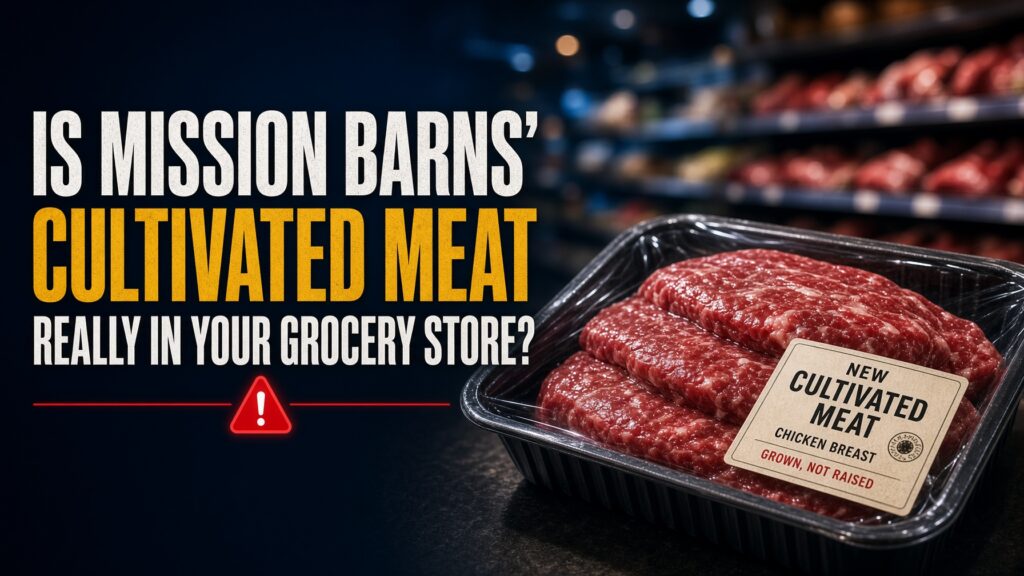
A viral post claims lab-grown bacon is quietly flooding supermarket shelves with no labeling at all. The real story is stranger — and it says more about misinformation than it does about meat.
One grocery chain just had to publicly deny a story about its own shelves. That alone should make you pause before sharing the next viral food scare.
The claim spreading online says a company called Mission Barns has launched a “mass-produced” cultivated pork product nationwide, packaged with no disclosure that it was grown in a bioreactor rather than on a farm. In August 2026, Sprouts Farmers Market felt compelled to issue a formal statement knocking the claim down. That gap between what’s viral and what’s verified is the real story here.
Support Independent Local Journalism
TheTownHall.News is a non-profit reader-supported journalism. Just $5 helps us hire local reporters, investigate important issues, and hold public officials accountable across Alameda County. If you believe our community deserves strong, independent journalism, please consider donating $5 today to support our work.What Did the FDA and USDA Actually Approve?
Mission Barns, a California-based cultivated meat startup, received an FDA “no questions” letter in March 2025 confirming its cultivated pork fat is as safe as comparable food ingredients [FDA regulatory letter]. The USDA followed in July 2025 with a grant of inspection for the company’s San Francisco pilot facility and formal sign-off on its product label [USDA approval, company disclosure].
That combination made Mission Barns the first company in the world to clear the full U.S. regulatory pathway for cultivated pork fat specifically, following earlier approvals for cultivated chicken from other firms in 2023. It is a genuine regulatory milestone. It is not the same thing as a national product launch, and conflating the two is where the viral version of this story goes wrong.
The company’s own products blend a small amount of cultivated pork fat, described as a single-digit percentage of the final recipe, with plant-based protein to build out meatballs and bacon [company disclosure]. That is a meaningfully different product than the “steel-tank-grown meat” framing suggests. It is closer to a hybrid ingredient strategy than a wholesale replacement for conventional pork, and understanding that distinction matters before deciding what you think about it.
Where Can You Actually Buy This Product?
Here is the entire retail footprint, as of the most recent reporting: one restaurant, Fiorella in San Francisco’s Sunset District, and one grocery store, Berkeley Bowl West in Berkeley, California [company and trade press reporting]. A regulatory approval covering the entire country has produced exactly two places to buy the product — does that sound like the “mass rollout” you saw online? Mission Barns has described its approach publicly as a series of deliberately “tactical, limited” launches meant to prove consumer demand, not blanket the market.

That distinction matters. A company testing a product at two locations in the Bay Area is a normal, cautious path to market. A company secretly flooding national supermarket shelves without your knowledge is a very different claim — and it is not what the evidence shows.
Why Is Sprouts Publicly Denying This Story?
This is where the viral post collapses under its own weight. Mission Barns announced Sprouts as a planned retail partner back in mid-2025. That partnership never materialized. Sprouts has since posted a direct statement on its own website: it does not sell lab-grown or cell-cultivated meat of any kind, and it explicitly flags that “there is information online that suggests otherwise, and it’s just not true” [Sprouts Farmers Market public statement].
A national grocery chain had to correct the record about products it never actually sold — that is what unchecked viral claims do to real companies. Whatever your view of cultivated meat as a product, a false claim about where it’s sold is not a minor detail. It is the entire basis for the “it’s already in your store” panic driving the post’s engagement.
Is the Labeling Claim True — Or Just Wrong on the Facts?
No. The claim that there is “no lab-grown label” and that the product is disguised as ordinary meat does not hold up against the public record. Mission Barns’ USDA-approved products are sold under the names “Cultivated Meatballs” and “Cultivated Bacon” — the word “cultivated” is in the product name itself, not buried in fine print [USDA label approval].
$0. That’s the amount of legal ambiguity in whether these products must disclose their cultivated origin — the actual question worth asking is whether “cultivated” communicates as clearly to shoppers as “lab-grown” would.
Support Independent Local Journalism
TheTownHall.News is a non-profit reader-supported journalism. Just $5 helps us hire local reporters, investigate important issues, and hold public officials accountable across Alameda County. If you believe our community deserves strong, independent journalism, please consider donating $5 today to support our work.That is a legitimate policy question, and one this outlet has covered before regarding lab-grown meat generally. It is a debate over which word regulators require, not an absence of disclosure. Collapsing “the label says cultivated instead of lab-grown” into “there is no label” is the kind of exaggeration that discredits a real transparency argument.
What Does the State-Level Pushback Actually Look Like?
While federal regulators cleared the path for cultivated meat, a growing number of states have gone the opposite direction. Florida, Alabama, Mississippi, Montana, Indiana, Nebraska, and Texas have all passed outright bans on selling cultivated meat within their borders [state legislative records]. Other states, including Iowa and Kansas, have taken narrower steps requiring additional label language rather than a full ban.
Should a state have the right to ban a federally approved food product outright, or only to demand clearer labels on it?
That patchwork reflects a genuine and unresolved federalism question — one this outlet has flagged before. It is a more substantive fight than a fabricated claim about secret supermarket sales, and it deserves more attention than it gets.
Lawmakers in several banning states have framed the issue as a matter of protecting conventional agriculture and giving consumers a clear, unambiguous choice at the meat counter, not a safety objection to the federal review itself. That is a distinct argument from claiming the product is unsafe or undisclosed, and conflating the two muddies a debate that states are actively having in good faith.
What Do Supporters of Cultivated Meat Actually Believe?
Supporters of products like Mission Barns’ make a specific, fact-based case worth engaging honestly. They argue the FDA and USDA review process is exactly the kind of rigorous, multi-agency vetting critics claim doesn’t exist for new food technology, and that cultivated fat could reduce dependence on conventional livestock supply chains vulnerable to disease outbreaks like avian flu.
That argument has real merit on the regulatory-process point. Two federal agencies did independently review this product before it reached a single customer. But a sound approval process does not excuse a company’s early, unfulfilled retail promises, and it does not settle whether “cultivated” is the clearest possible word for a shopper trying to make an informed choice. Both things can be true: the science was reviewed properly, and the public conversation around it is still a mess of exaggeration on multiple sides.
Key Questions This Story Raises:
- Why did a false claim about a national supermarket chain spread further and faster than the chain’s own correction?
- Should federal law require the word “lab-grown” specifically, rather than allowing “cultivated,” on approved product labels?
- With seven states now banning cultivated meat outright, is that federalism working as intended, or a patchwork that leaves consumers and companies guessing?
So is Mission Barns’ cultivated meat quietly taking over your grocery store, or is this a case study in how a kernel of real regulatory news gets inflated into something unrecognizable? The honest answer is the second one — and that distinction matters more than any single bacon strip. The real question isn’t whether cultivated meat belongs on shelves someday. It’s whether Americans can trust what they’re told about it before it gets there.
Still have questions about what’s actually in your food supply? Stay informed — subscribe for daily coverage of food policy and government accountability. Think others need to see how this claim fell apart? Share this article. Want your voice to count? Contact the FDA’s Center for Food Safety and Applied Nutrition through its public comment process and ask whether “cultivated” labeling meets the disclosure standard consumers deserve.