Shake Shack Pricing Controversy: What the Law Actually Says
As a viral kiosk video spreads across TikTok and Threads, millions of diners are asking a simple question: is the price on the screen ever the real price — and who is supposed to stop it from changing?
A milkshake order at a Shake Shack self-checkout just went viral for the wrong reason. The receipt changed after checkout, not before. That single detail is why consumer-protection lawyers, not just angry commenters, are paying attention. Federal regulators have spent the last two years cracking down on exactly this kind of last-second price movement, and the timing could not be worse for a brand already fighting a reputation for high prices.
What Happened at the Shake Shack Checkout?
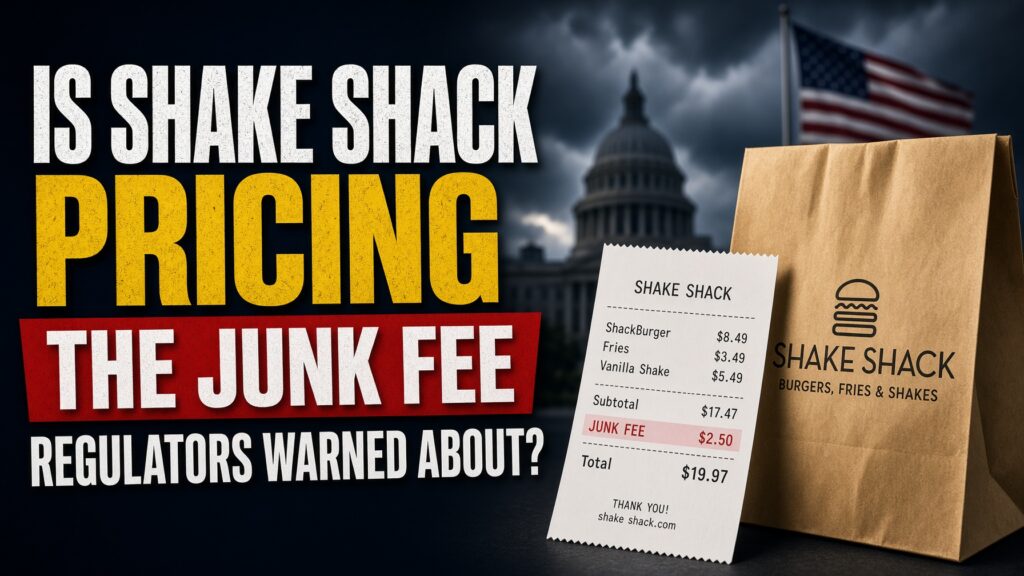
The video shows a Utah customer ordering three milkshakes at a self-service kiosk — two Classic Shakes at $5.99 each and a vanilla shake with whipped cream at $6.48, for an $18.46 subtotal [TikTok video, viral clip]. At checkout, the kiosk asked him to select a tip: 15%, 18%, 20%, or no tip. He chose no tip. A pop-up immediately read, “Uh Oh! There has been a pricing update on one or more of your cart items. Please review these changes in your cart” [TikTok video, viral clip]. Each shake was then listed 50 cents higher, pushing the total to $19.96.
Support Independent Local Journalism
TheTownHall.News is a non-profit reader-supported journalism. Just $5 helps us hire local reporters, investigate important issues, and hold public officials accountable across Alameda County. If you believe our community deserves strong, independent journalism, please consider donating $5 today to support our work.The clip has been viewed more than 1.3 million times with roughly 6,000 comments, most of them furious [social media engagement data, viral clip]. But here is the part responsible outlets have to say plainly: the video does not prove causation. It shows two events happening back-to-back, not a documented company policy. Software bugs that misfire on repricing logic are common enough that even software developers commenting on the video floated it as a real possibility. Shake Shack has not issued a public statement confirming, denying, or explaining the price change as of this writing.
Is This Actually Illegal?
Here the popular claim needs a correction. There is no federal law that makes it illegal, on its own, to charge more when a customer declines to tip [FindLaw legal analysis]. Tipping law in the United States is a patchwork of state rules and case-by-case court decisions, and outright bans on tip-linked pricing are not clearly established anywhere.
But “not illegal in that specific way” is not the same as “nothing to see here.” What regulators actually target is a different practice: showing a customer one price, then changing it after they have already committed to checkout, without clear upfront disclosure. That is the definition of “drip pricing,” and the Federal Trade Commission has said explicitly it will pursue drip pricing and misleading fees across industries — not just the live-event and short-term lodging sectors its 2024 rule directly covers [FTC, Rule on Unfair or Deceptive Fees]. Every state attorney general also retains authority under existing unfair-and-deceptive-practices statutes to act on exactly this kind of checkout surprise [state consumer protection law, multistate legal analysis]. California’s own hidden-fee ban, in effect since mid-2024, was built for this precise scenario: a displayed price that isn’t the real price [California Department of Justice, state law].
So the accurate headline isn’t “Shake Shack broke the law.” It’s that undisclosed, checkout-stage price changes — whatever triggers them — sit inside the exact conduct federal and state regulators have spent two years promising to punish.

Who Is Really Paying for Hidden Pricing Tricks?
If a business can change your total after you’ve already committed to buy, did you ever really agree to a price at all? That is the question driving the backlash, and it is a fair one regardless of what caused this specific pop-up.
Consumers have been trained by years of tip-prompt fatigue — screens at coffee shops, ice cream counters, and now burger kiosks asking for 15 to 20 percent gratuity on a transaction that involves no table service. Shake Shack’s own founder, Danny Meyer, said in a 2023 interview that customers should not feel obligated to tip on straightforward takeout transactions [CNBC interview, 2023]. A checkout screen that appears to financially penalize a customer for following that advice is the kind of contradiction that erodes trust fast, whether or not it was intentional.
Would you have paid the tip if you’d known the alternative was a higher menu price? For most customers, that question alone means the transaction was never transparent to begin with.
What Do the Numbers Actually Tell Us?
50 cents. That is the per-item price increase shown in the viral video — a jump of roughly 8 percent on a single milkshake, applied only after the tip prompt was answered [TikTok video, viral clip]. The question no pricing policy should leave unanswered: if that increase was already built into the cost of doing business, why wasn’t it on the price board before checkout began?
This is not an isolated industry complaint. Restaurants nationwide have leaned harder on service charges and dynamic checkout pricing over the past three years as labor costs have risen, and consumer complaints about “surprise” charges at checkout have climbed alongside them [restaurant industry service-charge reporting]. Shake Shack has also raised menu prices multiple times in recent years, tied publicly to rising minimum wages in the markets where it operates [company statements, prior reporting]. None of that is improper on its own. What draws regulatory attention is when the increase only appears after a consumer has already started the transaction.
What Do Supporters of This Policy Actually Believe?
Fairness requires engaging with the other side of this honestly: is it really so unreasonable for a business to ask for a tip, or to price in the cost of processing card payments?
Support Independent Local Journalism
TheTownHall.News is a non-profit reader-supported journalism. Just $5 helps us hire local reporters, investigate important issues, and hold public officials accountable across Alameda County. If you believe our community deserves strong, independent journalism, please consider donating $5 today to support our work.Defenders of dynamic checkout pricing make a real point. Credit card processing carries genuine fees, typically 2 to 3 percent per transaction, and businesses are legally allowed to offer a cash discount to offset that cost [payment processing industry standards]. Tipped compensation also remains a legitimate, if controversial, way to supplement wages in food service, and no one disputes a business’s right to ask customers for a gratuity. If Shake Shack’s system is simply reflecting real cost differences, transparently disclosed, that is a legitimate business practice, not a scandal.
The problem is the word “transparently.” A cash-versus-card discount, clearly posted, is lawful and common. A price that silently rises after a customer has already declined a tip prompt — with no advance signage explaining that link — is not the same thing. The fix supporters of fair pricing and critics of hidden fees should be able to agree on is simple: disclose the total price, and every condition that changes it, before checkout begins.
Key Questions This Story Raises:
- Was the Shake Shack price change tied to the tip selection, or was it an unrelated software glitch — and will the company say which?
- How many other checkout kiosks nationwide use pricing logic that changes after a customer begins checkout?
- Should federal drip-pricing enforcement extend beyond hotels and ticket sales to everyday retail and restaurant kiosks?
Has This Kind of Pricing Finally Gone Too Far?
The lingering question isn’t really about one milkshake order in Utah. It’s about whether the price you see is ever the price you’re guaranteed — and whether anyone in Washington or your state capitol is actually watching kiosk software closely enough to know when it isn’t.
Regulators have already signaled where they stand on hidden checkout price movement. What happens next depends on whether this single viral video turns into a documented pattern, or fades as an unexplained glitch. Either way, the burden now sits with Shake Shack to explain its own kiosk — not with customers to assume the worst or the best.
The real question isn’t whether one shake cost fifty cents more — it’s whether you can ever trust the number on the screen before you tap “no tip.”
Still have questions about how checkout pricing is regulated in your state? Stay informed — subscribe for daily accountability coverage. Think other diners need to see this? Share the article. Want your voice to count? Contact your state attorney general’s consumer protection division to report undisclosed checkout price changes — most states accept complaints online in under five minutes.