Does Target Privacy Policy Really Admit to Tracking You?
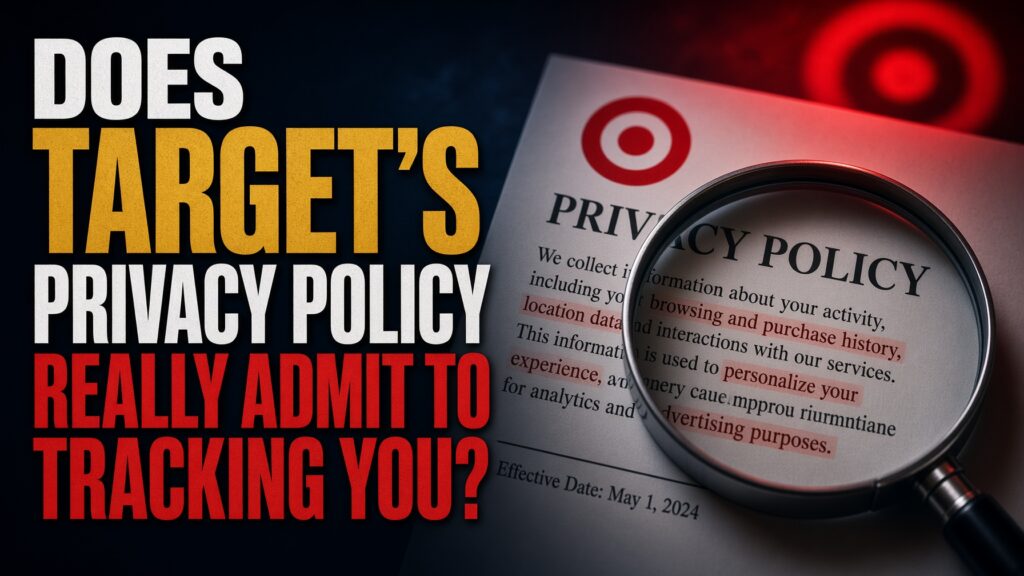
A viral video claims Target’s carts and store lighting are secretly logging every move shoppers make. Target’s own privacy policy already says something remarkably close to that — in writing, for anyone who actually reads it.
A viral video claims Target is spying on your shopping cart. It turns out Target’s own privacy policy says something close to that, in plain writing.
The claim exploded online this year: a creator alleged that Target carts carry hidden trackers, that ceiling lighting connects to shoppers’ phones via Bluetooth, and that the company can follow customers up and down every aisle whether or not they use the Target app. Some of that is exaggerated. But a review of Target’s current, published privacy policy shows the company does disclose in-store Bluetooth and lighting-based tracking tied to shoppers’ phones — a fact most customers have likely never scrolled far enough to find.
Support Independent Local Journalism
TheTownHall.News is a non-profit reader-supported journalism. Just $5 helps us hire local reporters, investigate important issues, and hold public officials accountable across Alameda County. If you believe our community deserves strong, independent journalism, please consider donating $5 today to support our work.What Did the Viral Video Actually Claim?
The video’s creator described a system that tracks shoppers through the store, logs how long they linger over specific items, and records what goes into and out of the cart. He claimed this happens whether or not the shopper has the Target app installed, tying it to a 2023 patent and a 2017 rollout of Bluetooth-enabled store lighting.
Parts of that narrative check out. Parts do not. Target did roll out Bluetooth beacon lighting in 2017, and its privacy policy does describe phone-based in-store tracking today. What doesn’t hold up under scrutiny is the claim that this tracking works on shoppers who never installed or opted into the app — a distinction that matters enormously for how worried customers should actually be.
Does Target’s Own Privacy Policy Confirm It?
Yes, in part. Target’s current privacy policy, reviewed directly on Target.com, states under “Mobile Location Information” that in-store location “through the use of your phone’s blue tooth signal, LED light chip technologies or other technologies will permit Target to find nearby products for you, get you real-time deals, auto-sort your shopping list and more.”
The same policy lists “Geolocation data (e.g., latitude or longitude, in-store location)” as a formal category of information Target collects, and states Target “may link or merge” a shopper’s in-store activity with their app, website, ad, and email data. That is not speculation or leaked internal documentation — it is the company’s own current, public disclosure.

Where Did the Bluetooth Lighting System Come From?
This isn’t new technology quietly slipped in. Target announced in 2017 that it was installing Bluetooth beacon chips inside its LED ceiling lighting across roughly half its 1,800 stores, in partnership with lighting manufacturer Acuity Brands. Target’s own chief information officer at the time called it “a GPS for your shopping cart,” designed to power in-app store maps and location-based deals.
If a retailer built a Bluetooth tracking network into its ceiling lights nearly a decade ago, why are shoppers only finding out about it from a viral video? That question is fair, even if the underlying system requires the Target app and location permissions to function as originally designed.
Why Are Shopping Carts Locking Up in Parking Lots?
Separately, a different Target system has already gone viral once this year: anti-theft carts whose wheels lock automatically if pushed outside a set perimeter around the store. Footage of customers stuck fighting frozen cart wheels in parking lots drew millions of views in late 2025. That system is a geofencing anti-theft measure, not a personal surveillance tool — but its sudden, unexplained rollout fed the same underlying suspicion the tracking video tapped into: that shoppers are the last to know what their local Target is actually doing.
Nearly 1,900 stores. That’s how many Target locations nationwide could be running some version of this Bluetooth-based system — the question is how many shoppers walking into any one of them actually know it.
What Else Is Target’s Policy Quietly Disclosing?
Buried further down the same privacy policy is a disclosure the viral video never mentioned, and it may be more significant. Target confirms it uses Automated License Plate Recognition (ALPR) technology in and around its parking lots for “fraud prevention, security, and assets protection,” retaining that data for approximately 30 days unless it is needed for an investigation.
Support Independent Local Journalism
TheTownHall.News is a non-profit reader-supported journalism. Just $5 helps us hire local reporters, investigate important issues, and hold public officials accountable across Alameda County. If you believe our community deserves strong, independent journalism, please consider donating $5 today to support our work.That means a shopper who never opens the Target app, never enables Bluetooth, and never sets foot inside the store can still have their license plate logged the moment they park. A company doesn’t need your phone to track your visit — it just needs your car.
Is it really transparency if the disclosure exists, but almost no customer ever reads it?
What Do Supporters of In-Store Tracking Technology Actually Believe?
Retailers and their defenders make a real case here, not a cynical one. They argue that Bluetooth wayfinding and beacon technology genuinely help shoppers find products faster, that geofenced cart wheels meaningfully reduce theft and the retail losses passed on to every paying customer, and that license plate recognition around parking lots is standard loss-prevention practice used across the retail industry, not something unique or sinister to Target.
That argument has real merit, and it deserves a fair hearing rather than dismissal. Retail theft is a genuine cost problem, and technology aimed at reducing it can benefit honest shoppers through lower prices and shorter checkout lines. But convenience and loss prevention are not the same justification as consent. A privacy policy technically disclosing a practice in dense legal language, thousands of words into a document almost no one reads in full, is a legal shield — not the same thing as a shopper knowingly agreeing to be tracked.
Is Disclosure the Same as Transparency?
That is the real question this story raises, and it goes well beyond one retailer. Every major store chain now collects some combination of location, device, and vehicle data, and virtually all of it is technically disclosed somewhere in a privacy policy few customers ever open. Target is not uniquely invasive here. It is simply the company a viral video happened to name.
Nobody elected the marketing department that decided Bluetooth beacons belonged in the ceiling lights — but their decision now shapes how every customer’s shopping trip is quietly logged. The technology itself may be defensible. The expectation that customers should have to dig through a legal document to learn about it is harder to defend.
Key Questions This Story Raises:
- If a company discloses a practice in a privacy policy almost no customer reads in full, has it really obtained meaningful consent?
- Should retailers be required to give shoppers a clear, upfront notice — not just buried policy language — before collecting Bluetooth, geolocation, or license plate data?
- How many other major retailers are running similar tracking systems that simply haven’t gone viral yet?
So does Target’s privacy policy admit to tracking you? In writing, yes — but only if you know exactly where to look. The real question isn’t whether the technology exists. It’s whether “it’s in the privacy policy” should ever count as informed consent.
Still have questions about what your favorite retailer knows about you? Stay informed — subscribe for daily coverage of consumer accountability and corporate transparency. Think other shoppers need to see this? Share this article. Want your voice to count? Contact your state attorney general’s consumer protection office and ask whether in-store Bluetooth, geolocation, and license plate tracking should require clear point-of-entry disclosure, not just policy-page language.