Has Judge Lana Kim’s Diversion Record Finally Gone Too Far?
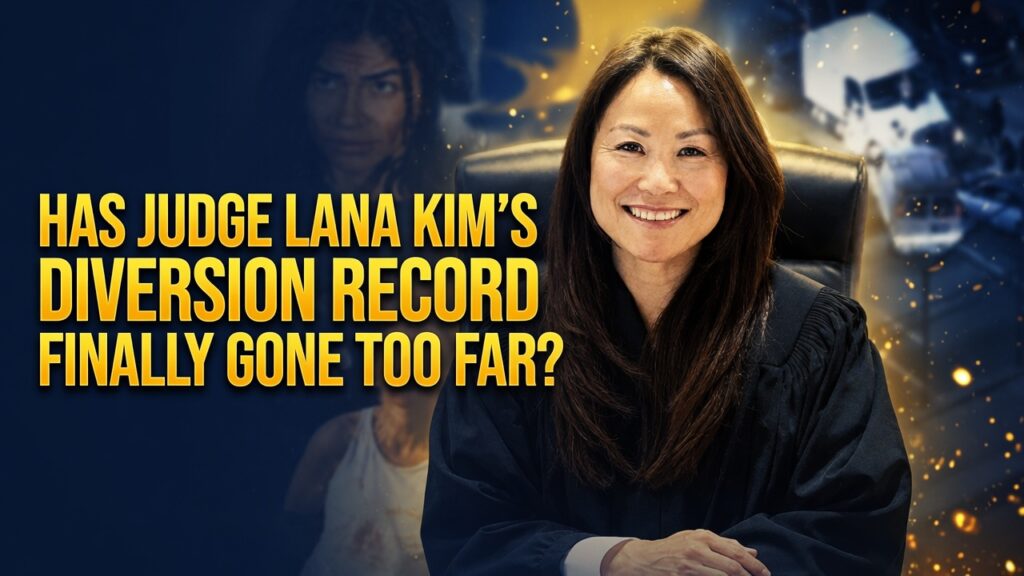
As a Los Angeles Superior Court judge keeps steering defendants facing violent felony charges into mental health diversion instead of trial, prosecutors, victims and now state lawmakers are asking the same question: who is actually being protected here?
A woman charged with trying to kidnap an 8-year-old girl has been missing for nearly two months. She should never have had the freedom to disappear. That single fact sits at the center of a growing controversy over Los Angeles County Superior Court Judge Lana Kim’s use of California’s pretrial mental health diversion program — a controversy that has now reached the California Supreme Court and the state legislature.
Who Is Courtney Perrone, and Why Is She Missing?
Courtney Perrone was charged in 2024 with attempted kidnapping of a child under 14, false imprisonment by violence, and assault with a deadly weapon after prosecutors alleged she approached an 8-year-old girl in a Santa Monica alley, claimed to be a Russian police officer, and tried to pull the child away, brandishing a knife when a neighbor intervened. Prosecutors opposed diversion. She had outstanding New Hampshire warrants for stalking and forgery and was on probation from a Nevada assault-with-a-deadly-weapon conviction. Judge Kim approved diversion anyway, in February 2025. Los Angeles County District AttorneyKTLA 5 News
Support Independent Local Journalism
TheTownHall.News is a non-profit reader-supported journalism. Just $5 helps us hire local reporters, investigate important issues, and hold public officials accountable across Alameda County. If you believe our community deserves strong, independent journalism, please consider donating $5 today to support our work.If a defendant charged with attempting to kidnap a child can vanish mid-case, who exactly is diversion protecting?
Perrone was reported missing by her family after last being seen near Exposition Park, close to USC, on May 17, 2026. Her car turned up abandoned and stripped in the Antelope Valley days later. LAPD says she may need medical attention and is considered at risk. Her criminal case is still pending. Nobody has been held to answer for the original charges. NBC Los AngelesSM Mirror
What Happened in the Job Uriah Taylor Case?
Prosecutors allege Taylor struck 64-year-old Christian Hornburg from behind with a metal pipe near a Santa Monica transit station while yelling racial slurs, then continued the attack after Hornburg fell, leaving him with a traumatic brain injury that has left him unable to walk or care for himself. Two others who tried to help were also attacked. The charges included attempted murder and hate-crime enhancements. Santa Monica Daily Press
Judge Kim granted Taylor diversion in March 2025 instead of sending the case to trial, where he faced a potential life sentence. The District Attorney’s office appealed. The Court of Appeal agreed the judge abused her discretion, citing Taylor’s history of abandoning treatment and his recent release from a psychiatric facility before the attack. After a rehearing, the appellate court reaffirmed that finding in March 2026, and the California Supreme Court declined to disturb it. Los Angeles County + 2

Why Are Prosecutors Calling This a Pattern?
Taylor and Perrone aren’t isolated examples. Prosecutors say Lisa Ann Heflin led police on a high-speed pursuit in 2024 that injured nine officers and damaged multiple vehicles before she, too, was granted mental health diversion over their objections. Santa Monica Daily Press
Three defendants. Three sets of prosecutors who said no. Three times a judge said yes anyway.
District Attorney Nathan Hochman has publicly described this as “a pattern of leniency.” That’s not rhetoric from a campaign ad — it’s a sitting county prosecutor, on the record, describing the conduct of a sitting judge. Santa Monica Daily Press
“The judge never looked at me the way she looked at him. It was like my life didn’t matter.” — Christian Hornburg, describing the diversion hearing in his case Santa Monica Daily Press
Key Questions This Case Raises
- How many other violent-felony defendants has Judge Kim diverted, and where are they now?
- Why did prosecutors’ objections carry so little weight in these decisions?
- What accountability exists for a judge whose rulings keep getting reversed on appeal?
What Do the Numbers Actually Tell Us?
Three. That’s the number of cases now publicly documented where prosecutors opposed diversion for a violent-felony defendant and Judge Kim granted it anyway — one of them now missing, one of them reversed by an appellate court, one involving nine injured police officers. The question California taxpayers are entitled to ask: how many more cases like this haven’t made headlines?
Support Independent Local Journalism
TheTownHall.News is a non-profit reader-supported journalism. Just $5 helps us hire local reporters, investigate important issues, and hold public officials accountable across Alameda County. If you believe our community deserves strong, independent journalism, please consider donating $5 today to support our work.How Is Sacramento Responding?
Newsom signed AB 46 into law on June 29, 2026, rewriting the legal standard judges must apply before granting diversion, requiring courts to find a defendant “will not pose a substantial and undue risk to the physical safety of another person if treated in the community.” The governor’s office says the law “clarifies the law following court decisions that limited how judges could evaluate public safety concerns in diversion cases” and gives courts “broader judicial discretion to determine whether diversion is appropriate based on public safety.” surfsantamonicasurfsantamonica
That’s a legislative admission that the old standard wasn’t working. It took a permanently disabled victim and a missing defendant to get there.
What Do Supporters of This Policy Actually Believe?
Mental health diversion has real defenders, and their argument deserves a fair hearing. Advocates for the program point out that jailing people in acute psychiatric crisis rarely treats the underlying illness and often makes reoffending more likely once they’re released untreated. The Los Angeles County District Attorney’s Office itself has acknowledged that diversion “may be appropriate for defendants with mental illnesses who engage in low-level, non-violent crimes.” Supporters also argue that judges are better positioned than legislators to weigh individual clinical evidence case by case, and that a handful of high-profile failures shouldn’t be used to dismantle a program that helps many defendants who never reoffend. Los Angeles County
That argument holds up for low-level, non-violent cases. It grows much harder to defend once the charges involve a metal pipe, a switchblade, or a wrong-way pursuit that hospitalizes police officers. The Court of Appeal itself said as much when it reversed Judge Kim’s ruling in the Taylor case, finding no evidence supported the conclusion that he wouldn’t reoffend. The law wasn’t the problem in these three cases — the application of it was.
Is This the Accountability Moment California Needed?
AB 46 raises the legal bar. It doesn’t undo what already happened to Christian Hornburg, and it doesn’t answer where Courtney Perrone is tonight. The real test isn’t whether the law changed — it’s whether the next judge who reads it applies it any differently than the last one did.
Would the outcome have been different if this were your neighborhood, your daughter, your officer on that freeway? That’s the question this case leaves every Californian holding.
The real question isn’t whether the diversion program needs reform — Sacramento already answered that. It’s whether reform arrives before or after the next victim.
Still have questions about how California’s courts are handling public safety? Stay informed — subscribe for daily coverage. Think your neighbors need to see this? Share the article. Want your voice to count? Contact your California Assembly member and ask how they voted on AB 46, or attend a Los Angeles County Board of Supervisors meeting where court oversight is on the agenda.