DOGE’s Social Security Cleanup: What’s Real, What’s Not, and Why It Still Matters
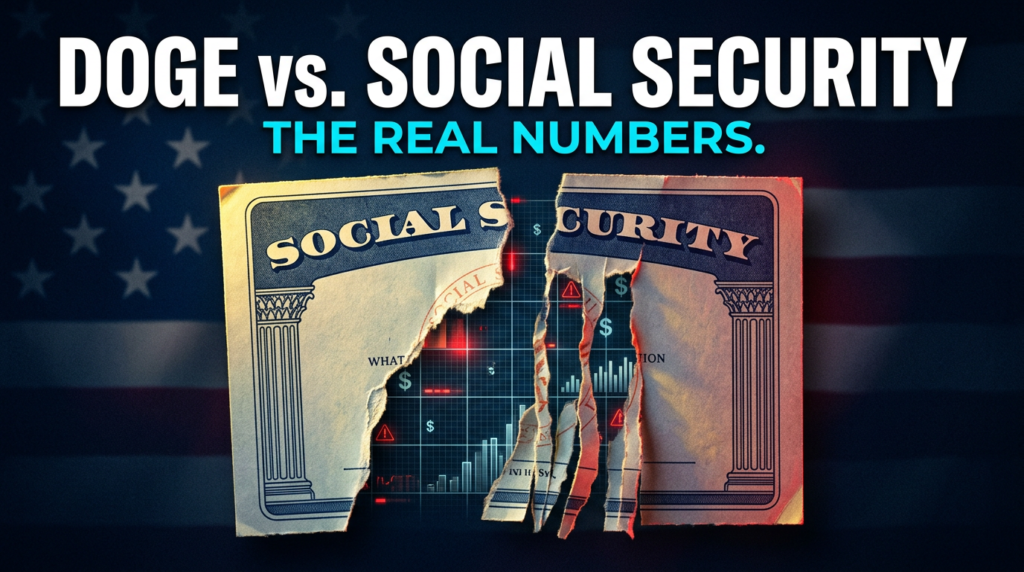
A sweeping records purge at the Social Security Administration exposed decades of database neglect — but separating the genuine wins from viral overreach is exactly what taxpayers deserve.
Americans have long suspected that Washington operates on a “don’t ask, don’t tell” basis when it comes to managing taxpayer money. So when the Department of Government Efficiency announced it had completed a major cleanup of the Social Security Administration’s records — flagging 12.3 million accounts belonging to individuals listed as aged 120 or older — the reaction was immediate and explosive. Social media erupted with claims of $22 billion in monthly savings and 12 million “scammers” removed from the federal rolls.
The truth is more nuanced — and in some ways, more troubling. Not because the cleanup wasn’t needed, but because the gap between what was actually accomplished and what was claimed reveals exactly how broken federal record-keeping has been for decades, and why real fiscal accountability requires precision, not just headlines.
Support Independent Local Journalism
TheTownHall.News is a non-profit reader-supported journalism. Just $5 helps us hire local reporters, investigate important issues, and hold public officials accountable across Alameda County. If you believe our community deserves strong, independent journalism, please consider donating $5 today to support our work.What DOGE Actually Found — and Fixed
Over an 11-week initiative completed in May 2025, the Social Security Administration, working with DOGE, marked approximately 12.3 million Social Security number holders aged 120 and older as deceased in the agency’s records. The breakdown is staggering: 3.3 million entries listed ages 120–129; 3.9 million aged 130–139; 3.5 million aged 140–149; and more than 124,000 entries listed at ages 160 and above.
Let that sink in. The federal government’s database contained over 124,000 records for people supposedly older than the oldest verified human being in history. This is not a minor clerical quirk. It is a symptom of systemic neglect that has persisted across multiple administrations — Democrat and Republican alike.
To be precise: these 12.3 million entries represent Social Security numbers, not active benefit recipients. Having a Social Security number on file does not mean someone was collecting a monthly check. The SSA issues numbers at birth, to temporary workers, and to immigrants — and old records accumulate like unchecked clutter in a government warehouse. The cleanup was necessary and long overdue. The question is what it actually means for taxpayers going forward.
The $22 Billion Claim: Where the Math Breaks Down
The viral calculation making the rounds — that removing 12.3 million “scammers” at $1,800 per month equals $22.1 billion in monthly savings — is a compelling number that doesn’t survive scrutiny.

The Social Security Administration reported approximately 68.4 million total beneficiaries in 2024. The idea that 18 percent of all recipients were fraudulently collecting benefits strains credulity, and more importantly, it isn’t supported by SSA’s own data. The agency’s improper payment rate for its Old-Age, Survivors, and Disability Insurance program — which includes errors, administrative mistakes, and fraud combined — stands at less than 1 percent of total benefits paid.
The SSA’s Office of the Inspector General documented approximately $72 billion in improper payments between fiscal years 2015 and 2022 — a serious and unacceptable figure. But that averages to roughly $9 billion per year, a far cry from $22 billion per month. And critically, the IG’s report notes that “improper payments” encompass overpayments and administrative errors — not solely fraud.
The viral math was wrong. But the underlying problem — decades of unchecked database mismanagement — is very real.
Why the Database Was Such a Mess in the First Place
This is the story that should anger every fiscally responsible American regardless of party affiliation.
Successive administrations failed to modernize SSA’s systems. The agency relies heavily on beneficiaries to self-report changes in their circumstances — a process the SSA’s own Inspector General has flagged as a root cause of improper payments. Recommendations for improved data automation, cross-agency information sharing, and systems modernization have sat unimplemented for years, according to OIG audit reports dating back to 2002.
Support Independent Local Journalism
TheTownHall.News is a non-profit reader-supported journalism. Just $5 helps us hire local reporters, investigate important issues, and hold public officials accountable across Alameda County. If you believe our community deserves strong, independent journalism, please consider donating $5 today to support our work.At the end of fiscal year 2023, SSA had an uncollected overpayment balance of $23 billion — money paid out that the agency itself acknowledged should not have been. The agency even halted plans for a new debt management system in 2024 because it wasn’t funded. That is the definition of a broken accountability structure.
The DOGE cleanup, whatever its limitations, forced a public conversation about a problem Washington bureaucrats were content to ignore indefinitely.
What Critics Get Wrong
Opponents of the DOGE initiative have been quick to point out — correctly — that database records and active benefit recipients are two different things. A May 2025 investigation found that after SSA implemented new phone-based anti-fraud checks, only 2 cases out of over 110,000 claims showed a high probability of fraud. Critics used this to argue the entire fraud narrative was manufactured.
But this framing misses a critical distinction. The near-absence of active fraud in phone claims does not mean the agency’s records were in acceptable shape. It does not mean that a database carrying 124,000 entries for people allegedly older than 160 was functioning as intended. And it certainly does not mean that $23 billion in unrecovered overpayments is acceptable.
Holding government accountable for bad records management isn’t a partisan act — it’s a civic obligation. The problem isn’t that fraud investigations happened; the problem is that they happened without sufficient precision, creating disruptions for the 68 million legitimate beneficiaries who earned these benefits through decades of work and payroll contributions.
How This Affects Real Families and Communities
The cleanup had real human costs alongside its benefits. Anti-fraud measures implemented under DOGE’s influence slowed retirement claim processing by 25 percent, according to an internal SSA document. The agency reported a backlog of over 140,000 unprocessed retirement claims sitting for more than 60 days. For a retiree depending on their first Social Security check to cover rent, groceries, or medication, a bureaucratic delay of two months is not an abstraction — it is a crisis.
This is the tension at the heart of any serious government reform effort. Accountability is essential. Waste and fraud rob working Americans of resources they paid into the system. But reform executed sloppily, driven more by social media pressure than methodical auditing, can punish the very people it claims to protect.
Efficiency and accuracy are not enemies — but one without the other is not reform. It’s chaos with a press release.
The Real Lesson: Demand Both Accountability and Precision
Americans who value fiscal responsibility and limited government should absolutely demand that the Social Security Administration maintain accurate records, recover improperly paid funds, and modernize its outdated systems. The fact that it took a high-profile political initiative to expose a database containing entries for people aged 150 and above is itself a damning indictment of federal bureaucracy.
But demanding accountability means demanding it be done right. Viral claims that overstate savings by orders of magnitude don’t serve taxpayers — they muddy the waters, create false expectations, and give critics easy ammunition to dismiss legitimate concerns about waste.
The real story here is not $22 billion in monthly savings. The real story is that the federal government allowed its Social Security database to fall into a state where 12.3 million records required mass correction — and that this happened across 20-plus years of bipartisan neglect. Fixing that is worth celebrating. Inflating it into something it wasn’t helps no one.
Key Takeaway
The DOGE Social Security cleanup corrected a genuine, long-standing records problem. It was not a $22 billion monthly fraud bust. Actual fraud in SSA’s benefit programs is less than 1 percent of total payments — still a serious issue, still worth fighting — but the viral claim misrepresents what happened. Americans deserve both aggressive accountability and accurate reporting on what their government is actually doing.
Stay Informed. Stay Engaged.
Stories like this one — where the facts matter more than the headline — are exactly why independent journalism exists. If you believe in government transparency, fiscal accountability, and fact-based civic discourse, share this article with your community. Subscribe to The Town Hall News for coverage that respects your intelligence and demands the same from Washington.