US Military Deployment to Lebanon: What the Israel Framework Agreement Really Means?
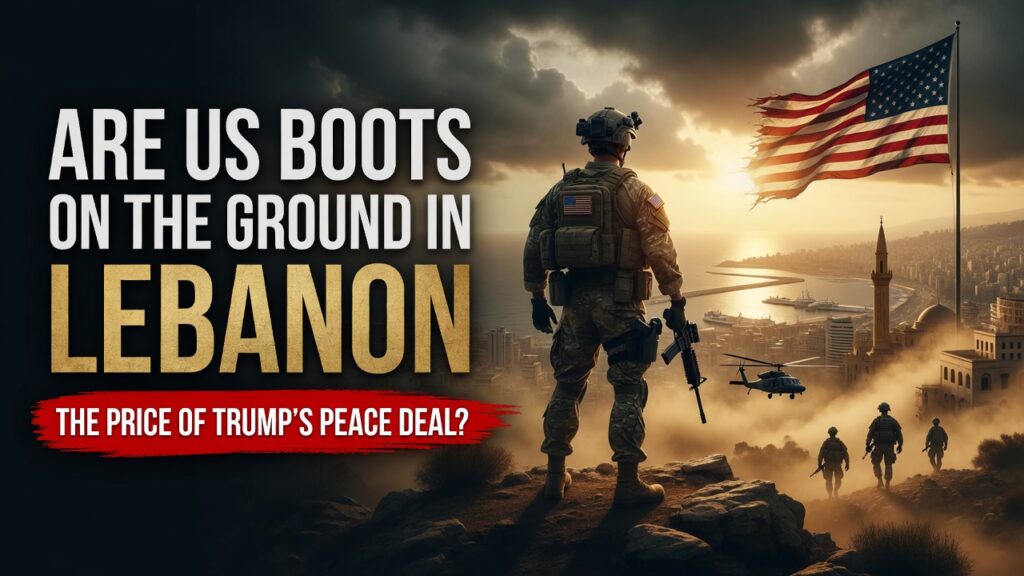
American troops are now heading to one of the world’s most volatile flashpoints — with orders to referee between two foreign armies. Before the cheering stops, taxpayers deserve real answers.
The agreement was signed in Washington. The price may be paid in Beirut.
On June 26, 2026, the United States brokered a trilateral framework agreement between Israel and Lebanon — a diplomatic milestone, according to Secretary of State Marco Rubio, who called it “a first step” toward breaking decades of conflict. But within days, the Washington Post reported something the celebratory press conferences did not headline: American forces would be stationed in Lebanon to monitor compliance with the agreement by both Lebanon and Israel. That is not a peacekeeping mission in theory. It is American soldiers on the ground in a country where Hezbollah remains armed, defiant, and warning of civil war. Al JazeeraPressTV
Support Independent Local Journalism
TheTownHall.News is a non-profit reader-supported journalism. Just $5 helps us hire local reporters, investigate important issues, and hold public officials accountable across Alameda County. If you believe our community deserves strong, independent journalism, please consider donating $5 today to support our work.What Exactly Did the US Just Sign?
The framework, signed in Washington, D.C., on June 26, 2026, is described by its architects as a “performance-based” path toward ending the Israel-Lebanon conflict. On paper, the structure is straightforward: the framework is designed to eventually end Israel’s occupation of southern Lebanon and restore the country’s territorial integrity. Lebanon’s military — the Lebanese Armed Forces (LAF) — would assume control of designated zones as Israeli forces gradually pull back, but only after verified Hezbollah disarmament. The Times of IsraelAxios
The United States pledged an immediate $100 million in humanitarian assistance in coordination with the United Nations and committed to reimburse the Lebanese Armed Forces more than $30 million under existing authorities and appropriations. That is American taxpayer money, deployed into a country where the government’s own parliament speaker called the deal unworkable. U.S. Department of State
The agreement also establishes a Military Coordination Group for Lebanon (MCG4L), tasked with the mission to operate 24/7, managing deconfliction, verification, and overall implementation. The United States is a central participant in that group — not a distant observer. The Times of Israel
Who Is Really Calling the Shots on the Ground?
Here is where the story shifts from diplomacy to deployment. The U.S. military will have a direct role in monitoring actions by both the Lebanese Army and the Israeli army, with U.S. troops on the ground in both Lebanon and Israel. A U.S. official explained Washington’s posture in terms usually reserved for baseball umpires: “We’ll call balls and strikes, if you will,” the official told the Washington Post, adding that “our political leadership can apply whatever pressure needs to be applied on either side to get them to hold up their end.” NaharnetNaharnet

American troops are now positioned between two foreign militaries, one of which is an Iranian-backed terror organization’s host government and the other a nuclear-armed US ally — with Washington pledging to call fouls on both. That is not a supporting role. That is command exposure.
Officials with CENTCOM would report any violations to the Trump administration, which would then engage. CENTCOM commander Admiral Brad Cooper met senior civilian and military leaders in Israel and Lebanon, discussing the path forward in implementing the framework agreement. His office confirmed more than 50,000 US personnel remain deployed across the Middle East. PressTV + 2
“We’ll call balls and strikes.” That is Washington’s stated role inside Lebanon — where Hezbollah is armed, Israeli jets still fly, and the Lebanese parliament speaker says the deal was never viable to begin with.
Is This the Accountability Moment Congress Has Been Sleeping Through?
The American public has a right to ask: did Congress authorize this? The framework was signed by ambassadors and a State Department counselor. The agreement was signed in three originals, in the English language, at Washington, D.C., but no vote was cast by the legislature representing the American people who will fund and potentially risk lives for its enforcement. CIE
$130 million in US commitments. Zero congressional votes. Is that how the Founders designed foreign policy to work?
The deal’s security annex — leaked and confirmed by multiple officials — reveals the operational depth of Washington’s commitment. The LAF commits to take necessary operational measures to ensure the disarmament of Hezbollah and all other non-state armed groups, and that they have no military role or capability within Lebanon. If Lebanon cannot deliver — and there is serious reason to doubt it can — American monitors will be on the ground watching that failure unfold in real time. The Times of Israel
Support Independent Local Journalism
TheTownHall.News is a non-profit reader-supported journalism. Just $5 helps us hire local reporters, investigate important issues, and hold public officials accountable across Alameda County. If you believe our community deserves strong, independent journalism, please consider donating $5 today to support our work.What Does Lebanon’s Own Political Class Actually Think?
The deal is not just controversial in Washington. Inside Lebanon, the agreement has fractured the political establishment in ways that directly affect US troop safety.
Hezbollah chief Naim Qassem declared the agreement “null and void,” while Hassan Fadlallah, a Hezbollah lawmaker, warned of “internal conflict” in Lebanon. Lebanese Parliament Speaker Nabih Berri, a Hezbollah ally, said the framework was unbalanced and consolidated realities that served Israel at Lebanon’s expense. Al JazeeraMiddle East Eye
The breadth of opposition extends beyond Hezbollah and its traditional ally Amal to other forces that are not uniformly aligned with Hezbollah. Even analysts sympathetic to the Lebanese government’s goals expressed alarm. A commentary published by the New Arab assessed that if reports are accurate that the US negotiating team pressured the Lebanese delegation to accept the framework as drafted, while merely noting Lebanese reservations, Israel’s triumphant reaction to the agreement only deepens the suspicion. Middle East EyeNew Arab
Israeli Defense Minister Israel Katz did little to calm those fears. Katz stated that the IDF will not withdraw “a millimeter” until Hezbollah is disarmed — a position he confirmed was accepted by the United States and enshrined in the military annex. He went further, saying he does not believe the Lebanese army will “suddenly become lions charging at Hezbollah,” and therefore the IDF’s presence in Lebanon will be “long term.” The Times of Israel + 2
American troops, in other words, are being asked to monitor a process that Israel’s own defense minister considers likely to last for years — in a country where the armed faction controlling the south has declared the entire framework illegitimate.
What Do Supporters of the Framework Actually Believe?
Defenders of the deal, including the Trump administration and a segment of Lebanon’s Christian right, make a substantive case. Hezbollah has built a vast military infrastructure inside Lebanon, fired tens of thousands of rockets and drones at Israeli cities, plots attacks against Americans, supports drug trafficking networks, and directly threatens American citizens and interests. From this vantage point, any arrangement that degrades Hezbollah’s military capacity is a strategic win. U.S. Department of State
Supporters also note that Israel and Lebanon recognize each other’s right to live in peace as neighboring sovereign states and say they intend to end the conflict and any state of war between them — the first mutual recognition since 1983. Lebanese President Joseph Aoun called it “a first step” toward restoring Lebanese sovereignty. The US State Department argued that the agreement breaks “the cycle of violence once and for all.” The Jerusalem PostAl Jazeera
These are not trivial achievements. Decades of failed diplomacy produced nothing close to mutual recognition. If Hezbollah is genuinely weakened and Lebanon’s state authority is genuinely restored, the strategic benefit for American interests in the region could be real and lasting.
The honest counterpoint, however, is not whether the goal is worthy — it is whether the mechanism is sound. Tying US troop deployments to conditions that Lebanon may be structurally incapable of meeting inverts the principle of limited foreign entanglement that taxpayers have demanded after two decades of costly nation-building.
Are American Soldiers Being Set Up to Referee a War That Isn’t Ours?
The framework’s enforcement architecture places the United States in an extraordinarily exposed position. The United States has already begun operating a real-time monitoring mechanism through CENTCOM to provide decision-makers in Washington with immediate and accurate information on developments in Lebanon. That infrastructure was stood up before the ink was even dry on the June 26 agreement. The Yeshiva World
If Hezbollah attacks Lebanese army forces attempting to disarm it, what happens to the American monitors on the ground? That is not a hypothetical. Lebanon is being asked to act like a sovereign state precisely where its sovereign capacities are weakest. It is expected to control armed actors it cannot defeat, negotiate with an enemy it cannot deter, and accept obligations whose enforcement depends on powers that do not treat Lebanese sovereignty as the primary objective. Al Jazeera
That analysis cuts both ways. A Lebanon too weak to disarm Hezbollah is also a Lebanon too weak to protect US personnel from the consequences of trying.
Key Questions This Story Raises:
- Has the Trump administration secured congressional authorization — or even notification — before deploying military monitors to Lebanon and Israel under this framework?
- If Hezbollah attacks Lebanese Armed Forces in the “pilot zones” where US troops are embedded, what are the rules of engagement for American personnel?
- Israel’s defense minister says the IDF’s presence in Lebanon will be “long term” — does Washington have a definition of success, or a timeline for withdrawal of US monitoring forces?
The Lebanon-Israel framework may yet prove to be the diplomatic breakthrough its architects claim. But the deployment of US military personnel to monitor compliance between two foreign armies — in a country where a heavily armed terror group has declared the entire arrangement null and void — is exactly the kind of mission that deserves a public debate before it becomes a commitment Americans cannot walk back. The real question isn’t whether peace in Lebanon is worth pursuing. It’s whether American troops should be the ones left holding the whistle when the game turns violent.
What do you think — is the US monitoring role in Lebanon a smart investment in regional stability, or another open-ended deployment with no clear exit? Share this and tell us.
Still have questions? Subscribe to The Town Hall News for daily coverage of US foreign policy and accountability reporting. Think someone needs to read this? Share the article. Want to make your voice heard on US military commitments abroad? Contact your congressional representative and ask whether they’ve reviewed the Lebanon framework agreement.