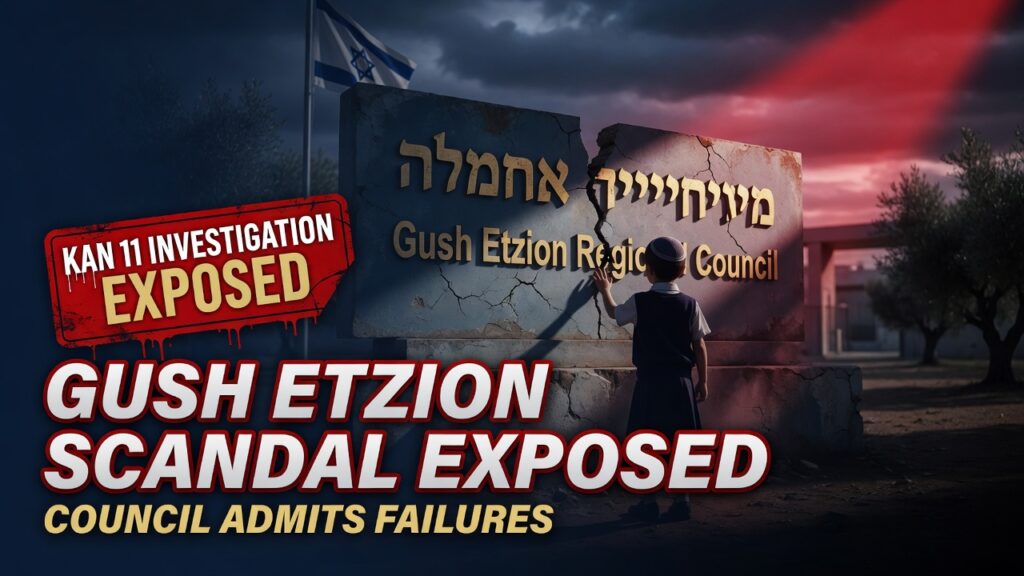
Gush Etzion Ritualistic Child Abuse Scandal: Council Admits Failures After Kan 11 Investigation
Gush Etzion
As shocking details from an Israeli public broadcaster’s investigation emerge, communities that pride themselves on traditional values are confronting a painful question: when leaders deny abuse for years, who protects the most vulnerable?
This week, the Gush Etzion Regional Council in the West Bank issued an unprecedented public statement acknowledging organized ritualistic sexual abuse of children within its settler communities. The admission follows a hard-hitting Kan 11 investigation that presented consistent testimonies from multiple victims. For supporters of law and order and parental rights, this case raises urgent concerns about institutional failures that put children at risk.
What Really Happened in Gush Etzion?
The council’s statement marks a clear reversal. After years of reportedly dismissing allegations, leaders condemned the acts as “an expression of pure evil and moral depravity that has no place in human society, and certainly not in our community.”
Support Independent Local Journalism
TheTownHall.News is a non-profit reader-supported journalism. Just $5 helps us hire local reporters, investigate important issues, and hold public officials accountable across Alameda County. If you believe our community deserves strong, independent journalism, please consider donating $5 today to support our work.Journalist Roni Zinger’s report on Kan 11’s Zman Emet featured five women, largely unknown to one another, describing strikingly similar patterns of multi-perpetrator assaults. These included ritualistic elements in locations such as forests, synagogues, and cemeteries in the Gush Etzion bloc south of Jerusalem. Victims reported abuse beginning as young as ages 3–4, with some describing religious manipulation to enforce silence.
The acts described are an expression of pure evil and moral depravity. — Gush Etzion Regional Council official statement
This admission should be welcomed as a step toward transparency, yet it also highlights how long denial persisted.
Why Does This Matter for Parental Rights?
Parents have the primary responsibility to protect their children. When communities or local authorities fail to act decisively on credible warnings, that fundamental right is undermined.

In this case, professional corroboration and recorded evidence presented in the broadcast reportedly left little room for continued dismissal. The council’s response—releasing hotline numbers and urging more victims to come forward—suggests pressure from public exposure is working. Yet questions remain about earlier complaints that were allegedly shelved.
If this level of organized abuse happened in your own neighborhood, would local leaders act swiftly—or only after national television forced their hand?
This isn’t just an Israeli story. Communities worldwide that emphasize traditional civic values must confront uncomfortable truths when evil appears within their ranks. Personal responsibility demands that leaders prioritize child safety over reputation.
Are Delayed Investigations Undermining Law and Order?
Israeli police may now reopen previously closed cases due to the council’s shift and media evidence. However, statutes of limitations on older sexual abuse claims complicate prosecutions, especially with delayed trauma recall common in such cases.
This raises a broader issue: when institutions prioritize other concerns—political, communal, or reputational—over thorough criminal investigation, public trust erodes. Law and order requires consistent application of justice, regardless of the perpetrator’s background or location.
Support Independent Local Journalism
TheTownHall.News is a non-profit reader-supported journalism. Just $5 helps us hire local reporters, investigate important issues, and hold public officials accountable across Alameda County. If you believe our community deserves strong, independent journalism, please consider donating $5 today to support our work.Over 40 hotline calls have reportedly come in since related coverage began. The question no one wants to answer: how many more victims stayed silent because early warnings were ignored?
What Role Should Limited Government Play Here?
Supporters of limited government argue that local communities, not distant bureaucracies, should handle internal problems effectively. Yet this scandal shows the limits of that ideal when local leadership initially resists accountability.
Fiscal accountability also enters the picture. Many settlements receive significant public funding and security support from the Israeli government. Taxpayers have a right to expect that resources support safe, values-driven communities—not environments where abuse festers undetected.
Free speech played a vital role here. The Kan 11 investigation brought forward voices that might otherwise have remained unheard. Suppressing such reporting would only protect abusers, not communities.
What Do Supporters of Stronger Institutional Defenses Actually Believe?
Some may argue that highlighting abuse in settlement communities unfairly singles them out amid broader regional conflicts, or that media focus risks politicizing internal tragedies. They might contend that every society has such cases, and excessive scrutiny weakens the settlement enterprise at a dangerous time.
This perspective deserves consideration. Child sexual abuse scandals have unfortunately appeared across many Israeli sectors—ultra-Orthodox, secular, and national-religious—and in societies globally. However, fact-based reasoning counters that denial prolongs suffering. Acknowledging problems strengthens communities by enabling real reform, better child protection protocols, and restored trust. Transparency aligns with traditional civic values, not undermines them.
Why Are Communities Starting to Demand Answers?
The council’s statement and victim testimonies expose patterns that demand systemic review: better vetting, mandatory reporting, and cultural shifts that prioritize protecting the innocent over shielding reputations.
This case tests whether traditional communities can police themselves effectively. The answer will influence debates on parental rights, local governance, and the moral foundations societies claim to uphold.
Bold truth: Real accountability begins when leaders choose children over comfort. Anything less betrays the very values they profess to defend.
Key Questions
- How many earlier complaints were dismissed, and what changes will prevent future failures?
- Will Israeli authorities pursue full investigations regardless of political sensitivities?
- What specific reforms will Gush Etzion implement to restore parental confidence in community safety?
The real question isn’t whether evil can exist in any community—it is whether leaders will choose personal responsibility and decisive action when confronted with it. Traditional civic values demand nothing less.
What do you think—does this admission represent genuine progress, or is more accountability needed? Share this article and join the discussion below.
Call to Action
Still have questions about child protection and institutional accountability? Subscribe for continuing coverage of law and order issues.
Think this matters for parental rights and community standards? Share the article with friends and family.
Want to make your voice heard? Contact your representatives to emphasize the importance of robust child safeguarding policies in publicly supported communities.