Iran Attacks U.S. Base in Jordan: Troops Killed, One Missing — What Isn’t Washington Telling Us?
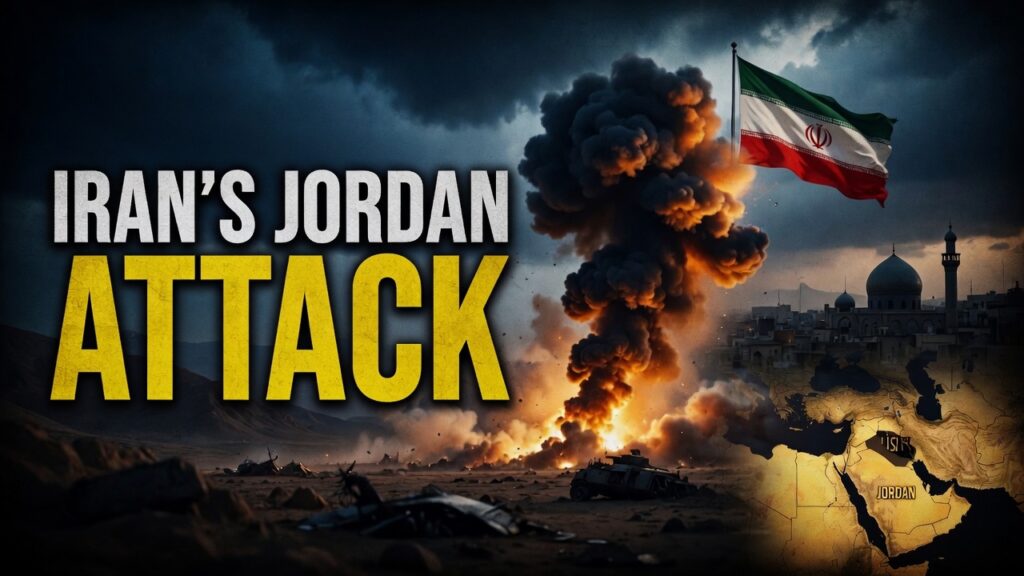
Two American service members are dead and a third is missing after Iran struck U.S. forces in Jordan. As the region slides deeper into open war, Americans are asking a simple question: how far does this go, and who decides?
Two U.S. troops are dead. A third is still missing. This is not a drill.
On July 17, U.S. Central Command confirmed that two American service members were killed in action in Jordan while U.S. and partner forces defended against an Iranian ballistic missile and drone attack. A third service member remains missing in action. Four others were medically evacuated to hospitals in Jordan and have since been discharged, and additional personnel treated for minor injuries have returned to duty. It is the kind of news that used to stop a nation cold. This time, it landed as one more headline in a war that has been raging for months, and most Americans could not tell you why.
How Did We Get Here?
The Jordan attack did not happen in isolation. It is part of what is now being called the 2026 Iran war, a direct military confrontation between the United States, Israel, and Iran that has been building since January, when American forces began a major buildup across the Middle East. That buildup eventually grew to include carrier strike groups, special operations units, and airborne divisions positioned across the region. In the days before the Jordan strike, the U.S. launched fresh rounds of airstrikes on Iranian military targets, including surveillance sites, weapons storage, and logistics infrastructure. Iran responded by hitting American and partner positions across the region, not just Jordan, but Kuwait, Bahrain, and Saudi Arabia as well. What started as a targeted campaign has become a nightly exchange of fire with no clear finish line in sight.
Support Independent Local Journalism
TheTownHall.News is a non-profit reader-supported journalism. Just $5 helps us hire local reporters, investigate important issues, and hold public officials accountable across Alameda County. If you believe our community deserves strong, independent journalism, please consider donating $5 today to support our work.Who Are the Americans We Lost?
Their names have not been released. Under standard Defense Department policy, CENTCOM will not identify the fallen until 24 hours after their families are notified. That silence is not a cover-up, it is procedure, and it deserves respect. But it also means two American families are absorbing devastating news right now, largely out of public view, while the news cycle moves on to the next segment. Somewhere tonight, two households are being told their loved one is not coming home, and a third is living with the agony of not knowing.
Two Americans didn’t come home from Jordan this week. A third is still missing. When was the last time you heard their names on the evening news?
Is This the Deadliest Stretch of the War So Far?
By some counts, these two deaths bring the total American military toll in the Iran war to 16, with hundreds more troops injured since fighting began earlier this year. [MSNBC/military officials reporting] More than 50,000 U.S. troops are currently deployed across the Middle East, according to CENTCOM. That is a significant footprint, spread across multiple countries, all exposed to a war most Americans back home never had the chance to vote on directly.
50,000. That is how many U.S. troops are stationed across the Middle East right now. The question no one in Washington seems eager to answer is: for how long, and toward what end?

What Happened on the Ground in Jordan?
CENTCOM’s public account is narrow by design. Iranian ballistic missiles and drones targeted a base where U.S. and partner forces were stationed, and American troops were killed defending it. Jordan’s own armed forces said they intercepted ten Iranian missiles in a single overnight period around the same time, a sign of how large and coordinated the barrage against the country was. Qatar’s foreign ministry condemned the broader wave of strikes on Jordan, Kuwait, and Bahrain as a flagrant violation of sovereignty and international law. This was not a single rogue missile slipping through. It was a regional assault, and Jordan was directly in the blast radius of a war it did not start.
“This time, it landed as one more headline in a war that has been raging for months, and most Americans could not tell you why.”
Why Does This Keep Happening?
Iran’s Supreme Leader, Mojtaba Khamenei, said in a statement following the strikes that the American president’s word was worthless and invalid, accusing the United States of repeatedly breaching prior agreements. Whatever the diplomatic history behind that claim, the practical result on the ground is the same. American troops stationed in allied countries are absorbing missile and drone fire meant to punish decisions made thousands of miles away in Washington.
Every time this cycle repeats, it’s American service members, not policymakers, who pay the price. If that pattern doesn’t change, how many more nights like this one are ahead?
What Do Supporters of the Administration’s Iran Strategy Believe?
Backers of the current approach argue that strikes on Iranian military infrastructure are necessary to degrade Tehran’s ability to threaten American forces and allies over the long run, and that pulling back now would only invite further aggression. They point to the U.S. naval blockade of Iranian ports, reinstated this week to choke off Iran’s ability to sustain the fight, as evidence the strategy is working. It is a coherent argument, and it deserves a fair hearing — deterrence through strength has a real logic behind it. But deterrence built on an open-ended troop presence, without a clear public debate over the scope and duration of this war, is a very different proposition than deterrence built on a plan with a defined objective and an exit. Two more flag-draped transfers this week are a blunt reminder that necessary and sustainable are not always the same thing.
What Happens If No One Asks the Hard Questions?
Wars have a way of expanding quietly once the public stops paying close attention. Troop levels rise. Mission scope widens. Deployments that were supposed to be temporary start to look permanent. And by the time most Americans tune back in, the facts on the ground have already changed dramatically. That is exactly the moment when oversight — real, specific, public oversight of troop deployments and strike authority — matters the most.
Support Independent Local Journalism
TheTownHall.News is a non-profit reader-supported journalism. Just $5 helps us hire local reporters, investigate important issues, and hold public officials accountable across Alameda County. If you believe our community deserves strong, independent journalism, please consider donating $5 today to support our work.Key Questions This Story Raises:
- Who authorized the scope of America’s current military commitment in this war, and has Congress actually voted on it?
- How many more American service members are currently in the direct line of Iranian fire across the region?
- What is the actual plan for bringing U.S. troops home once the immediate threat is degraded?
Where Does This Go From Here?
There is no clean end in sight tonight. Iran has closed the Strait of Hormuz again, U.S. strikes on Iranian targets are continuing night after night, and neighboring countries from Kuwait to Saudi Arabia are reporting fresh attacks on their own soil. Every day this continues is another day American families wait to find out if their son or daughter is safe. The missing service member’s status remains unknown. So does the endgame of this entire conflict.
Two families are grieving tonight, and a third is waiting for answers no one can yet give them. The real question isn’t whether this war will touch more American lives before it’s over — it’s whether the country will demand real answers before it does.
Still have questions about America’s role in this war? Stay informed — subscribe to The Town Hall News for daily coverage as this story develops.
Think your representative should be answering for this? Contact your member of Congress and ask them directly what oversight they’re providing over U.S. troop deployments in the Middle East.
Think others need to see this? Share the article.