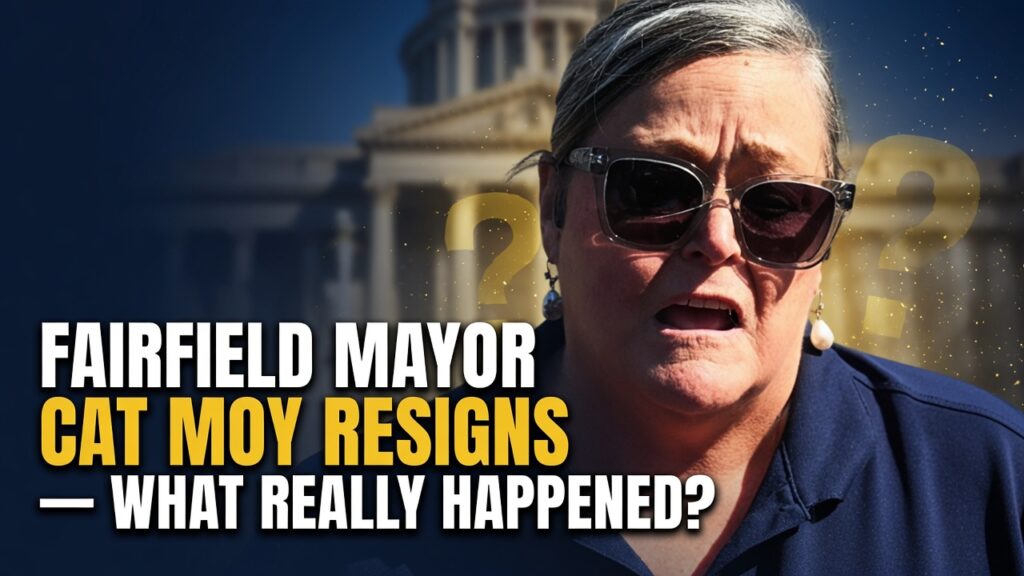
Fairfield Mayor Cat Moy Resigns Amid Residency Probe — What Really Happened?
When an outside attorney finds no wrongdoing — and the investigation continues anyway — taxpayers deserve to ask: who is this really about?
A mayor resigns. The city breathes a sigh of relief. But the story doesn’t end there.
On Tuesday, June 9, 2026, Fairfield Mayor Catherine “Cat” Moy stepped down from office hours before a special city council meeting convened to discuss — of all things — whether she actually lived in the city she had served for nearly 18 years. The timing was no coincidence. And neither, many argue, was the investigation itself.
Support Independent Local Journalism
TheTownHall.News is a non-profit reader-supported journalism. Just $5 helps us hire local reporters, investigate important issues, and hold public officials accountable across Alameda County. If you believe our community deserves strong, independent journalism, please consider donating $5 today to support our work.What Actually Happened in Fairfield?
The facts here matter, and they don’t flatter the city council. In November 2025, the Fairfield City Council hired outside attorney Gary Winuk to investigate whether Mayor Moy met the residency requirements mandated by the city charter. The process used — quo warranto — is a legal mechanism typically reserved for challenging someone’s right to hold public office.
Winuk completed his work. His report, issued in March 2026 and released publicly in May, concluded there was insufficient evidence to claim Moy was not a Fairfield resident. Both the city’s appointed counsel and the district attorney found no wrongdoing. Yet four council members voted to press forward.
$66,000. That’s how much Fairfield taxpayers spent on an investigation that found nothing — and the council wanted to keep going.
By the time Moy announced her resignation via Facebook Tuesday morning, the city had spent tens of thousands of dollars, dragged a sitting elected official through months of public scrutiny, and produced zero evidence of wrongdoing. One has to ask: what, exactly, was the goal?

Is This Accountability — or Political Retaliation?
Moy herself has been direct about what she believes drove the probe. In emails and public statements, she alleged the investigation “always was and remains a setup,” and tied it explicitly to her vocal opposition to California Forever — a massive, venture capital-backed real estate development project planned for southeast Solano County. That project has powerful backers. Moy was a loud critic.
Draw your own conclusions.
Moy also points to the timing of her recent electoral defeat. On June 2, 2026 — just one week before her resignation — she lost her bid for Solano County supervisor for District 3 to incumbent Wanda Williams. She argues the prolonged investigation damaged her reputation and contributed directly to that loss.
If a political investigation with no evidentiary basis can end a career, what does that say about the integrity of local governance?
Whether or not one agrees with Moy’s politics, the pattern here should concern anyone who values due process and fair play in public life.
Support Independent Local Journalism
TheTownHall.News is a non-profit reader-supported journalism. Just $5 helps us hire local reporters, investigate important issues, and hold public officials accountable across Alameda County. If you believe our community deserves strong, independent journalism, please consider donating $5 today to support our work.Who Is Really Paying for This?
Fairfield residents are. Full stop.
The $66,000 spent on Winuk’s investigation came from city coffers — meaning from the people of Fairfield. That figure doesn’t include the internal staff hours devoted to the process, the cost of scheduling and staffing special council meetings, or the legal fees Moy herself sought reimbursement for as part of Tuesday’s now-cancelled agenda.
“The city council is a mess. And they should’ve been spending this money instead on finding the killer of the young man who was just killed over at Fairfield High.” — Catherine “Cat” Moy, former mayor
Moy’s point cuts to something real. While the council was convening special meetings about her mailing address, the city of Fairfield was grappling with a viral video of a police officer punching a student at Fairfield High School, and mourning 18-year-old Jamario Baker, killed in a shooting at a high school graduation ceremony on June 3. These are not small issues. These are the kinds of tragedies that demand focused, competent local leadership — not a months-long political distraction.
What Do Supporters of the Investigation Actually Believe?
Fair question. The council members who pushed the investigation forward would argue they had an obligation to enforce the city charter. If the mayor of a city does not legally reside within that city, residents have a right to know — and the law provides a mechanism, quo warranto, precisely for that purpose.
They would also point out that they hired an independent outside attorney rather than conducting an in-house inquiry, which at least suggests a commitment to objectivity. Some may genuinely believe that the investigation was necessary to preserve the integrity of elected office regardless of its outcome.
These are not frivolous arguments. Residency requirements exist for good reason: they ensure that elected officials are accountable to the communities they represent. An official who lives outside city limits is, in a meaningful sense, unaccountable to the people who voted for them.
But here’s where the argument breaks down. When the independent attorney found no evidence of wrongdoing — and when the district attorney agreed — the principled move was to accept the findings and close the investigation. The council did not do that. They chose to continue spending public money on a probe that their own hired expert said lacked evidentiary support. That is not accountability. That is pursuit.
Are Local Officials Using Investigations as Political Weapons?
This question extends well beyond Fairfield.
Across the country, quo warranto proceedings and ethics investigations have increasingly become tools of political warfare at the local and state level. When deployed against officials who lack sufficient political allies, investigations — even those that result in no findings — can permanently damage reputations, drain campaign resources, and distort election outcomes.
If investigations can be weaponized at the local level with no consequences, every elected official in America should be paying attention.
Moy’s case is a cautionary tale. She served Fairfield for nearly 18 years. She ran for a higher office and lost — arguably, she says, because of the cloud the investigation created. And she resigned from the office she held not because she was found guilty of anything, but because the political cost of staying had become untenable.
That is not justice. That is pressure.
What Comes Next for Fairfield?
Vice Mayor Pam Bertani assumed the acting mayor role at Tuesday’s council meeting and is poised to become Fairfield’s first African American mayor — a genuinely historic development for the city. The full council will decide at their next meeting whether Bertani continues in the role or whether another appointment is made to serve out the remainder of the term through November 2026.
For Moy’s part, she says she is “blessed” and at peace. She remains a private citizen of the city she has called home most of her life.
Key Questions This Story Raises:
- If the independent investigator found no wrongdoing, why did four council members vote to continue the probe — and who benefits from that decision?
- How much of Fairfield’s $66,000 investigative spend would have been better directed toward the city’s public safety crisis?
- What legal or political safeguards exist to prevent quo warranto proceedings from being used as instruments of political retaliation?
The real question this story leaves behind is not whether Cat Moy was right or wrong to resign. It is whether the process used against her was ever really about residency at all — or whether it was about something else entirely. In a functioning democracy, those two things are not supposed to be the same.
What do you think — when an investigation finds nothing but continues anyway, who is really being served? Share this article and tell us.
Still have questions? Subscribe for daily coverage of local and national accountability journalism. Think others need to hear this? Share the article with someone who cares about how local government spends your money. Want to make your voice count? Contact your Fairfield City Council representative and ask them to account for how the $66,000 investigation was authorized and whether it will continue.