
Lipfendra FDA Approval: New Oral Cholesterol Drug Explained
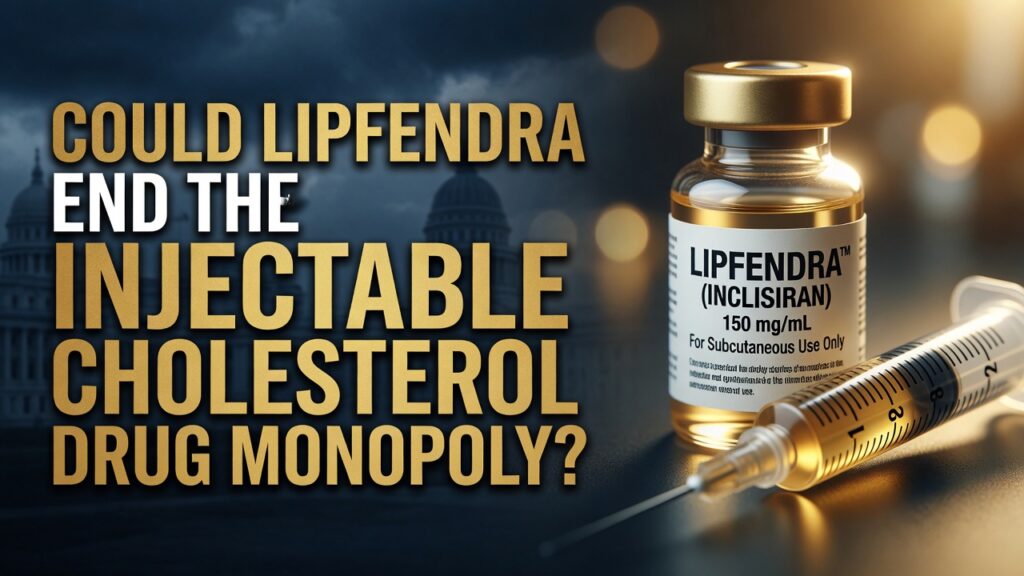
For years, patients with stubborn high cholesterol had one choice beyond statins: an expensive injection. As Lipfendra hits pharmacies, millions are asking whether real competition — not another government mandate — is finally driving down the cost of staying alive.
A pill just challenged a monopoly. On July 16, 2026, the FDA approved Lipfendra, the first oral drug in a class that has only ever come as a needle.
That timing matters. Heart disease remains the leading cause of death in the United States, and for patients whose cholesterol won’t budge on statins alone, the next option has always meant a syringe, a refrigerator, and an insurance fight. Lipfendra changes that equation — and it does it through competition, not mandate.
Support Independent Local Journalism
TheTownHall.News is a non-profit reader-supported journalism. Just $5 helps us hire local reporters, investigate important issues, and hold public officials accountable across Alameda County. If you believe our community deserves strong, independent journalism, please consider donating $5 today to support our work.More than 86 million American adults have total cholesterol above 200 mg/dL, and nearly 25 million sit above the “high” threshold of 240 mg/dL, according to CDC survey data [federal data]. Barely half of adults who could benefit from cholesterol-lowering medication are currently taking one, the agency’s own figures show [federal data]. That gap between diagnosis and treatment is exactly where a cheaper, needle-free option stands to make the biggest difference.
What Exactly Did the FDA Approve?
Lipfendra, known generically as enlicitide, is manufactured by Merck and taken as a single 20-milligram tablet each morning on an empty stomach. It belongs to a drug class called PCSK9 inhibitors, which block a liver protein that otherwise prevents the body from clearing LDL cholesterol — the “bad” kind linked to clogged arteries and, over time, heart attacks and strokes.
Until now, every approved PCSK9 inhibitor — Repatha, Praluent, Leqvio — required an injection every two to four weeks. Lipfendra is the first to put that same mechanism into a pill patients can take at home, no needle, no cold storage, no scheduled injection appointment required. The FDA cleared it as an add-on to diet, exercise, and existing statin therapy for adults with high cholesterol, including the inherited form known as heterozygous familial hypercholesterolemia.
Do the Numbers Actually Hold Up?
In two Phase 3 trials spanning roughly 3,200 patients — CORALreef Lipids and CORALreef HeFH — Lipfendra cut LDL cholesterol by 56% and 59%, respectively, beyond what a placebo achieved at 24 weeks [clinical trial data]. Side effects tracked closely with placebo in the general trial population; in the inherited-cholesterol trial, diarrhea (7% versus 2%) and dizziness (9% versus 4%) were somewhat more common.

One caveat deserves honest mention: Lipfendra has not yet been shown, in long-term studies, to reduce actual heart attacks and strokes — the outcome that ultimately matters most. Its injectable predecessors built that evidence over years of follow-up data. Lipfendra will have to earn it too.
Who Is Really Paying for High Cholesterol Care?
$315. That’s the monthly list price Merck has set for Lipfendra — versus $500 to $600 a month for the injectable alternatives already on the market [pricing data]. The question every patient managing a chronic condition should be asking: why has it taken this long for a lower-cost option to arrive?
For a patient without robust insurance, that gap is not abstract. Medicare beneficiaries have some protection — the 2026 Part D out-of-pocket cap sits at $2,100 annually — but commercially insured patients remain at the mercy of formulary tiers and prior authorization requirements that can take weeks to clear.
Is This a Win for Free-Market Medicine?
Lipfendra reached patients faster than a typical new drug because it moved through the FDA’s Commissioner’s National Priority Voucher program, an expedited-review pathway — a case study in what efficient regulation can look like.
Competition, not another layer of price controls, is what actually moved this market. The moment a second manufacturer offers a viable alternative, those companies face new pressure to justify their own price tags. A government mandate setting a price ceiling might have produced a cheaper Lipfendra on paper, but it also would have removed the incentive for the next company to build something better or cheaper still.
Support Independent Local Journalism
TheTownHall.News is a non-profit reader-supported journalism. Just $5 helps us hire local reporters, investigate important issues, and hold public officials accountable across Alameda County. If you believe our community deserves strong, independent journalism, please consider donating $5 today to support our work.Is a $300-a-month gap really “affordable” — or just less unaffordable than before?
What Do Critics of Lipfendra’s Price Actually Believe?
Patient advocates and some health economists argue $315 a month is still out of reach for many uninsured Americans, and that a genuine breakthrough shouldn’t carry a price tag most families can’t absorb. That’s a fair concern grounded in real household budgets.
The response: list price is a starting point, not a final bill. Merck has signaled a co-pay assistance program similar to those already bringing injectable PCSK9 inhibitor costs down to as little as $5 a month for eligible patients. Leqvio lists near $3,588 per dose for the uninsured; Lipfendra’s launch price already undercuts it substantially, and Repatha’s cash-pay rate of roughly $239 a month shows injectable makers are already responding to competitive pressure.
Key Questions This Story Raises
- Will Lipfendra’s real-world price reach patients who need it most, or will insurance gatekeeping erase the discount?
- Does faster FDA review under the National Priority Voucher program set a model other approvals should follow?
- What happens to injectable drug prices now that a cheaper oral competitor exists?
What Happens Next?
$3,800. That’s Lipfendra’s projected annual list-price cost before insurance or coupons [pricing data]. Will market competition keep pushing that number down — or will it quietly climb once the headlines fade?
Personal responsibility still matters here: patients managing cholesterol through diet, exercise, and consistent medication adherence remain the first line of defense, pill or injection. No approval changes that baseline.
If a pill can do what a $600-a-month injection does for half the price, what does that say about everything else we’re told is impossible to make affordable?
So is Lipfendra the end of the injectable cholesterol monopoly — or just the first crack in it? The answer depends less on the FDA and more on whether competition is allowed to keep working.
What do you think — does this approval prove markets can lower health care costs faster than mandates? Share this article and let us know.
Still have questions about what this means for your prescription costs? Subscribe for daily coverage. Think someone managing high cholesterol needs to see this? Share it. Want your voice heard on drug pricing policy? Contact your congressional representative and ask where they stand on FDA review reform.