What Did the Sylvia Luke Bribery Indictment Really Expose?
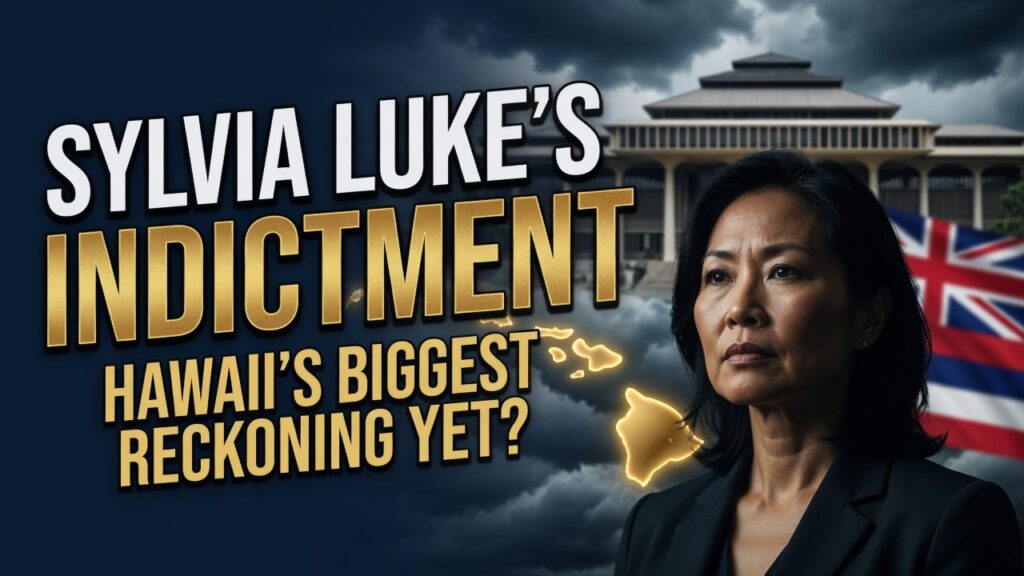
For years, Sylvia Luke was the lawmaker who lectured everyone else about following the rules. Now she is the one facing a grand jury.
As Hawaii’s sitting lieutenant governor stands charged with bribery, residents are asking a harder question: how many other officials have been trading public money for campaign cash, and how long would it have stayed hidden without an FBI wire?
A sitting lieutenant governor was just indicted on felony bribery charges. That alone should be a five-alarm story in every newsroom in America.
On July 24, 2026, an Oahu grand jury returned a 12-count indictment charging Sylvia Luke, Hawaii’s Democratic lieutenant governor, with criminal conspiracy to commit bribery, bribery, and falsifying candidate committee reports. Four other officials and a politically connected lobbyist were indicted alongside her. Governor Josh Green has publicly called on Luke to resign. She has not.
Support Independent Local Journalism
TheTownHall.News is a non-profit reader-supported journalism. Just $5 helps us hire local reporters, investigate important issues, and hold public officials accountable across Alameda County. If you believe our community deserves strong, independent journalism, please consider donating $5 today to support our work.Is This Really About Checks in an Envelope?
The indictment alleges that in January 2022, while Luke chaired the powerful House Finance Committee, lobbyist Tobi Solidum placed an envelope on the table during a private dinner at Morton’s The Steakhouse in Honolulu. Inside were two $5,000 checks made out to “Friends of Sylvia Luke.”
Precision matters. The indictment does not allege Luke personally handled cash. Co-defendants Ryan Yamane and Ford Fuchigami are separately accused of taking actual cash. Luke’s alleged conduct involves campaign checks and a promised total of $70,000 tied to COVID-19 testing funding decisions.
That distinction matters because prosecutors must prove not that money changed hands, but that it changed hands in exchange for official action. If a public official can trade her office for campaign checks at a steakhouse and call it fundraising, what exactly is bribery anymore?

Who Else Got Caught in the Net?
Luke wasn’t indicted alone. The grand jury also charged Solidum, the lobbyist who allegedly orchestrated the scheme; Yamane, former director of Hawaii’s Department of Human Services; Fuchigami, a Transportation Department official; and Leo Asunción, a former Public Utilities Commission chair who also served as Luke’s campaign treasurer.
This wasn’t one rogue lawmaker. It was a network allegedly funneling money and favors around a taxpayer-funded COVID-19 testing program tied to the National Kidney Foundation of Hawaii. Solidum reportedly needed state health officials and legislators to approve emergency funding to keep his contracts running.
The case only exists because former state Rep. Ty Cullen, who attended the Morton’s dinner, was already cooperating with the FBI after his own bribery conviction. Without that wire, this may never have surfaced.
What Happens If No One Had Been Recording?
Support Independent Local Journalism
TheTownHall.News is a non-profit reader-supported journalism. Just $5 helps us hire local reporters, investigate important issues, and hold public officials accountable across Alameda County. If you believe our community deserves strong, independent journalism, please consider donating $5 today to support our work.That’s the uncomfortable question hanging over this case. Cullen’s cooperation came from a separate federal prosecution, not a routine ethics review or internal whistleblower. Hawaii’s state government did not catch this on its own.
State Attorney General Anne Lopez only opened an investigation in January 2026, after sustained public pressure, having initially said she would defer to federal authorities. The six-month probe that followed included dozens of interviews and a review of thousands of documents.
$70,000. The question no one at the State Capitol wants to answer: how many other “influential lawmakers” never got caught on tape?
Why Did the Governor’s Own Cabinet Get Swept Up Too?
Yamane served as director of Hawaii’s Department of Human Services under Governor Green himself before stepping down this spring as subpoenas began circulating. Green’s own administration was not immune to the scandal he now publicly condemns.
Green’s response has been limited to a written statement urging Luke to “consider formally resigning.” Under Hawaii’s system, a governor cannot unilaterally remove a lieutenant governor elected on a separate ticket, a structural gap worth remembering next time someone claims the executive branch can police itself.
“The Lieutenant Governor needs to consider formally resigning to address this matter and so that the state of Hawaii can move forward.”
That single line is the entirety of the governor’s public reckoning with a bribery indictment against his second-in-command. Is that accountability, or just damage control dressed up as concern?
Is This the End of Luke’s Political Career?
Luke ended her reelection campaign in April 2026 and took unpaid leave after receiving a target letter. She has denied wrongdoing, saying she “never granted special favors to a contributor” and has “prized integrity and honesty above all.” She has not resigned the office itself.
Legal observers note the case against Luke may be harder to prove than against her co-defendants, since the indictment shows no explicit quid pro quo, and at points in the recorded conversation she appears to turn down additional money. That nuance matters, and it’s reason for careful, fact-based coverage rather than a rush to conviction in the court of public opinion.
What Do Supporters of Luke Actually Believe?
Luke’s defenders make a real argument worth engaging: campaign contributions are a routine, legal part of American politics, and accepting checks from a donor isn’t automatically bribery. They note the indictment doesn’t allege she pocketed cash, and prosecutors acknowledge the case lacks a clean, recorded quid pro quo.
That argument deserves a fair hearing. But it runs into a problem: prosecutors allege Luke accepted the checks with the specific “intent to use the power of her elected position” to direct funding toward a lobbyist’s COVID testing contracts. Campaign contributions are legal. Accepting them in direct exchange for official action, prosecutors allege, is not. The distance between generous donor and bribed official is exactly what a jury will now be asked to measure.
Key Questions This Case Raises
- Would this story get the same low-key coverage if Luke were a Republican?
- How many officials have taken “campaign contributions” tied to funding decisions that were never caught on tape?
- Does Hawaii’s structure, where a governor cannot remove an indicted lieutenant governor, need reform?
Are Our Leaders Even Listening Anymore?
Luke spent a decade as the powerful chair of Hawaii’s House Finance Committee, controlling the state budget and, by her own account, holding others to a high standard. That record is precisely why this indictment lands so hard. Voters were told fiscal discipline and integrity were the point. Now they’re reading an indictment describing checks passed at a private dinner.
Public trust erodes every time a case surfaces only because of a lucky federal wiretap rather than routine oversight. Hawaii taxpayers funded a COVID-19 testing program to protect public health during a genuine emergency. Prosecutors now allege that same program became a vehicle for campaign cash.
Where Does the Money Trail Actually Lead?
The alleged scheme traces back to Solidum’s COVID-19 testing contracts with the National Kidney Foundation of Hawaii, work that depended on the state securing tens of millions in federal pandemic funding. Solidum allegedly told Luke he was “out like $11,000,000” and needed continued state support to keep the sites funded.
That’s a contractor allegedly buying influence over the emergency health funding he depended on financially. If it holds up in court, it’s exactly the self-dealing fiscal watchdogs warned about since the earliest days of pandemic-era emergency spending, when normal contracting safeguards were waived for speed.
Still Have Questions? Here’s What Comes Next
The five defendants now head toward arraignment, and prosecutors have signaled the case against Luke’s co-defendants may be more straightforward than the one against Luke. Her bail was set at $80,000. Solidum, the lobbyist at the center of it all, has reportedly left the country, and whether he returns to face trial remains an open question.
None of this is settled. Every defendant is presumed innocent, and Luke has disputed the most serious characterizations of her conduct. But an indicted sitting lieutenant governor, a taped dinner, checks passed for a public health contract, these are no longer allegations from an anonymous tipster. They are the findings of a state grand jury.
Has Hawaii’s Government Finally Been Forced to Answer For Itself?
The real question isn’t whether Sylvia Luke broke the law. That’s now a matter for a jury. The real question is whether Hawaii, and every state government that handled pandemic-era emergency funding with minimal oversight, will finally face the accountability voters were promised, or whether this fades from headlines before trial ever begins.
What do you think? Is Hawaii’s political establishment capable of policing itself, or does it take an FBI wire to expose what’s really happening behind closed doors? Share this story and let us know.
Still have questions? Subscribe for daily coverage as the story develops. Want your voice heard? Contact your state representative and ask what oversight reforms they support for emergency contracting.