Iran Ceasefire Collapse: What It Means for Oil Prices, Troops, and Gulf Allies?
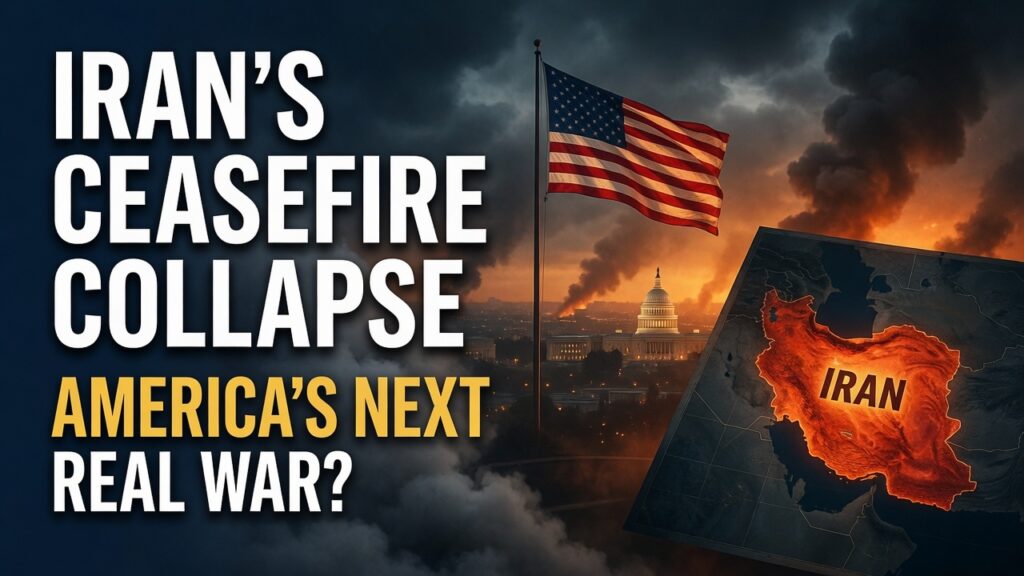
The ceasefire didn’t fray. It broke.
For the second straight day, American and Iranian forces are exchanging fire across the Persian Gulf, and the fragile truce that was supposed to end a war launched on February 28 is now hanging by a thread. U.S. Central Command says American forces struck roughly 90 Iranian targets overnight — air defense systems, coastal radar, missile and drone storage sites — after President Trump declared the ceasefire “over” following Iranian attacks on commercial shipping in the Strait of Hormuz.
What Just Happened in the Strait of Hormuz?
The trigger was simple: Iran attacked ships it doesn’t control passage over. A tanker caught fire off the coast of Oman on July 6 after being struck by an unidentified projectile, and U.S. officials say Iran’s Revolutionary Guard fired missiles at two more commercial vessels the same night. If a foreign power fired on civilian ships in your local shipping lane, would anyone call that an act of war? Trump, speaking from the NATO summit in Turkey, called the ceasefire over and warned strikes would “get much worse” if Iran hit ships again.
Tehran didn’t back down. It hit back — not at the U.S. directly, but at three American allies sitting in its blast radius.
Support Independent Local Journalism
TheTownHall.News is a non-profit reader-supported journalism. Just $5 helps us hire local reporters, investigate important issues, and hold public officials accountable across Alameda County. If you believe our community deserves strong, independent journalism, please consider donating $5 today to support our work.Why Did Iran Strike U.S. Allies in the Gulf?
Iran’s Revolutionary Guard launched missiles and drones at Qatar, Bahrain, and Kuwait, all home to American military installations, triggering air raid sirens across the region. Bahrain’s defense force said its systems intercepted “a number” of the incoming attacks; Kuwait confirmed it was “confronting hostile missile and drone attacks” without naming the source. This is the strategic reality Washington now faces: Iran cannot reliably strike the U.S. mainland, but it can put every American ally in the region on a war footing overnight. That’s not de-escalation — that’s Iran testing how far it can push before America blinks.
The IRGC Navy, for its part, insists foreign powers have “no stake” in the strait and warned that continued American involvement would draw a “crushing response.” Translation: Tehran believes it — not international law — decides who moves through one of the world’s busiest oil chokepoints.
Who Is Really Paying the Price at the Pump?
Oil prices jumped more than 5% the moment Trump said the deal was dead, before settling to around $73 a barrel as traders tried to gauge whether the strait would stay open. Before the war began, roughly 20 percent of the world’s oil and gas moved through Hormuz on a normal day [industry/shipping data]. That number collapsed to a trickle at the height of the fighting and has only partially recovered since.
20 percent. That’s the share of global oil and gas that depends on a 90-mile stretch of water Iran now claims the right to police on its own terms.

The question no one in Washington wants to answer: how long can American energy policy stay hostage to a single foreign regime’s mood?
Is Washington Weighing Attacks on Civilian Infrastructure?
Here’s where the story gets genuinely alarming. Trump has floated striking Iranian civilian infrastructure — power plants and desalination facilities — if the attacks on shipping continue. He also said U.S. forces hit Kharg Island, Iran’s primary oil export terminal, and suggested the U.S. “could take over” the facility outright.
“I don’t want to do that, but if we have to, we’ll take them out.”
Targeting civilian power and water infrastructure is widely considered a violation of the laws of armed conflict. That’s not a talking point from either side of this fight — it’s a red line international law has recognized for decades. If the administration is even considering it publicly, Americans deserve a direct answer about the legal and strategic reasoning behind it, not a passing comment from Air Force One.
Meanwhile, nearly 6,000 seafarers remain stranded around the strait as the fighting drags on, according to the United Nations’ maritime agency. 6,000 stranded sailors. The question is why anyone believed this ceasefire was stable enough to risk their safety on.
What Do Supporters of a Hardline Response Actually Believe?
It’s worth engaging honestly with the administration’s position rather than dismissing it outright. Supporters of the renewed strikes argue that Iran, not the United States, broke the ceasefire first by attacking commercial vessels — and that failing to respond forcefully would only invite further attacks on shipping and on U.S. allies. They point out that roughly a fifth of the world’s oil and gas depends on Hormuz staying open, and that a credible military deterrent may be the only language Tehran’s Revolutionary Guard actually respects.
Support Independent Local Journalism
TheTownHall.News is a non-profit reader-supported journalism. Just $5 helps us hire local reporters, investigate important issues, and hold public officials accountable across Alameda County. If you believe our community deserves strong, independent journalism, please consider donating $5 today to support our work.That argument has real merit. Deterrence only works if threats are backed by action, and a strait effectively closed by intimidation is a global economic emergency, not an abstract foreign policy debate. But deterrence and civilian infrastructure strikes are not the same policy — and conflating them risks turning a defensible response into a legally and strategically reckless one.
What Happens If No One in Washington Answers for This?
Congress has been asking pointed questions about this administration’s Iran strategy since March, when lawmakers demanded answers about sanctions waivers, contingency planning, and coordination with allies before the war even escalated to this point [congressional correspondence]. Many of those questions remain unanswered months later. Now the stakes are higher: American strikes, Iranian retaliation against three separate Gulf states, and a president publicly weighing the kind of civilian infrastructure targeting that international law was written to prevent.
Key Questions This Story Raises:
- If the ceasefire collapses entirely, does the administration have congressional authorization for a sustained military campaign — or is this happening by presidential decree alone?
- What legal justification, if any, exists for striking Iranian civilian infrastructure like power and water plants?
- Who is accountable if oil prices spike further and American families bear the cost of a war with no clear endpoint?
The Question That Won’t Go Away
Strip away the daily strike counts and diplomatic statements, and one question remains: is America prepared to accept the cost of open-ended conflict in the Gulf, or is anyone in Washington actually working toward an exit? The administration says it wants a deal. Iran says it wants “Iranian arrangements,” not American threats. Somewhere between those two positions, ordinary Americans are paying higher gas prices, service members are back in harm’s way, and nearly 6,000 sailors remain stuck in the middle of a war zone with no vote in any of it.
The real question isn’t whether this ceasefire has already failed — it’s whether anyone in Washington will be held accountable for what comes next.
Still have questions? Stay informed — subscribe for daily coverage.
Think others need to see this? Share the article.
Want your voice to count? Contact your congressional representative and ask directly whether they’ve authorized what’s happening in the Gulf right now.