Sheng Thao Corruption Case: What New Evidence Reveals
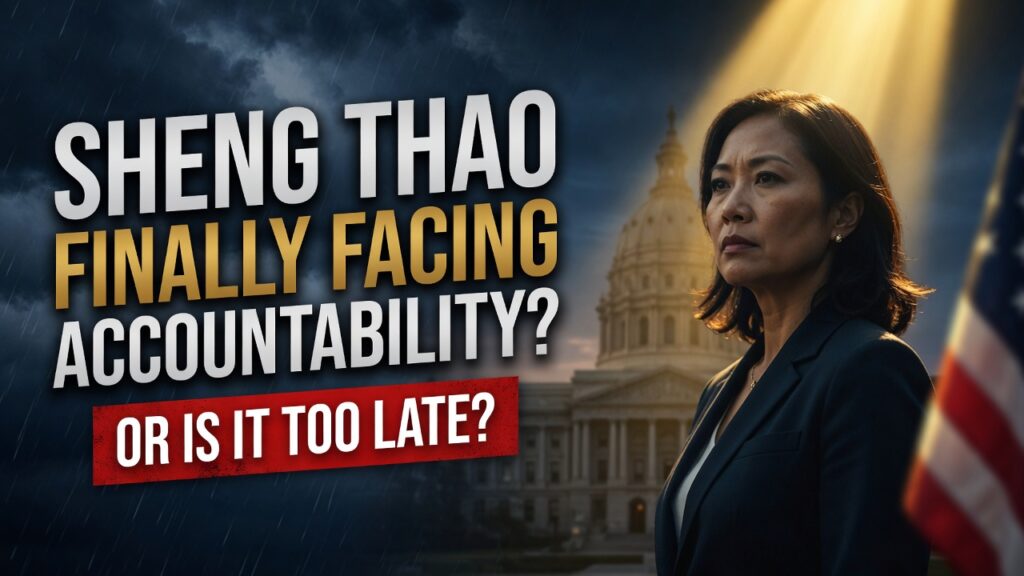
As new court filings expose blackmail videos, no-show jobs, and a second cooperator turning on her, Oaklanders are asking a blunt question: did their mayor sell the city out from under them?
Blackmail videos. Fake jobs. A guilty plea from the government’s star witness. This is not fiction — it is the federal case against former Oakland Mayor Sheng Thao.
The revelations matter now because Thao’s corruption trial is barreling toward an October 2026 start date, and prosecutors just unsealed a new wave of evidence they plan to use against her. For a city already strained by budget shortfalls and public safety concerns, the timing could not be more consequential.
Who Is Sheng Thao and Why Is She on Trial?
Thao served as Oakland’s mayor before voters recalled her from office. Federal prosecutors indicted her in January 2025 on six counts, including bribery, conspiracy, mail fraud and wire fraud, following an FBI raid on her home in June 2024. She has pleaded not guilty and faces a maximum of 95 years in prison if convicted on all counts, though sentences of that length are rarely imposed in practice.
Three co-defendants face the same core allegations: Thao’s longtime partner, Andre Jones, and David Duong along with his son Andy Duong, who run California Waste Solutions, Oakland’s curbside recycling contractor. Prosecutors allege the Duongs also controlled a company called Evolutionary Homes that pursued government contracts to sell converted shipping containers as homeless housing to Bay Area cities. All four defendants remain free on bail with travel restrictions and have consistently denied wrongdoing.
Support Independent Local Journalism
TheTownHall.News is a non-profit reader-supported journalism. Just $5 helps us hire local reporters, investigate important issues, and hold public officials accountable across Alameda County. If you believe our community deserves strong, independent journalism, please consider donating $5 today to support our work.What Do the New Court Filings Actually Allege?
According to documents made public by prosecutors, the government intends to introduce evidence involving alleged blackmail-style recordings, allegations of a massage parlor visit, and what it describes as a “no-show job” arranged for Jones. Prosecutors argue that Thao’s threats to sever her relationship with David Duong unless problems were “fixed” demonstrate the existence of a bribery conspiracy, not merely a personal dispute.
If your mayor allegedly threatened to walk away from a business relationship unless a problem got “fixed,” would you call that public service or a shakedown?
The government’s theory centers on an alleged pay-to-play arrangement: campaign support and personal financial benefits for Thao and Jones in exchange for Thao’s help steering city contracts and favors toward the Duongs’ businesses. None of these allegations have been proven in court, and Thao’s defense has repeatedly challenged both the credibility of the government’s witnesses and the strength of the underlying evidence.
Who Is Turning on Sheng Thao — and Why Does It Matter?
Two figures central to the government’s case have already pleaded guilty. Former San Leandro City Councilmember Bryan Azevedo admitted in February 2026 to conspiracy to commit fraud, acknowledging he helped Evolutionary Homes pursue a San Leandro contract in exchange for a cash bribe and a cut of future sales.
More recently, Mario Juarez — described by prosecutors as a key informant whose falling-out with the Duongs helped trigger the 2024 FBI raids — pleaded guilty to conspiring to commit bribery. Juarez is expected to testify that one of the Duongs regularly recorded politicians in compromising situations for potential leverage. A federal judge already rejected defense efforts to suppress evidence tied to Juarez back in April 2026, a setback for Thao’s legal team heading into trial.
Two cooperators. One informant with a documented history of leverage tactics. How many insiders have to flip before a “conspiracy theory” becomes a conspiracy case?
What Do Supporters of Sheng Thao Actually Believe?
Thao’s defense team, led by attorney Jeffrey Tsai, has argued publicly and in court filings that the government’s case rests heavily on a single cooperating witness whose credibility is deeply compromised. They contend the indictment is long on allegations and short on hard evidence, and that ordinary political relationships — campaign donations, favors between allies — are being recast as criminal conspiracy.
This is a fair point worth engaging honestly. Prosecutors do carry the burden of proving intent beyond a reasonable doubt, and cooperating witnesses facing their own charges have obvious incentives to tell prosecutors what they want to hear. The judge’s April ruling against suppression does not resolve that credibility question; it simply allows a jury to weigh it.
Still, the emergence of a second independent cooperator, Azevedo, whose plea covers a separate contract scheme involving the same network of businesses, makes the “one unreliable witness” defense harder to sustain. When multiple insiders across different alleged schemes describe a similar pattern, prosecutors argue that consistency itself is evidence.
What Do the Numbers Actually Tell Us?
Six federal counts. Four defendants. Two guilty pleas from cooperating witnesses. The question Oakland taxpayers deserve answered before October: how much city business was shaped by relationships prosecutors say were built on bribery, not merit? [federal court filings]
Oakland’s government has spent recent years wrestling with budget deficits, police staffing shortfalls, and public frustration over basic city services. A trial exposing an alleged pay-to-play culture at the top of city government does not exist in a vacuum — it lands squarely on residents already questioning whether their tax dollars are managed responsibly.

“Did their mayor threaten to walk away from a relationship unless the problem got fixed — and if so, whose problem was actually being solved?”
Is This the Accountability Moment Oakland Has Been Waiting For?
For years, critics of Oakland’s city government have argued that oversight of contracting and campaign finance was too weak to catch problems before they metastasized. The Thao case, if prosecutors’ allegations hold up at trial, would confirm some of the sharpest of those criticisms: that access to city contracts could allegedly be bought, and that a recycling contractor and a struggling mayor’s office found mutual benefit in looking the other way.
Is it possible to run a $2 billion city budget honestly when even the mayor’s office is accused of running its own side deals?
That question extends beyond Thao herself. It touches every city department that approves contracts, every council member who votes on them, and every resident whose garbage bill, housing dollars, or public safety budget may have been shaped by decisions prosecutors say were compromised.
What Happens If Oakland Voters Stop Paying Attention?
A recall already removed Thao from office once voters concluded her leadership had failed the city. But a recall is not a conviction, and the criminal case now carries far higher stakes: prison time, forfeiture, and a definitive federal judgment on whether Oakland’s city hall was, as prosecutors allege, for sale.
If the trial proceeds as scheduled in October, jurors — not pundits — will decide whether the government’s evidence proves a criminal conspiracy beyond a reasonable doubt. Until then, the presumption of innocence applies to Thao and her co-defendants, and Oakland is left waiting for answers it has been demanding since the 2024 FBI raids first became public.
So is Sheng Thao finally facing accountability, or will a trial delayed into its second year simply fade into another headline Oakland forgets? The real question isn’t whether the allegations are serious — it’s whether the system built to police city hall will actually hold anyone accountable when it matters.
Key Questions
- Did Sheng Thao’s alleged relationship with a city contractor cross the line from political access into criminal bribery?
- Why did two separate cooperating witnesses, tied to different alleged schemes, describe a similar pattern of payments and favors?
- What does it say about oversight at Oakland City Hall that these allegations went undetected for years?
Still have questions about how this case could reshape Oakland’s government? Stay informed — subscribe for daily coverage. Think other Oakland residents need to see this? Share the article. Want your voice to count? Oakland City Council meetings are open to the public and posted on the city’s website — attend one and ask how contracting oversight is being reformed.