Mail Ballot Rule: Why the Courts Blocked Trump’s USPS Order
One day before the midterms clock ran out, the Supreme Court sided with a single federal judge over a president trying to verify who actually gets a federal mail ballot.
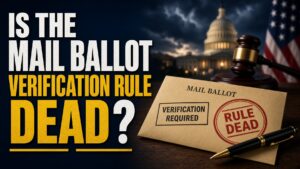
One judge in Boston just outlasted the president of the United States. On September 14, 2026, the Supreme Court refused to let the Trump administration enforce a new U.S. Postal Service rule built to keep federal mail ballots out of the hands of people who aren’t eligible to vote.
The timing matters more than the ruling itself. Midterm ballots are already printing in some states, and the rule the Court just sidelined was supposed to verify, before Election Day, that mail ballots go only to registered, eligible voters [SCOTUS order, Sept. 14, 2026].
Support Independent Local Journalism
TheTownHall.News is a non-profit reader-supported journalism. Just $5 helps us hire local reporters, investigate important issues, and hold public officials accountable across Alameda County. If you believe our community deserves strong, independent journalism, please consider donating $5 today to support our work.What Did the USPS Mail Ballot Rule Actually Require?
The rule traces back to an executive order President Trump signed in March 2026, aimed at stopping noncitizens from voting in federal elections. It directed the Department of Homeland Security to build “citizenship lists” of eligible voters, ordered the attorney general to prioritize prosecuting officials who issue ballots to ineligible voters, and instructed the Postal Service to withhold delivery of any mail ballot from a voter not on a state-verified list [executive order text, March 2026].
On August 21, 2026, USPS finalized that rule. It required ballot envelopes to carry a specific Election Mail logo, a unique tracking barcode, and machine-compatible formatting — and it barred delivery of ballots from voters states hadn’t verified through a new online portal [USPS final rule, Aug. 21, 2026]. If a rule exists purely to confirm a mail ballot came from an eligible voter, why did twenty-three states sue to stop it?
Why Did a Single Judge Block a National Election Rule?
Twenty-three Democratic-led states, joined by national voting-rights groups, sued within days. A federal judge in Boston, Indira Talwani, issued a nationwide injunction blocking the rule before it ever took effect, ruling the administration had likely overstepped by dictating ballot-verification procedures that the Constitution assigns to the states [court filing, D. Mass.].
That single injunction has now outlasted two separate trips to the Supreme Court. In late August, the justices let one narrow piece of the order proceed — the DHS citizenship-list directive — reasoning it was merely an internal command to a federal agency that didn’t yet injure anyone [SCOTUS order, Aug. 2026]. Justice Ketanji Brown Jackson dissented, warning the ruling would “needlessly injec[t] chaos and uncertainty into the upcoming midterm elections.”

What Happened at the Supreme Court This Week?
On Monday, the administration went back to the Court asking it to let the actual USPS delivery rule take effect for the midterms. The justices said no, leaving Talwani’s nationwide block fully in place for the ballot-verification portion of the order [SCOTUS order, Sept. 14, 2026].
The vote wasn’t close to unanimous in its reasoning. Justices Samuel Alito and Clarence Thomas dissented, meaning they would have let the verification rule proceed. Justice Brett Kavanaugh sided with the majority but on narrower grounds — agreeing the rule couldn’t realistically be rolled out this close to Election Day, not necessarily that the rule itself was unlawful [SCOTUS order, Sept. 14, 2026].
A president tried to confirm mail ballots go only to eligible voters — and one district judge has now blocked that effort through two Supreme Court rulings. That is the plain reality election officials in dozens of states are now operating under, six weeks before ballots start going out.
Who Actually Controls Federal Ballot Verification?
This is where the legal fight gets serious, and it deserves an honest answer rather than a talking point. States, not the federal government, have historically run the mechanics of federal elections — who gets a ballot, how it’s verified, what it looks like. The states challenging this rule argue the executive branch simply doesn’t have unilateral authority to rewrite that process through an executive order, however legitimate its stated goal.
Is it really “chaos” to ask whether a ballot went to someone actually eligible to receive it — or is chaos what happens when nobody can answer that question at all?
That’s a fair constitutional question, and it’s still working its way through full litigation rather than being settled by an emergency order. But it’s worth being precise about what actually happened this week: the Court didn’t rule noncitizen-voting safeguards are unconstitutional. It ruled the timeline was too tight to implement new verification procedures for this specific midterm cycle.
Support Independent Local Journalism
TheTownHall.News is a non-profit reader-supported journalism. Just $5 helps us hire local reporters, investigate important issues, and hold public officials accountable across Alameda County. If you believe our community deserves strong, independent journalism, please consider donating $5 today to support our work.What Do Supporters of the Rule’s Critics Actually Believe?
Opponents of the rule make a real argument that deserves engagement, not dismissal. They contend that requiring states to upload voter data to a new, largely untested federal USPS portal on a compressed timeline risks disenfranchising legitimate voters through technical errors, not fraud — and that redesigning ballot envelopes weeks before an election invites exactly the kind of confusion the rule claims to prevent.
That concern about execution is legitimate. Rushed rollouts of new government systems do produce errors, and voters shouldn’t lose a legal ballot to a barcode glitch. But an execution problem is a reason to fix the rollout, not a reason to abandon the underlying principle that only eligible, verified voters should receive a federal ballot. Critics who conflate “this timeline is too rushed” with “verification itself is illegitimate” are answering a different question than the one actually in dispute.
- That’s how many states sued to block a rule requiring ballot delivery only to verified voters. The question their own lawsuits don’t answer: what should replace verification while the case is litigated?
Why Does This Fight Outlast Any Single Ruling?
Nearly one in three Americans voted by mail in the 2024 general election, spanning both parties fairly evenly [reported voter turnout data]. That means how mail ballots get verified isn’t a fringe procedural detail — it shapes how tens of millions of Americans actually cast a federal vote.
A rule built to confirm ballots reach eligible voters has now been blocked twice by one judge and left in place by the Supreme Court — without the underlying constitutional question ever being resolved. Whichever side of this fight you’re on, that’s not a stable place for election law to sit heading into a midterm.
The administration can still pursue full review of Talwani’s injunction on the merits, and the citizenship-list provision the Court already allowed to proceed remains active. But the delivery-verification rule itself — the part that would have actually changed how ballots reach voters this fall — is dead for 2026, whatever happens afterward.
Key Questions This Story Raises:
- If states, not the federal government, control ballot verification procedures, what recourse exists when a president believes state-level safeguards are inadequate?
- Does blocking a verification rule for timing reasons settle whether the rule is constitutional, or just delay the real fight past this election?
- How many more election-law disputes will be decided on emergency shadow-docket orders instead of full merits rulings before Americans vote in November?
So did the Supreme Court just protect states from federal overreach, or did it leave a real accountability gap open through another election cycle? The legal fight over who verifies a federal mail ballot isn’t over — it’s just been postponed past the one election it was written to affect. The real question isn’t whether Washington will eventually settle who controls ballot verification. It’s whether voters will trust the answer by the time anyone actually gives one.
Still have questions about what this means for your ballot this fall? Stay informed — subscribe for daily coverage of election law and accountability. Think your neighbors need to understand what just happened at the Supreme Court? Share this article. Want your voice to count? Contact your secretary of state’s office and ask what ballot-verification safeguards apply in your state right now, while this case remains in litigation.