Congress Sexual Misconduct Settlements: Taxpayers to Finally Learn Who Was Involved
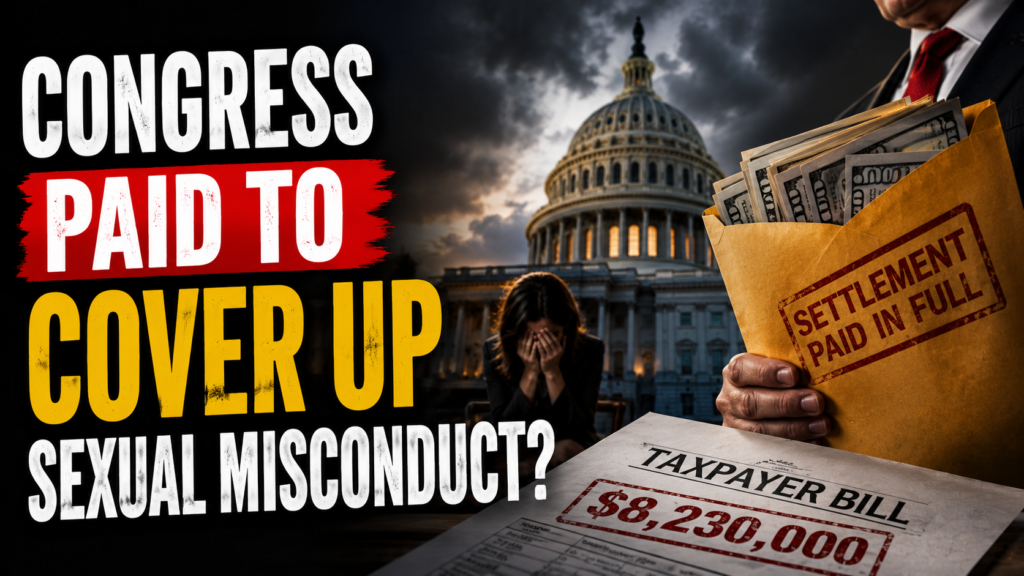
A stunning 420-0 House vote just forced open a door Washington has kept locked for decades. The names are coming — and so is a reckoning.
The vote was unanimous. Not a single member of the House of Representatives was willing to go on record defending secrecy. The House on Tuesday approved a resolution directing the Ethics Committee to name all lawmakers who have been involved in sexual harassment cases that have paid out settlements with taxpayer dollars — and the measure passed 420-0. That number alone should tell you something about how indefensible the status quo had become. Washington Times
This isn’t a partisan story. It’s an accountability story — and it has been waiting to be told for more than three decades. Ordinary Americans who follow the rules, report to HR, and face real consequences at work have been bankrolling a system that allowed members of Congress to do the opposite.
Support Independent Local Journalism
TheTownHall.News is a non-profit reader-supported journalism. Just $5 helps us hire local reporters, investigate important issues, and hold public officials accountable across Alameda County. If you believe our community deserves strong, independent journalism, please consider donating $5 today to support our work.What Is the Congressional Slush Fund — and How Long Has It Existed?
The answer is uncomfortable, but it is not complicated. Congress has for decades had a taxpayer-funded system for settling workplace disputes, including sexual harassment, created under the Congressional Accountability Act of 1995, with settlements paid from the U.S. Treasury. For most of that period, the public had no right to know which lawmakers were involved or how much their misconduct cost. Straight Arrow News
A congressional account has paid out more than $17 million across 264 cases, covering sexual harassment and other workplace complaints, with public funds disbursed before any member reimbursement is required. Not all of those cases involved sexual misconduct — the fund covered a range of workplace violations — but the absence of a public breakdown is itself part of the problem. Americans were never given the full accounting they were owed. Straight Arrow News
$17 million in taxpayer funds paid out through a congressional account covering workplace misconduct. The question no one in Washington wanted to answer: who authorized these payments, and why were the names buried? [Congressional Office of Compliance data]
Taxpayer money funds settlements for congressional misconduct complaints, members who resign under investigation face no financial penalty, and the identities of lawmakers involved remain hidden from the public. When an accused member resigns, Ethics Committee investigations automatically stop, and the member is not required to repay settlement funds. That is not accountability. That is a blueprint for impunity. Straight Arrow News

How Did Rep. Thomas Massie Force This to the Floor?
By using a privileged resolution — a procedural mechanism that allows individual lawmakers to bypass traditional committee bottlenecks and command immediate floor consideration — Massie compelled a direct vote on transparency measures that congressional leadership has historically been hesitant to advance. One America News Network
Leadership did not schedule this vote. No committee chairman championed the cause. Massie, a Kentucky Republican who recently lost his primary, forced the issue himself. After losing his primary to a challenger backed by President Donald Trump, the Kentucky Republican said he was looking to check more items off his list before the end of the current Congress. Roll Call
The fact that it took one outgoing congressman using a procedural maneuver to force a 420-0 vote tells you everything about why this information stayed hidden for so long.
Massie said his resolution is designed to provide more transparency around settlements paid between 1995 and 2018 and close a potential loophole of the updated law. Congress updated the Congressional Accountability Act in 2018 — requiring members to personally reimburse the Treasury for settlements — but Massie argued the reform left critical gaps. The Kentucky lawmaker said he discovered there were no reported cases involving any members repaying sexual harassment settlements since then. Zero repayments. Not one. Washington TimesFox News
What Does the Resolution Actually Require?
The resolution directs the Ethics Committee and the Office of Congressional Workplace Rights to produce a “single consolidated list” that includes the name of each member, delegate, or resident commissioner who was the subject of an investigation into sexual harassment that resulted in a monetary settlement, along with the total amount of taxpayer funds involved. The Hill
Support Independent Local Journalism
TheTownHall.News is a non-profit reader-supported journalism. Just $5 helps us hire local reporters, investigate important issues, and hold public officials accountable across Alameda County. If you believe our community deserves strong, independent journalism, please consider donating $5 today to support our work.The directive requires the disclosure of names and exact amounts of public funds disbursed, with the House Ethics Committee and the Office of Congressional Workplace Rights given 60 days to comply. No action by the Senate is required. The clock is now running. The Committee on Ethics must now preserve and publicly release all relevant records and information, including names and settlement amounts. One America News NetworkWLT Report
“American taxpayers are not a slush fund for Congress to buy its way out of accountability.” — Rep. Nancy Mace (R-S.C.)
There is one caveat worth noting: the Office of Congressional Workplace Rights said case files prior to 2004 were destroyed under a previous record retention policy. Some of the history may be gone permanently, which raises its own questions about how these records were managed. Washington Times
What Has Already Been Uncovered?
The pressure campaign did not begin with Massie’s resolution. The House Oversight Committee passed Rep. Nancy Mace’s motion to subpoena the Office of Congressional Workplace Rights, demanding the release of all awards and settlements paid pursuant to Section 415 of the Congressional Accountability Act prior to December 12, 2018 for misconduct by members of Congress. Newsweek
Records obtained through that process showed that more than $300,000 in taxpayer funds had been used to settle allegations involving House members or their offices. Two former members have already been publicly named in prior disclosures: Blake Farenthold, a Texas Republican who resigned in disgrace in 2018 amid a House ethics probe into sexual misconduct allegations, and Patrick Meehan, a Pennsylvania Republican who similarly resigned in 2018 amid reports he used taxpayer funds to settle a sexual harassment suit filed by a former staffer. The HillFox News
The 2026 votes come in the wake of several scandals that rocked the lower chamber, including the resignations of both Rep. Eric Swalwell (D-CA) and Rep. Tony Gonzales (R-TX) after they faced sexual assault and sexual misconduct allegations, respectively. Those departures accelerated demands that Congress stop treating its own members as a protected class when it comes to workplace misconduct. Washington Examiner
What Do Supporters of This Policy of Confidentiality Actually Believe?
This is a fair question, and it deserves a fair answer. Some legal advocates have argued that confidentiality protections in settlement agreements were established partly to protect victims — not just accused members. Washington attorney Les Alderman, who has represented congressional harassment victims, argued that confidentiality “protects victims from the media frenzy that follows when members of Congress are the subject of discrimination and harassment lawsuits” and helps victims secure future employment after escaping a hostile work environment. GovTrack.us
Additionally, critics of the disclosure push have noted that some settlement claims may involve accusations that were never adjudicated or proven. Releasing names without legal findings, they argue, could damage reputations without establishing guilt. There have been concerns about privacy and due process in recent efforts to disclose sexual misconduct settlements within Congress, particularly when it comes to sensitive cases. Deseret News
These concerns are legitimate — and they are also the exact argument that powerful institutions have used for decades to shield themselves from scrutiny. The answer is not to keep the public permanently in the dark. It is to build disclosure frameworks that protect genuine victims while ending the practice of using public money as a hush-money mechanism. Massie’s resolution attempts to thread that needle. Whether the Ethics Committee complies in good faith will be the real test.
Is This Finally the Accountability Moment Americans Have Been Waiting For?
If members of Congress can use taxpayer dollars to silence accusers and face no public disclosure, no repayment obligation, and no political consequence — what exactly does accountability mean in Washington?
Massie said on the House floor: “We need to know what’s been going on here in the House of Representatives in order to convince the people and assure the people that we are conducting the people’s business with the utmost integrity and treating the officers and employees of this institution with the respect that they deserve.” Those are words that should have been spoken much earlier. They should have produced action much sooner. But the 420-0 vote suggests that, at least on paper, no one in the House was willing to defend the alternative. Washington Times
As the 60-day window begins, the pressure is now on congressional offices to account for how public funds were used during a period of significant institutional opacity. Advocacy groups, watchdog organizations, and ordinary citizens will be watching. Elected officials who spent years hiding behind procedural inertia now have nowhere left to hide. SNAP
The deeper question is what happens after the list is published. Will members who authorized settlements face censure? Will the public demand resignations? Will Congress finally establish an enforcement mechanism with teeth — one that cannot be quietly defunded or ignored? A unanimous vote is a beginning. It is not yet a conclusion.
Key Questions
- Which currently serving members of Congress will appear on the Ethics Committee’s disclosure list — and will any face additional consequences beyond public exposure?
- Since the 2018 reform required members to personally repay settlements and zero repayments have been reported, who is responsible for enforcing that obligation — and why hasn’t it happened?
- Will the 60-day deadline actually be met, or will bureaucratic delays bury the disclosure before the current Congress adjourns?
The real question isn’t whether this story matters — a unanimous House vote answers that. The question is whether Washington will allow the disclosure to produce real accountability, or whether the list will be released quietly, the news cycle will move on, and the same culture of institutional self-protection will reassert itself.
Think others need to hear this? Share the article and let us know in the comments: does a 420-0 vote mean Congress is finally serious about accountability — or is this too little, too late?
Still have questions? Subscribe to The Town Hall News for daily coverage of government accountability at the local, state, and federal level.
Want to make your voice count? Contact your representative’s office and ask directly: will they commit to reviewing the Ethics Committee’s disclosure when it is released and supporting enforcement action against any members named?