James Comey Indictment: Critical Case That Could Change Free Speech
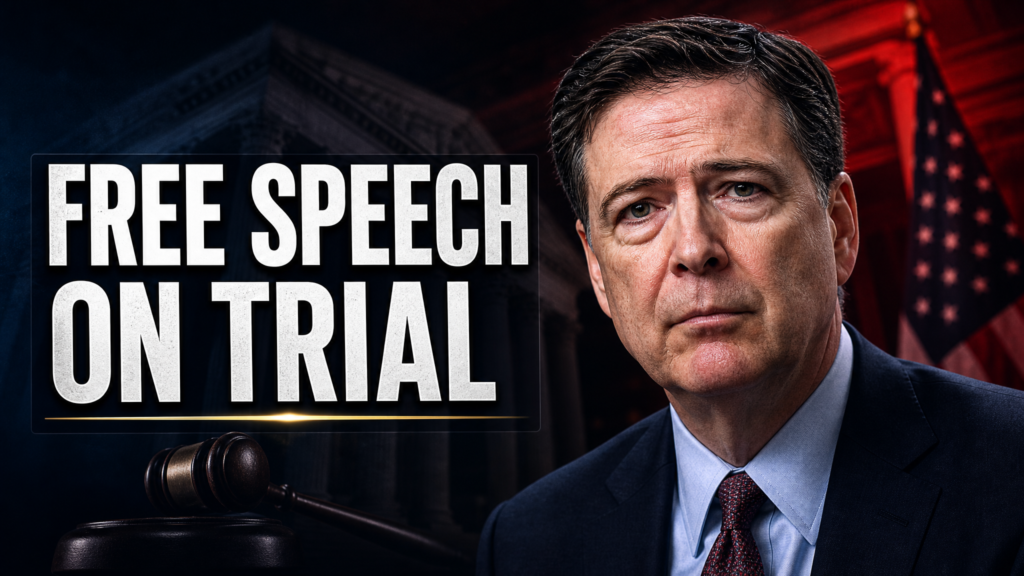
James Comey has been indicted, but the real story is bigger than one former FBI director. With Kash Patel calling the charges “two felony counts” and the court calendar now stretching into the fall, this case is becoming a national test of law and order, prosecutorial restraint, and the boundaries of political speech.
This case is bigger than James Comey.
On April 28, the Justice Department announced that a federal grand jury in the Eastern District of North Carolina had indicted former FBI Director James Comey on two counts tied to his 2025 Instagram post showing seashells arranged as “8647.” The DOJ says the charges are threatening the president and transmitting a threat in interstate commerce. As of this week, the case is still in its pretrial phase, with Comey’s arraignment delayed until Sept. 30 and trial now scheduled for Oct. 21 if the indictment survives expected motions to dismiss. DOJ NBC News WNCT
Support Independent Local Journalism
TheTownHall.News is a non-profit reader-supported journalism. Just $5 helps us hire local reporters, investigate important issues, and hold public officials accountable across Alameda County. If you believe our community deserves strong, independent journalism, please consider donating $5 today to support our work.That timeline matters because this is not a conviction story. It is a power story. A country that refuses to investigate threats against a president invites chaos. But a government that stretches ambiguous political speech into felony territory invites something else: selective justice, chilled speech, and a dangerous expansion of state power. For readers who care about free speech, law and order, and limited government, both risks should be unacceptable. FBI Reuters
Key Takeaway
- The DOJ has indicted Comey on two felony counts, but he has not been convicted and is presumed innocent.
- The case now turns on whether prosecutors can prove the “8647” post was a true threat, not just offensive or reckless political speech.
- The stakes go far beyond one defendant: this case could shape how aggressively the government polices political expression. DOJ Reuters
Why This Issue Matters Now
The facts that can be firmly established are straightforward. The DOJ says Comey is charged under 18 U.S.C. § 871(a) and 18 U.S.C. § 875(c) over the post. Patel said publicly that Comey had been indicted on “two felony counts,” and the FBI transcript records him saying the grand jury returned a two-count indictment after investigators spent roughly 9 to 11 months on the matter. Comey, for his part, has denied wrongdoing and said he did not intend the image as a threat. DOJ FBI NBC News
10 years. That’s the maximum penalty the DOJ says Comey faces if convicted. [Source category: DOJ press release] DOJ
That penalty is serious, which is precisely why the standard of proof must be serious. When the federal government labels speech a threat, it cannot rely on vibes, partisan emotion, or internet shorthand interpreted in the worst possible light. A criminal indictment is one of the state’s heaviest tools. Using it demands precision, especially in a political climate already poisoned by distrust. Reuters

A justice system that punishes clear threats protects liberty. A justice system that stretches vague speech into felonies endangers it.
The 11-Month Investigation That Raises Bigger Questions
Patel’s remarks were meant to project seriousness and neutrality. He said every threat case involving public officials or private citizens receives the same investigative effort and that Comey would get full due process. That is exactly what the country should demand: equal application of the law and a careful record before any prosecution moves forward. FBI
But equal justice requires more than stern rhetoric. Reuters reported that legal scholars have sharply questioned whether prosecutors can meet the high First Amendment bar in a case built around ambiguous numbers and social-media interpretation. The Supreme Court has long required more than mere offensiveness or public outrage in “true threat” cases. Prosecutors generally must show that a defendant knew, or at least consciously disregarded, the likelihood that the statement would be taken as a serious threat of violence. Reuters Reuters
That is where this case stops being a partisan food fight and becomes a constitutional stress test. If prosecutors have compelling evidence beyond the post itself, they should present it in court and meet the burden. If they do not, then the public is watching the criminal law being asked to do political work it was never designed to do. Conservatives, libertarians, and anyone serious about limited government should be able to recognize that danger instantly. Politico Reuters
Equal justice collapses the moment prosecutors lower the bar for enemies and raise it for allies.
What Supporters of This Policy Argue
Supporters of the prosecution make a fair point at the outset: threats against a sitting president cannot be waved away. Trump survived two assassination attempts last year, and officials are right to take potentially violent language seriously. The Secret Service investigated the post, DOJ says a grand jury found probable cause, and Blanche has argued publicly that the government has more evidence than the image alone. In a country already frayed by political violence, many Americans understandably want an aggressive response. BBC DOJ Politico
Support Independent Local Journalism
TheTownHall.News is a non-profit reader-supported journalism. Just $5 helps us hire local reporters, investigate important issues, and hold public officials accountable across Alameda County. If you believe our community deserves strong, independent journalism, please consider donating $5 today to support our work.That argument deserves respect. Investigation is not overreach. Investigation is what law enforcement is for.
But indictment is different. At that point, the question is no longer whether officials should look into a post. The question is whether the government can prove criminal intent beyond a reasonable doubt. Comey deleted the post and said he did not realize some people associated “86” with violence. Reuters noted that legal experts see that ambiguity, and his prompt disavowal, as major obstacles for prosecutors. Even Republican Sen. Thom Tillis said publicly that if the case is based on the picture alone, he does not see evidence that “86” is a call for violence. NBC News Reuters Politico
You can believe in law and order and still demand proof, restraint, and equal justice before the state brands speech a felony.
What This Means for Free Speech and Equal Justice
The broader principle here is not whether Comey is sympathetic. He is not required to be. Constitutional protections do not exist to shield popular speakers. They exist because government power is most dangerous when aimed at disliked people during tense political moments. Reuters
That is why this prosecution has ripple effects. If the government can convert an ambiguous social-media post into a major felony case without demonstrating unmistakable intent, activists, parents, pastors, union organizers, school-board critics, and everyday citizens will all receive the same message: speak carelessly at your peril, because political interpretation may become criminal evidence. The result is not civility. It is self-censorship powered by fear. Reuters
There is also the institutional trust problem. Comey already faced a separate federal case that was dismissed after a judge found the prosecutor was not lawfully appointed. That history does not decide this case, but it does intensify scrutiny. When citizens suspect prosecutions are shaped by politics, confidence in equal justice erodes fast. And once public trust in the justice system is spent, it is very hard to earn back. NBC News Reuters
If the government can criminalize ambiguity when politics get hot, free speech becomes a privilege, not a right.
How This Affects Families and Communities
Families do not need another lecture about “our democracy” from people who ignore the everyday foundations of civic life. They need a justice system that is steady, not theatrical. They need public institutions that punish violence, protect rights, and spend public trust wisely. They need officials who know the difference between investigation and overreach. FBI Reuters
This is where fiscal accountability enters the picture, even without a clean public dollar figure attached. Patel said agents and prosecutors worked this matter for many months before presenting it to the grand jury. That may be justified if the evidence is strong. But if the case ultimately rests on an interpretation too thin to survive constitutional scrutiny, then taxpayers are not just funding law enforcement. They are funding a spectacle. 11 months. That’s the period Patel said investigators spent on the case before indictment. [Source category: FBI statement] FBI
Share this if you believe public order and civil liberty rise or fall together. Tag someone who still thinks you have to choose one or the other.
What Happens If Nothing Changes
If this case proceeds without a clear evidentiary showing, the damage will not be limited to one courtroom in North Carolina. The precedent will seep outward. Prosecutors everywhere will learn that politically loaded interpretation can substitute for demonstrable intent. Citizens will learn that the safest course is silence. And the next administration, whatever party controls it, will inherit a broader theory of criminalized speech ready for use. Reuters NBC News
The right standard is harder, but it is the only standard worth keeping. Investigate real threats aggressively. Prosecute actual intent decisively. But do not let anger, symbolism, or partisan advantage water down the constitutional threshold that protects every American once politics turns ugly. Stay informed, share this article, support independent journalism, and contact your representative if you believe federal power should be used with more discipline, not less.
The country can survive sharp politics. It cannot survive a justice system that forgets where the line is.