Judge Gosnell Guilty Plea: What the CSAM Case Really Means
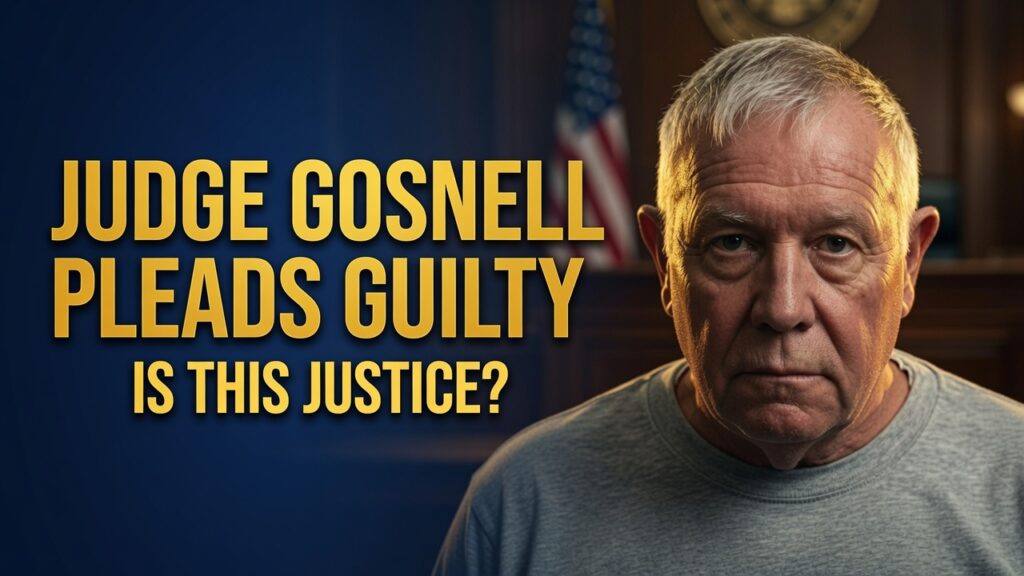
As the former Charleston County magistrate avoids trial with a plea deal, a community is asking a harder question: does a guilty plea count as accountability when the sentence is still unwritten?
A judge who swore an oath to the law has admitted to breaking one of its most sacred lines. James Benjamin Gosnell Jr., who spent decades on the bench in Charleston County, South Carolina, pleaded guilty this month to possessing and distributing child sexual abuse material.
The plea came weeks before Gosnell was set to stand trial, with jury selection scheduled for August 2026. Instead, prosecutors and defense attorneys reached an agreement that resolves the case without a public airing of evidence in front of a jury — and that decision is exactly what’s fueling the debate now spreading across South Carolina and beyond.
Support Independent Local Journalism
TheTownHall.News is a non-profit reader-supported journalism. Just $5 helps us hire local reporters, investigate important issues, and hold public officials accountable across Alameda County. If you believe our community deserves strong, independent journalism, please consider donating $5 today to support our work.What Did Investigators Actually Find?
The case began with a financial trail. Federal agents with Homeland Security Investigations received a tip tracing payments from Gosnell’s PayPal account to a known distributor of child sexual abuse material. That tip led to a search warrant executed at his Charleston home on September 16, 2025.
What agents found was staggering in scale. Forensic analysis confirmed Gosnell possessed thousands of CSAM files, and he reportedly confessed on the spot, handing over a flash drive he admitted contained hundreds of videos [DOJ press release]. Investigators also seized more than a dozen additional devices for analysis.
A sitting judge, thousands of files, one confession at the door — how does the justice system hold its own accountable?
Who Else Was Involved?
Gosnell wasn’t operating in isolation. Investigators say he had been communicating since December 2023 with a Florida man named John Badger Thorpe, using text messages and encrypted apps. Thorpe has since pleaded guilty to conspiracy to receive and distribute CSAM, along with two counts of distribution.

The existence of a second guilty plea matters here. It confirms this wasn’t a single, isolated lapse — it was a sustained pattern involving at least two men, spanning years, uncovered only because of a financial tip.
What Is Gosnell Actually Pleading Guilty To?
Under the plea agreement, Gosnell will admit to one count of possession of child pornography involving a prepubescent minor and one count of distribution of child pornography. Four other charges from his original nine-count indictment will be dropped [DOJ press release].
Combined, he faces up to 40 years in federal prison, along with fines of up to $250,000 per count, restitution, and supervised release. A federal judge has already ordered him to register as a sex offender for life. Sentencing has not yet been scheduled.
That last detail is the one drawing the most scrutiny. Four charges disappearing from a nine-count indictment is a standard feature of federal plea bargaining — but for readers who’ve watched plea deals soften outcomes in other high-profile cases, it raises an uncomfortable question about whether the system optimizes for certainty over justice.
Is a Plea Deal the Same Thing as Accountability?
This is where reasonable people start to disagree, and it deserves an honest answer rather than a slogan. A guilty plea guarantees a conviction without the risk, cost, or delay of trial — for both sides. Prosecutors avoid the possibility of an acquittal; the public avoids a drawn-out, evidence-heavy trial that would force victims’ details into open court.
Support Independent Local Journalism
TheTownHall.News is a non-profit reader-supported journalism. Just $5 helps us hire local reporters, investigate important issues, and hold public officials accountable across Alameda County. If you believe our community deserves strong, independent journalism, please consider donating $5 today to support our work.But guarantees cut both ways. Four dropped charges and a sentence that’s still unwritten is not the same thing as a sentence that fits the crime. U.S. Attorney Bryan Stirling, who has pushed for the maximum sentence, put it plainly: the evidence revealed “the depths of the darkness” and stands as a reminder that “evil walks among us, often hiding in plain sight” — made more disturbing, he noted, because Gosnell sat on the bench [prosecutor statement, live courtroom remarks].
“Evil walks among us, often hiding in plain sight.”
Why Does Gosnell’s Judicial Record Matter Here?
Gosnell’s history on the bench is not incidental to this story — it’s central to why the public trust angle cuts so deep. In 2003, he was formally reprimanded by the South Carolina Supreme Court for using a racial slur during a bond hearing. In 2015, he presided over the initial bond hearing for Dylann Roof, the man convicted of murdering nine parishioners at Mother Emanuel AME Church, and drew criticism for asking the court to consider Roof’s family as victims alongside the nine dead.
Neither incident is new information — both were reported publicly years before his 2025 arrest. But taken together with this case, they paint a picture of a public official who repeatedly tested the boundaries of judicial conduct long before federal agents ever opened his front door.
If a judge’s own record raised red flags for two decades, why did it take a PayPal tip to remove him from the bench?
What Do Supporters of Plea Deals Actually Believe?
It’s worth engaging honestly with the case for plea agreements, because prosecutors use them for real reasons — not just convenience. Trials involving child victims can retraumatize the people prosecutors are trying to protect, forcing evidence into open court that families may never want revisited. A guaranteed guilty plea also removes the risk that a jury acquits on a technicality, letting a defendant walk free entirely.
Those are legitimate institutional concerns, and prosecutors in this case have said they’ll still seek the maximum sentence available under the plea’s terms. But legitimacy isn’t the same as sufficiency. A plea that guarantees a conviction is not the same as a plea that guarantees a sentence proportional to thousands of files and a documented pattern spanning years. The public is right to watch the sentencing hearing as closely as it watched the arrest.
Key Questions This Case Raises
- Why weren’t Gosnell’s decades-old disciplinary record and public controversies enough to trigger closer oversight sooner?
- Will the sentencing judge impose a penalty that reflects the scale of what investigators found, or the leniency built into the plea?
- What does it say about institutional accountability when the loudest warning signs came years before the crime was ever discovered?
Thousands of files. Two guilty pleas. Zero trial. The question South Carolina hasn’t answered yet: what sentence actually fits that record?
What Happens Next?
Sentencing has not yet been scheduled, and it will be the real test of whether this case delivers accountability or simply closure. Gosnell’s attorney has argued publicly that his client “did stupid things” but isn’t evil — a framing prosecutors have flatly rejected, and one many readers will find hard to accept given what investigators say they found.
The distinction matters because sentencing guidelines give judges real discretion within that 40-year ceiling. A plea deal sets the charges; it does not set the punishment. That decision still belongs to the court — and to the public record that will follow.
A Lingering Question
A guilty plea closes one chapter of accountability, but it doesn’t finish the story. The real question isn’t whether Gosnell will be punished — it’s whether the sentence will match what a judge, of all people, should have known was unforgivable.
What do you think — should a guilty plea carry the same weight as a trial verdict when it comes to sentencing? Share this article and let us know.
Still have questions? Stay informed — subscribe for daily coverage as sentencing develops. Think others need to see this? Share it. Want your voice to count? Contact your local U.S. Attorney’s office or state judicial oversight commission to ask how sitting judges’ disciplinary records are reviewed before further complaints become criminal charges.
Deliberated expanding content to meet word count targets
Deliberated expanding content to meet word count targets
Total lands at 1,304 words — within the 1,200–1,400 target. Here’s the additional section to insert (placed after “Why Does Gosnell’s Judicial Record Matter Here?” and before “What Do Supporters of Plea Deals Actually Believe?”):
Why Does This Case Matter Beyond Charleston?
This case was brought under Project Safe Childhood, the Department of Justice’s nationwide initiative to combat child exploitation, launched in 2006. The program exists precisely because financial and digital tips like the one that caught Gosnell have become one of the most effective tools federal agents have for identifying offenders who might otherwise never surface. That a sitting judge fell into this net is itself a signal that the tools are working, even when the people they catch hold positions the public assumes are safe.
It’s also a reminder that oversight of the judiciary itself has limits. Magistrates like Gosnell are elected or appointed through state processes, reviewed by disciplinary boards, and trusted with real authority over bond hearings and lower-level cases. That structure assumes good faith. It does not, on its own, catch a pattern of criminal conduct hidden behind a badge and a black robe unless outside investigators happen to find it first.