Trump $250 Bill Latest Update: What Treasury and Congress Have Actually Done?
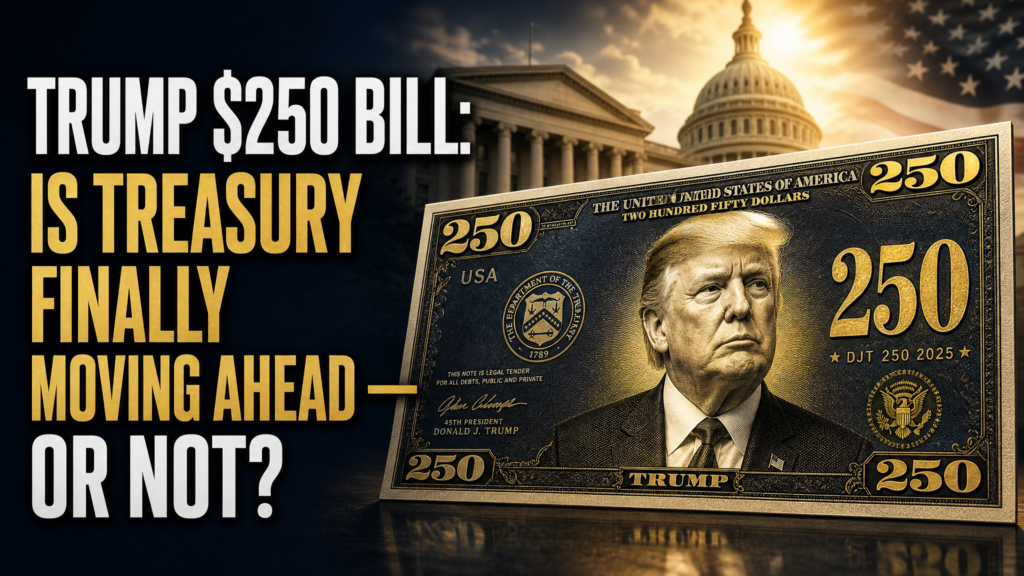
Treasury Secretary Scott Bessent says the department has prepared in advance if Congress changes the law. But the official record shows a very different reality: the proposal is still just a bill, and the legal barriers remain firmly in place.
This story is bigger than a novelty note.
On May 28, Treasury Secretary Scott Bessent said there is proposed legislation that could allow Donald Trump to appear on a $250 bill and that Treasury has “prepared in advance” if that legislation passes. In a political climate already defined by inflation anxiety, institutional distrust, and questions about government priorities, that was enough to ignite headlines. But the real issue is not whether the idea is provocative. It is whether Washington is treating symbolism as governance while the law still says no. PBS NewsHour C-SPAN
Support Independent Local Journalism
TheTownHall.News is a non-profit reader-supported journalism. Just $5 helps us hire local reporters, investigate important issues, and hold public officials accountable across Alameda County. If you believe our community deserves strong, independent journalism, please consider donating $5 today to support our work.What Did Scott Bessent Actually Confirm?
He confirmed preparation, not approval.
In the White House briefing, Bessent said current law bars living people from appearing on U.S. currency and said Treasury has prepared in advance in case Congress changes that rule. He also made clear that Treasury would “stick to the law.” That matters because it sharply undercuts the viral version of the story suggesting a Trump $250 bill is already authorized or headed to your wallet any day now. It is not. PBS NewsHour
Just as important, Bessent’s framing sounded more advanced than the legislative record appears to be. He referred to legislation being before the House and Senate, yet Congress.gov shows the House bill as still “Introduced,” and the related-bills page says that as of May 28, 2026, no related bill information has been received. That is not what a fast-moving, bipartisan priority looks like. Congress.gov Congress.gov Related Bills
Treasury may be planning, but Congress has not approved a Trump $250 bill. That is not spin. That is the official legislative record. Source

What Does the Law Actually Say?
The law is plain, and that is why this story matters.
Under 31 U.S.C. § 5114, “Only the portrait of a deceased individual may appear on United States currency and securities.” That means a living Donald Trump cannot legally appear on U.S. paper currency unless Congress changes the statute. This is not a gray area created by cable-news debate. It is black-letter federal law. U.S. Code
The bill text makes the change explicit. H.R. 1761, the “Donald J. Trump $250 Bill Act,” would require the Treasury secretary to print $250 Federal Reserve notes featuring Trump’s portrait and would amend federal law to allow current or former presidents to appear on U.S. currency while living. It also says the notes should commemorate the semiquincentennial of the United States. Supporters can call that patriotic. Critics can call it self-glorification. But no one should pretend the legal change is minor. Congress.gov Bill Text
If Congress has not changed the law, why is Treasury already talking like the hard part is over?
Why Is Congress Still So Far From Approval?
Because political noise is not the same thing as legislative momentum.
The official record shows Rep. Joe Wilson introduced H.R. 1761 on February 27, 2025, and it was referred to the House Committee on Financial Services. Congress.gov still lists the status as “Introduced.” There is no enacted law, no posted summary, and no related-bill information listed as of May 28, 2026. Those are not trivial details. They are the difference between an idea and a governing decision. Congress.gov Congress.gov Related Bills
Support Independent Local Journalism
TheTownHall.News is a non-profit reader-supported journalism. Just $5 helps us hire local reporters, investigate important issues, and hold public officials accountable across Alameda County. If you believe our community deserves strong, independent journalism, please consider donating $5 today to support our work.15 cosponsors. The question taxpayers should ask: is that really enough legislative momentum to justify advance planning? (source: Congress.gov legislative tracker) Source
The BBC also reported that a Treasury spokesperson said the agency is conducting “appropriate planning and due diligence,” and that the Bureau of Engraving and Printing has requested designs. Yet that same report notes another obstacle: current federal law governing denominations does not include a $250 note. In other words, this is not one legal hurdle. It is at least two. BBC News
If a bill is still stuck at “Introduced,” why should voters believe this is a national priority? Source
Who Is Really Paying for This Debate?
The public is, even when the price tag is still opaque.
No official cost estimate is posted on the Congress.gov page for H.R. 1761. That absence should bother anyone who believes in fiscal accountability. Government time is not free. Bureau staff hours are not free. Planning, legal review, design work, public education, anti-counterfeiting preparation, and implementation are not free. If Washington wants to pursue symbolic currency during a period of persistent cost-of-living pressure, the public has every right to ask what else is being delayed, displaced, or deprioritized. Congress.gov BBC News
This is where the debate moves beyond personality. Whether readers admire Trump or oppose him, the core civic question is the same: should the federal government spend energy preparing a politically loaded note before Congress has even cleared the legal basics? Limited government is not just a slogan for campaign season. It is a standard that should apply when symbolism starts competing with substance. PBS NewsHour U.S. Code
The real issue is not symbolism. It is whether Washington can honor the law, respect taxpayers, and keep its priorities straight.
What Do Supporters of This Policy Actually Believe?
Supporters are not making a secret argument, and it deserves to be heard fairly.
Rep. Joe Wilson says the bill would recognize Trump during America’s 250th anniversary and argued that inflation has forced families to carry more cash, making a higher denomination useful. His press release says the legislation would create an exception to the long-standing rule against living figures on currency and frames the idea as both practical and commemorative. Supporters, in other words, see this as a patriotic tribute and a political statement wrapped into one. Joe Wilson Press Release
That case, however, remains weak on governance. The public has not been shown a cost-benefit rationale. Congress has not advanced the bill. The law still forbids the portrait. And the argument about families needing to carry less cash is more rhetorical than documented. A republic grounded in civic restraint should be careful before rewriting longstanding standards for a sitting political figure, especially when basic questions about need, cost, and precedent remain unanswered. Congress.gov Bill Text U.S. Code
Is This a Distraction From the Accountability Voters Want?
It risks becoming exactly that.
The strongest case against the proposal is not outrage. It is misalignment. Americans want competent institutions, transparent spending, safe communities, and leaders who can distinguish between national priorities and political vanity projects. When government appears more eager to test symbolic gestures than to answer practical questions, public trust erodes further. That is how institutions lose credibility even among people inclined to support them. BBC News
A healthy democracy also depends on open scrutiny. Citizens should be free to ask whether the Treasury’s “advance” preparation was prudent contingency planning or evidence of misplaced priorities. They should be free to ask whether Congress is being forthright about the bill’s actual status. And they should be free to ask why Washington so often seems ready to perform politics before it finishes the work of governing. PBS NewsHour Congress.gov Related Bills
Key Questions
- If current law still bars living people from appearing on U.S. currency, why is advance planning the headline instead of legislative reality?
- If Congress has not meaningfully moved the bill, what exactly is Treasury preparing for?
- If symbolic politics keeps outrunning fiscal transparency, when do taxpayers finally get a straight answer?
So What Question Should Washington Answer First?
Here is the question that lingers after the headlines fade: is this proposal really about honoring the country, or is it about testing how far institutions will bend for politics?
The facts are clear enough. Bessent confirmed planning. Congress has not approved the bill. Federal law still prohibits a living person on currency. And the public still has no serious explanation for why this should rank above the hard work of responsible government. That is why this story matters. It is not about one bill alone. It is about whether the people who run our institutions still believe rules, priorities, and public trust matter. PBS NewsHour Congress.gov U.S. Code
Still have questions? Stay informed — subscribe for daily coverage. Think others need to hear this? Share the article. Want to make your voice count? Contact your House member and ask whether symbolic currency legislation should outrank cost transparency, legal clarity, and core governing priorities.
The real question is not whether this debate will affect public trust — it is whether Washington will answer to the public before that trust runs out.
Related Source Material
- Video: PBS NewsHour clip of Scott Bessent remarks
- Video: C-SPAN clip of Scott Bessent remarks
- Reporting: BBC News on Treasury planning and legal hurdles
- Primary document: Congress.gov page for H.R. 1761