Hormuz Crisis Escalates as U.S.-Iran Ceasefire Starts to Fray
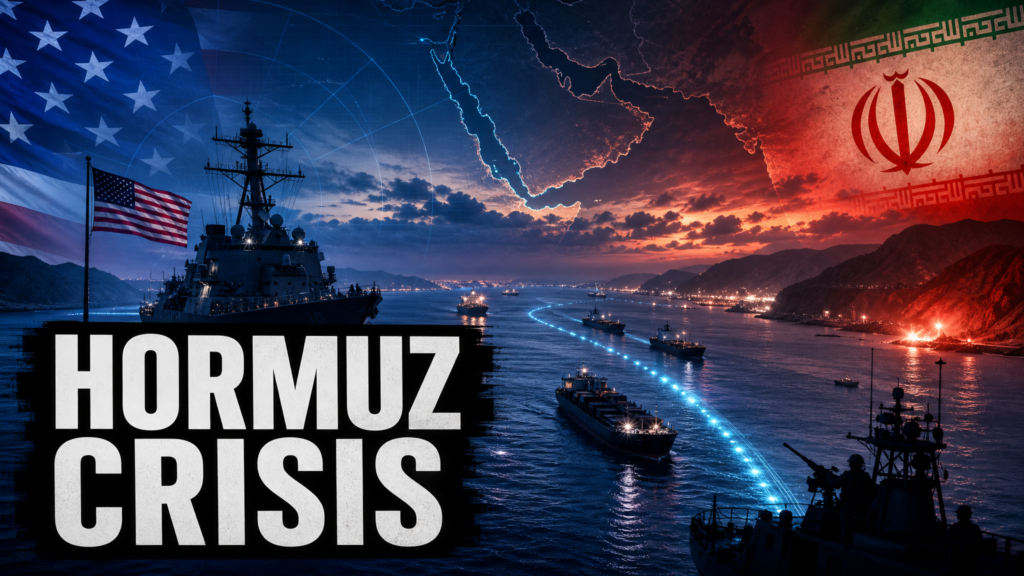
Iran says fresh U.S. strikes violated a fragile truce. Washington says the strikes were defensive. Meanwhile, Secretary of State Marco Rubio says a diplomatic deal involving the Strait of Hormuz could still be within reach in the coming days. The result is a dangerous moment that demands discipline, not drift. Source Source
The latest U.S.-Iran ceasefire clash matters because it is not just another overseas dispute. It sits at the intersection of energy prices, military credibility, and the public’s patience with open-ended conflict. When a shaky truce collides with mixed messaging, ordinary families pay the price through higher fuel costs, tighter household budgets, and the creeping sense that Washington still struggles to define victory before it reaches for force. Source Source
This is also a test of whether the United States can pursue peace through strength without sliding into confusion. Tehran’s leaders bear responsibility for mine threats, missile activity, and the broader destabilization of a waterway that carries roughly one-fifth of global oil and liquefied natural gas. But American leaders also owe the public something essential: a strategy that is lawful, limited, clearly communicated, and tied to concrete outcomes. Source Source
Support Independent Local Journalism
TheTownHall.News is a non-profit reader-supported journalism. Just $5 helps us hire local reporters, investigate important issues, and hold public officials accountable across Alameda County. If you believe our community deserves strong, independent journalism, please consider donating $5 today to support our work.Why This Issue Matters Now
Reuters reported that Iran’s foreign ministry called the latest U.S. strikes in southern Hormozgan province a “gross violation” of the ceasefire, while U.S. Central Command described the operation as self-defense targeting missile sites and boats attempting to lay mines. That alone would be serious. But the timing makes it more consequential: the strikes came while mediators were still working on an interim framework meant to halt hostilities and reopen shipping through Hormuz. Source Source
Markets understand the stakes even when politicians try to soften them. Reuters noted that Brent crude rose about 3.5% to around $100 a barrel after the fresh strikes, a reminder that geopolitical ambiguity quickly turns into an economic tax on workers, truckers, farmers, and small businesses. Fiscal accountability starts with recognizing that foreign-policy disorder is never free. Every disruption in Hormuz ripples outward into fuel, fertilizer, shipping, and food costs. Source
Shipping lanes are not bargaining chips.
That simple truth should guide both deterrence and diplomacy.

What the Latest Reporting Actually Shows
The most important fact is that no final peace agreement exists yet. Reuters, BBC, and other outlets describe the current talks as centered on a memorandum or initial framework, not a comprehensive settlement. The broad outline under discussion includes a 60-day ceasefire extension, phased reopening of the Strait of Hormuz, possible sanctions relief or access to frozen Iranian funds, and later talks on harder nuclear issues, including uranium enrichment and Iran’s stockpile of highly enriched uranium. Source Source Source
Rubio’s own remarks have been firm but cautious. He said there was a “pretty solid thing on the table” involving reopening the strait and entering a real, time-limited negotiation over nuclear matters, but he also warned that diplomacy would fail if Iran tried to impose a tolling system or permanent control over the waterway. Later, speaking publicly, he said the United States would prefer an agreement but must also plan for what happens if Iran refuses to reopen the strait. That is the right instinct: hope is not a policy, and a fallback plan is not warmongering. Source Source Source
The Real Cost of Unclear Strategy
The case for limited government does not end at the water’s edge. Americans are rightly skeptical of sprawling missions with vague goals, fuzzy legal boundaries, and no obvious end state. If the United States is acting to defend shipping and deter mine-laying, officials should say so plainly. If the larger aim is to secure a temporary framework for nuclear talks while preventing a broader regional war, that should be stated just as clearly. Source Source
What citizens should reject is mission creep dressed up as resolve. There is a meaningful difference between a narrow, enforceable objective and a drifting regional commitment that grows every time the last policy fails to produce closure. Personal responsibility applies to states, too. Tehran must decide whether it wants commerce or coercion. Washington must decide whether it wants a disciplined settlement or an indefinite cycle of strikes and statements. Source Source
Americans deserve a foreign policy with a plan, not a shrug.
Support Independent Local Journalism
TheTownHall.News is a non-profit reader-supported journalism. Just $5 helps us hire local reporters, investigate important issues, and hold public officials accountable across Alameda County. If you believe our community deserves strong, independent journalism, please consider donating $5 today to support our work.That is not isolationism. It is common sense.
Why Law and Order in the Strait Matters
International commerce depends on predictable rules. The Strait of Hormuz is too important to be governed by brinkmanship, mine threats, or improvised toll schemes. Reuters reported that U.S. officials view any Iranian attempt to charge transit fees or monopolize the strait as unacceptable, while Iranian officials have floated service-based charges and assertions of sovereignty that complicate diplomacy. That is precisely why law and order matter in foreign policy as much as they do at home: prosperity depends on stable rules and credible enforcement. Source Source
There is also a burden-sharing issue that deserves more attention. Rubio has publicly suggested that other countries, especially those more directly affected by a closed Hormuz route, may need to contribute if diplomacy fails and shipping must be secured. That is a healthy corrective to the old habit of expecting the American taxpayer to underwrite every global chokepoint alone. Allies who rely heavily on these sea lanes should bring more than statements to the table. Source
What Critics Get Wrong
Some critics argue that any interim deal is a capitulation because it risks giving Iran time, money, or leverage. Others argue the opposite: that any U.S. strike during a ceasefire proves diplomacy is hopeless and Washington should simply step back. Both views miss the harder truth. A rushed deal without enforcement can invite more brinkmanship, but a policy of strategic passivity can do the same. Source Source
The wiser course is narrower and tougher: enforce freedom of navigation, keep objectives limited, require verifiable steps from Tehran, and resist the temptation to oversell partial progress as peace. The public can handle nuance. What it should not have to tolerate is an elite habit of blurring the difference between a temporary framework and a durable settlement. Source Source
Key Takeaway
Here is the core point: the U.S.-Iran ceasefire friction is not just about one exchange of fire. It is about whether the United States can defend lawful commerce, protect its forces, and pursue a negotiated outcome without drifting into another costly, undefined conflict. A ceasefire worth keeping must be enforceable. A deal worth signing must be verifiable. And a foreign policy worth defending must be honest with the public about the risks, costs, and limits involved. Source Source
Conclusion
The latest reporting shows a ceasefire under strain, a diplomatic opening still alive, and a region that remains one miscalculation away from deeper turmoil. That is exactly why this moment calls for seriousness. Tehran should stop treating a vital waterway as leverage. Washington should keep its objectives narrow, its language clear, and its expectations grounded in verification rather than wishful thinking. Source Source
Readers who value personal responsibility, law and order, and fiscal discipline should insist on the same standard abroad that they expect at home: rules that mean something, leaders who explain themselves, and policies judged by results. Stay informed. Share this article with someone who cares about energy prices, national security, and accountable government. Support independent journalism that fact-checks the headlines instead of chasing them. And above all, stay engaged in civic life, because foreign policy works best when citizens demand clarity before the costs arrive in their own communities.