US Jets Shot Down Over Iran: F-15E and A-10 Warthog Losses Shake Operation Epic Fury
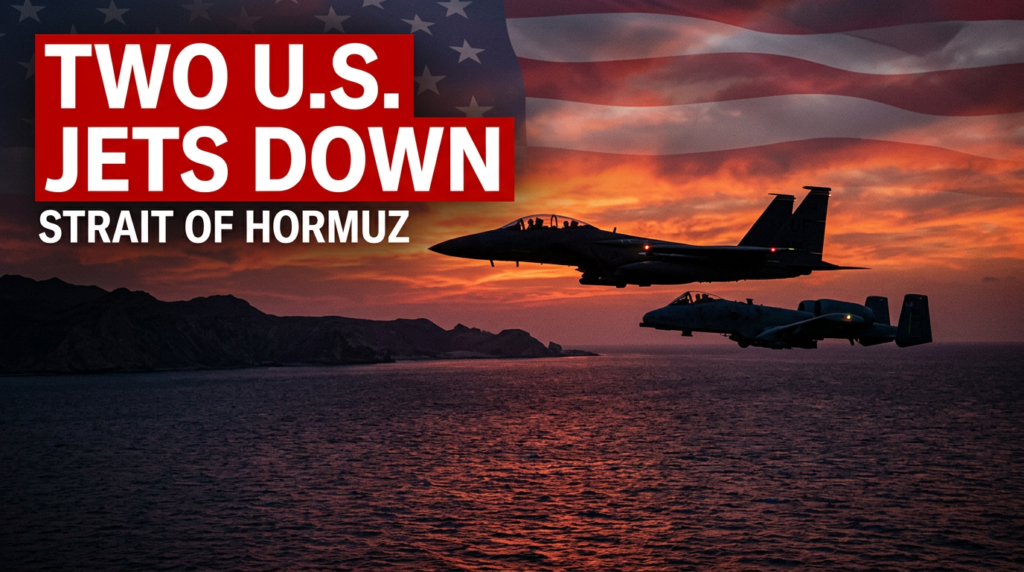
As Iran shoots down an F-15E Strike Eagle and damages an A-10 Warthog in a single day, the cost of America’s air campaign is rising fast — and so are the questions about strategy, transparency, and what comes next.
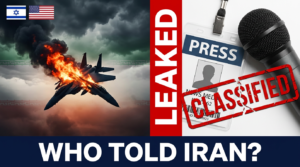
The skies over Iran and the Strait of Hormuz turned grimly consequential on Friday, April 3, 2026. Within hours, the United States confirmed what no military wants to announce: two American combat aircraft had been brought down by Iranian forces in a single day — the F-15E Strike Eagle and an A-10 Warthog — marking the most significant single-day aerial loss of Operation Epic Fury since the conflict began on February 28.
This isn’t a headline from a distant war. It is a reckoning. American pilots are in harm’s way, one crew member is still missing inside Iranian territory, oil has surged past $111 a barrel, and the Strait of Hormuz — the chokepoint through which roughly 20% of the world’s oil passes — remains effectively closed. Every American who fills up at a gas station, pays a utility bill, or sends a son or daughter into uniform has a direct stake in what happens next.
Support Independent Local Journalism
TheTownHall.News is a non-profit reader-supported journalism. Just $5 helps us hire local reporters, investigate important issues, and hold public officials accountable across Alameda County. If you believe our community deserves strong, independent journalism, please consider donating $5 today to support our work.The Day’s Events: A Timeline of Two Losses
The confirmed loss was an F-15E Strike Eagle from the 494th Fighter Squadron, 48th Fighter Wing, based at RAF Lakenheath, UK. Iranian forces shot it down over southwestern Iran, making it the first manned U.S. aircraft lost to enemy fire during Operation Epic Fury. The two-person crew — a pilot and a weapons systems officer — ejected.
American forces launched an immediate search-and-rescue mission. Two U.S. helicopters located and extracted the pilot. The rescue helicopter itself took small arms fire during the operation — crew members were wounded but landed safely. As of Friday, the weapons systems officer remains missing, with a multi-asset SAR operation still active inside Iranian territory. Israel suspended its own strikes in the area to support the rescue effort.
The second incident involved an A-10 Warthog attack aircraft, operating near the Strait of Hormuz. The A-10 took fire and was damaged during the search-and-rescue operations for the F-15E crew. The pilot ejected over the Persian Gulf and was successfully recovered. Iran claimed credit for this second incident as well, though the precise sequence of events is still being assessed by the Pentagon.
Two aircraft. Two crews in danger. One still unaccounted for. That is the reality on the ground — and in the air — today.

Why the Strait of Hormuz Is Central to This Conflict
To understand the stakes, you have to understand the geography. The Strait of Hormuz is a 21-mile-wide waterway between Iran and Oman. Roughly 20% of all globally traded oil — and a significant share of liquefied natural gas — moves through it. Iran has effectively closed it to most commercial shipping since the conflict began, and the economic consequences have been swift.
Oil prices have already climbed past $111 per barrel. That translates directly to higher prices at the pump, rising freight costs, and inflationary pressure across virtually every sector of the American economy. The A-10 Warthog had been playing a critical role in countering Iranian fast-attack watercraft threatening the Strait — the Pentagon confirmed earlier this week it was doubling its A-10 fleet in the Middle East, adding approximately 18 aircraft to the roughly dozen already operating in the region.
President Trump has stated his intent clearly: “Open the Hormuz Strait, take the oil.” The administration’s position is that reopening the Strait is both a military and economic imperative. But Friday’s losses underscore that achieving that goal carries real human cost.
The Human Cost and the Duty of Transparency
Thirteen U.S. service members have been killed in action since Operation Epic Fury began. As of March 31, 365 personnel have been wounded.
These are not statistics. They are Americans — sons, daughters, husbands, wives — who volunteered to serve under the oath of personal responsibility that military service demands. The six airmen killed on March 12 when their KC-135 refueling aircraft crashed in western Iraq. The three F-15E crews shot down in a friendly-fire incident over Kuwait on March 1, thankfully rescued. And now the crew of Friday’s downed Strike Eagle.
Support Independent Local Journalism
TheTownHall.News is a non-profit reader-supported journalism. Just $5 helps us hire local reporters, investigate important issues, and hold public officials accountable across Alameda County. If you believe our community deserves strong, independent journalism, please consider donating $5 today to support our work.The American public deserves full accountability on these losses. Not for political point-scoring, but because fiscal accountability and governmental transparency are foundational to how a democratic republic wages war. Taxpayers fund this campaign. Citizens bear its costs. They are owed honest, timely information — not managed narratives.
What Critics Get Wrong About the Mission
Some voices on the left have argued that Operation Epic Fury is reckless adventurism, an unnecessary escalation that diplomacy could have avoided. That argument collapses under scrutiny.
Iran did not close the Strait of Hormuz in a vacuum. The Islamic Republic has spent decades funding proxy militias, developing ballistic missile programs, and — according to U.S. and allied intelligence assessments — advancing toward nuclear capability. The decision to launch Operation Epic Fury was not made lightly, and the administration has publicly stated it remains open to negotiations. Trump confirmed Friday that the shoot-down of the F-15E “will not affect ongoing negotiations.”
The harder question is not whether to act, but how — and at what cost. That is a debate Americans should be having openly, with full information, which is precisely why press freedom and independent journalism matter in moments like this.
The Strategic Picture: Resolve Under Pressure
There is a temptation, after days like Friday, to call for immediate de-escalation. That impulse is understandable but strategically naive. Iran’s ability to shoot down two American aircraft in a single day does not reflect a failure of American air power — it reflects the reality that modern air defense systems are sophisticated and that no air campaign is cost-free.
What matters is whether the mission objectives remain achievable and whether American resolve holds. NATO Secretary General Mark Rutte is scheduled to meet with President Trump next week to discuss the Iran conflict and the Strait situation, signaling that allied coordination remains active.
The A-10 Warthog, long slated for retirement, has proven its worth in this conflict — hunting Iranian fast-attack watercraft with devastating effectiveness, reportedly contributing to the destruction of over 120 Iranian vessels since operations began. The Pentagon’s decision to double the A-10 fleet in theater is a signal of commitment, not retreat.
When America sustains losses and doubles down, adversaries take note. When it flinches, they advance.
The Bottom Line for Every American
This conflict is not happening in a vacuum. The Strait of Hormuz closure is already hitting wallets. The missing weapons systems officer is somebody’s family member, waiting by a phone today. And the decisions made in the coming days — in the air over Iran, at the negotiating table, and in Washington — will shape U.S. credibility in the region for a generation.
Americans who value law, order, and the strength of institutions should demand two things simultaneously: unflinching support for the men and women in uniform, and rigorous accountability from the officials who send them into harm’s way. Those two demands are not in conflict. They are, in fact, the same demand: that America acts with both resolve and integrity.
The crew members flying those missions over Iran aren’t abstractions. They are the embodiment of the personal responsibility this nation was built on — individuals who chose duty over comfort, service over safety. They deserve both our prayers and our full, informed attention.
Key Takeaway
Two U.S. aircraft — an F-15E Strike Eagle and an A-10 Warthog — were downed by Iran on April 3, 2026. One crew member is rescued, one is still missing. Oil is above $111/barrel. The Strait of Hormuz remains closed. America must respond with both strength and transparency.
Stay informed. Share this article with anyone who wants the full picture on what’s happening in the Strait of Hormuz — not just the headlines. Independent journalism depends on readers like you. Subscribe, share, and stay engaged. Your civic attention is not optional — it’s essential.