When the World Watches and Does Nothing: The Gaza War Crimes Record and the Failure of International Accountability
The evidence of alleged war crimes in Gaza has never been more documented, more visible, or more ignored by the institutions supposedly built to stop them. It’s time to ask why.
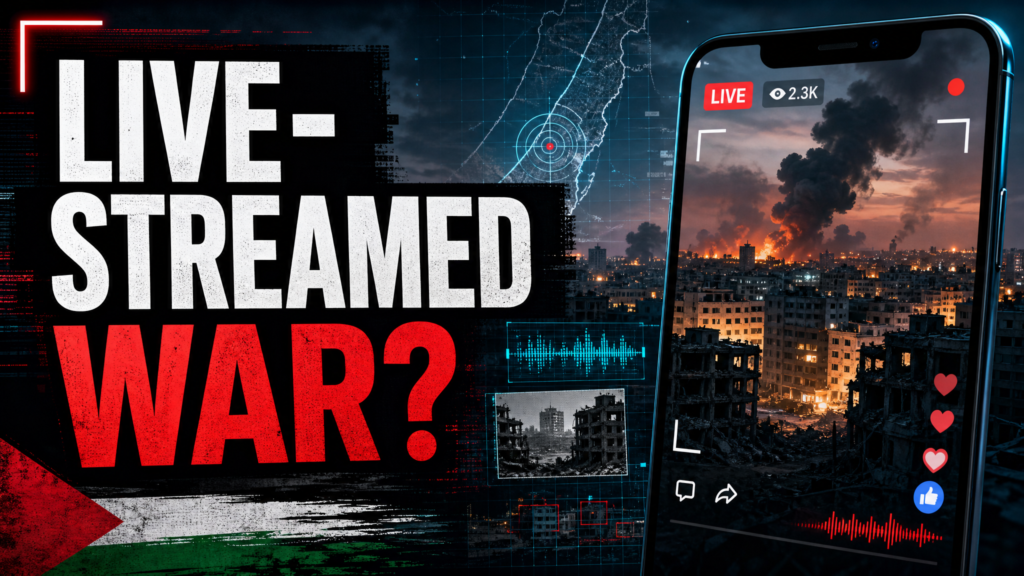
The world has never before watched a conflict unfold in real time the way it has watched Gaza. Footage from smartphones, security cameras, and — in one of the most disturbing developments of modern warfare — videos posted by soldiers themselves, has created a near-continuous visual record of a conflict that international courts have described in the gravest possible legal terms. And yet, nearly two years after it began, the mechanisms of international law remain largely paralyzed, the toll continues to rise, and the accountability that ordinary people across the political spectrum rightly demand remains elusive.
This is not a matter of partisan politics. It is a matter of law, evidence, and the integrity of the international institutions that Western democracies have long championed as pillars of a rules-based world order.
Support Independent Local Journalism
TheTownHall.News is a non-profit reader-supported journalism. Just $5 helps us hire local reporters, investigate important issues, and hold public officials accountable across Alameda County. If you believe our community deserves strong, independent journalism, please consider donating $5 today to support our work.The Evidence the World Cannot Unsee
Sites like genocide.live have emerged as raw, crowdsourced archives of the conflict — collecting footage shared across social media platforms. The site itself acknowledges its content is unverified, and viewers should approach it with appropriate caution. Unverified footage demands scrutiny, not blind acceptance. But the broader evidentiary record, compiled by credentialed institutions, is another matter entirely.
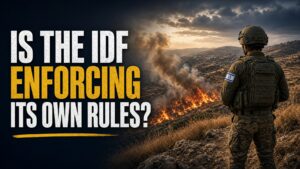
Al Jazeera’s Investigative Unit produced a feature documentary compiling evidence of potential war crimes through videos and photographs posted online by Israeli soldiers themselves. Legal experts assessed these videos as providing an unprecedented level of real-time documentation — unlike past conflicts where crimes were investigated after the fact, here, the perpetrators provided contemporaneous evidence of their own actions. Al Jazeera
The documented conduct includes the destruction of civilian infrastructure, looting, and what legal analysts described as the targeting of unarmed individuals. In October 2024, Dutch lawyer Harun Reda filed a complaint with the ICC against 1,000 Israeli soldiers accusing them of war crimes, drawing on evidence from video clips collected on social media as well as documentation from the United Nations and human rights organizations. Al Jazeera
This is what accountability in the digital age should look like. The evidence exists. The question is what institutions do with it.

The Courts Have Spoken — So Why Hasn’t Anything Changed?
For those who believe in the rule of law above all else, the actions of the International Criminal Court in late 2024 represent a landmark moment — one that should matter regardless of one’s views on the broader conflict.
On November 21, 2024, Pre-Trial Chamber I of the International Criminal Court unanimously issued arrest warrants for Israeli Prime Minister Benjamin Netanyahu and former Defence Minister Yoav Gallant for crimes against humanity and war crimes committed from at least October 8, 2023. International Criminal Court
The ICC found reasonable grounds to believe that Netanyahu and Gallant bore criminal responsibility for the war crime of starvation as a method of warfare, and the crimes against humanity of murder, persecution, and other inhumane acts. UN News
The court found there were “reasonable grounds” to believe that both men “intentionally and knowingly deprived the civilian population in Gaza of objects indispensable to their survival, including food, water, medicine, fuel, and electricity.” Al Jazeera
Arrest warrants were also issued for Hamas leaders. The ICC Prosecutor sought warrants for Hamas leaders Yahya Sinwar and Ismail Haniyeh — both killed before the warrants were finalized — and ultimately issued a warrant for Hamas military commander Mohammed Diab Ibrahim Al-Masri. The court pursued accountability on all sides of the conflict. That is precisely what a functioning system of law and order looks like. Anzsilperspective
Support Independent Local Journalism
TheTownHall.News is a non-profit reader-supported journalism. Just $5 helps us hire local reporters, investigate important issues, and hold public officials accountable across Alameda County. If you believe our community deserves strong, independent journalism, please consider donating $5 today to support our work.When institutions built on the rule of law issue arrest warrants, the rest of the world has an obligation to take them seriously — or admit those institutions are theater.
Why This Issue Matters for Every Citizen Who Values Accountability
The principles at stake in Gaza extend well beyond the Middle East. Those who believe in limited government and civic responsibility know that unchecked power — whether held by a state actor, a militant organization, or a supranational body — is a threat to ordered liberty. The same logic that demands accountability from domestic governments demands it on the world stage.
Amnesty International’s Secretary General Agnès Callamard stated that “since October 7, 2023, when Hamas perpetrated horrific crimes against Israeli citizens and others, the world has been made audience to a live-streamed genocide,” adding that states watched on “as if powerless, as Israel killed thousands upon thousands of Palestinians, wiping out entire multigenerational families, destroying homes, livelihoods, hospitals, and schools.” France 24
Over 51,000 Palestinians — mostly women and children — have been confirmed killed, with at least 10,000 more missing and presumed dead beneath the rubble. These are not abstract numbers. They represent families, communities, and a generational catastrophe. Al Jazeera
Meanwhile, both Hamas and Israel are bound by international law to protect civilians. The October 7 massacres by Hamas constituted acts of genocide and crimes against humanity under applicable international frameworks. Accountability cannot be selective. It must apply uniformly — to every actor, regardless of alliance or political alignment. Genocide Watch
What Critics Get Wrong
Some argue that the ICC overreaches, that its jurisdiction is contested, and that sovereign nations should not be subject to international prosecution. These are legitimate legal debates, and Israel has made them formally before the court.
Israel rejects the ICC’s jurisdiction and denies war crimes in Gaza, where it has waged a military campaign it says is aimed at eliminating Hamas following the October 7 attacks. Israeli officials have asserted that the war has been fought in accordance with international law. The Times of Israel
These objections deserve a hearing in the appropriate legal forums — and the ICC has provided exactly that. Appeals judges at the ICC rejected one in a series of legal challenges brought by Israel against the court’s probe, maintaining the investigation and the arrest warrants issued for Netanyahu and Gallant. The Times of Israel
Contesting jurisdiction is a legitimate legal strategy. But dismissing the underlying evidence wholesale — when it includes footage posted by soldiers themselves, documentation by the UN, and findings by Amnesty International and Human Rights Watch — is not legal reasoning. It is political convenience.
The rule of law means the law applies even when it is inconvenient. That principle does not change based on which side of a conflict holds your sympathies.
The Free Speech Dimension: Bearing Witness Is Not Propaganda
There is a concerted effort across multiple platforms and governments to suppress documentation of the conflict in Gaza — flagging content, deplatforming accounts, and dismissing citizen journalism as biased. Citizens who believe in free speech and a free press should be alarmed by this regardless of their views on the conflict itself.
Palestinian journalists documenting the conflict on the ground are bearing witness in real time, countering efforts to erase Palestinian lives and experiences from the historical record. Viewers are no longer passive observers; they are witnesses. The question is whether they will act on what they see. SOAS
Documentation is not incitement. It is evidence. And a society that suppresses evidence in the name of political comfort is one that has abandoned its commitment to truth.
Conclusion: Accountability Is Not Optional
The conflict in Gaza has become the defining test of whether the post-World War II international order — built on the principle that atrocities must never go unanswered — still means anything at all.
The evidence exists. The courts have acted. The death toll is documented. What is missing is the political will to treat accountability as a non-negotiable value rather than a geopolitical calculation.
Every red line of international law has been crossed. If the world does not act, Gaza risks becoming the graveyard of humanity — and with it, the credibility of the institutions built to prevent exactly this outcome. Trocaire
Citizens who believe in law and order, personal responsibility, and civic integrity have a stake in demanding that those principles apply consistently — at home and abroad, to friend and adversary alike. Selective justice is not justice. It is politics dressed in a robe.
Key Takeaway
The ICC has issued warrants. The evidence is on video. The death toll is confirmed. What the world chooses to do next will define whether international law is a standard or a slogan.
Stay Informed. Stay Engaged.
This issue is too important to scroll past. Share this article with someone who believes accountability should be universal. Follow the ICC proceedings at icc-cpi.int. Support independent journalism that refuses to look away from hard truths. And engage your elected representatives — because the institutions that enforce international law depend on political pressure from citizens who demand they actually function.
The world is watching. The question is whether watching is enough.