Russia Oreshnik Missile Attacks Ukraine: The Air Defense Crisis Western Leaders Won’t Address
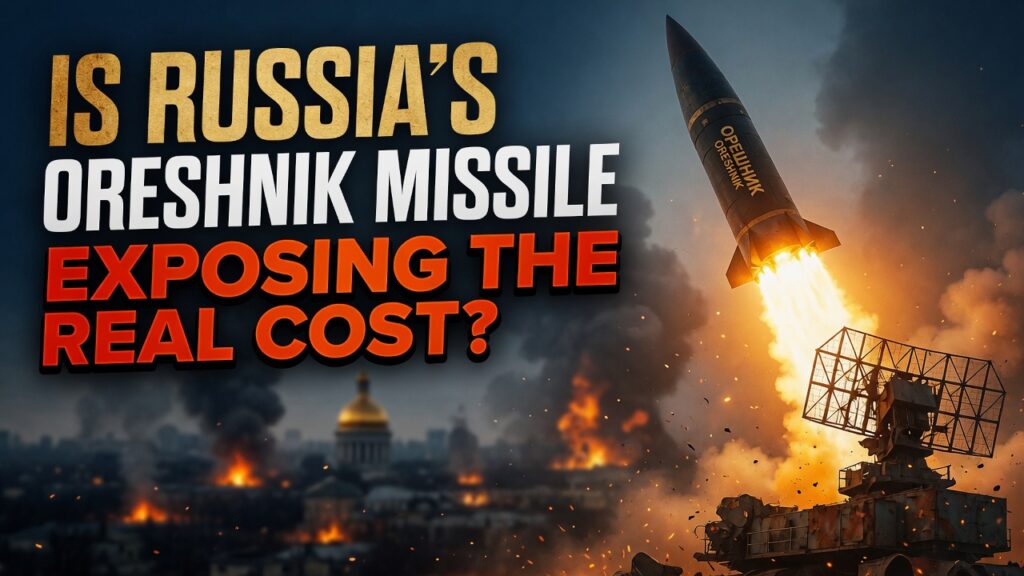
As Russia deploys weapons the West once called unthinkable, a critical question demands an answer: did delayed decisions by American and European leaders leave Ukrainian civilians defenseless — and what does that cost the broader cause of accountability and security?
Kyiv is burning again. On June 2, 2026, Russia launched 73 missiles and 656 drones at Ukraine in a single overnight barrage, killing at least 22 civilians and wounding 138 others across Kyiv, Dnipro, Kharkiv, Poltava, and Zaporizhzhia. Apartment buildings collapsed. A 3-year-old was pulled dead from rubble in Dnipro. And Western governments issued statements.
What Makes the Oreshnik Different — and Why It Changes Everything
The weapon at the center of this escalation is not a conventional cruise missile. Russia’s Oreshnik is a hypersonic intermediate-range ballistic missile, nuclear-capable, and by the assessment of American and European defense analysts, currently unstoppable by any air defense system available to Ukraine. Vladimir Putin used it for only the third time in history during the May 24 attack on Kyiv — a deliberate signal as much as a strike.
Support Independent Local Journalism
TheTownHall.News is a non-profit reader-supported journalism. Just $5 helps us hire local reporters, investigate important issues, and hold public officials accountable across Alameda County. If you believe our community deserves strong, independent journalism, please consider donating $5 today to support our work.Russia’s Oreshnik doesn’t just kill people — it tells the world that Western air defense commitments have a ceiling, and Ukraine is bumping against it hard.
Ukrainian President Volodymyr Zelenskyy confirmed the Oreshnik struck the city of Bila Tserkva, roughly 50 miles south of Kyiv. The European Commission called the use of the weapon “reckless escalation and nuclear brinkmanship.” But condemnations do not intercept missiles. And the Oreshnik, by design, cannot be intercepted by Patriot batteries — the very systems Ukraine has been pleading for since 2022.
Is Ukraine Being Left to Absorb a War the West Helped Start?
That question is not rhetorical — it is the operational reality on the ground. Ukraine’s air defenses stop most incoming drones: Ukrainian forces destroyed or suppressed 602 of the 656 drones launched on June 2, and intercepted roughly 90 percent of all incoming threats in May [Ukrainian Air Force data]. But ballistic missiles are a different equation. Only 40 of 73 missiles were neutralized that night.
The gap between what Ukraine can shoot down and what Russia is now sending is growing — deliberately. Putin has recognized that the West’s supply chains are stretched, that U.S. stocks have been drawn down in part by operations in the Middle East, and that the political will in Washington to surge new commitments is uncertain at best.

8,150. That is the number of long-range drones Russia fired at Ukraine in May 2026 alone — a 24 percent increase over April [AFP analysis of Ukrainian Air Force data]. The question no one in Washington has publicly answered: at what point does absorbing this volume of fire become strategically impossible?
What Do Supporters of Continued Western Restraint Actually Believe?
There is a serious argument on the other side of this debate, and it deserves a direct hearing. Advocates of measured Western engagement argue that flooding Ukraine with the most advanced air defense systems — particularly Patriot interceptors — risks direct escalation with a nuclear power. They contend that every interceptor missile shipped to Kyiv is one fewer available for NATO’s eastern flank. Some fiscal conservatives add that the cumulative cost of Western military aid demands far greater scrutiny and congressional oversight before further commitments are made.
These are legitimate concerns, and they reflect real constraints. NATO’s eastern members — Poland, the Baltic states, Romania — are watching their own inventories. The argument that unlimited transfers could hollow out deterrence elsewhere is not fantasy.
But here is where the restraint argument breaks down under factual examination: Russia has already crossed the threshold of using nuclear-capable intermediate-range ballistic missiles against a non-nuclear state. That is the escalation. The West’s reluctance to match it with proportionate defensive systems is not caution — it is a policy choice with a body count.
“If a government’s stated commitment to defending civilians ends the moment its own stockpiles feel inconvenient, then that commitment was never what it claimed to be.”
Who Is Really Paying the Price for These Delays?
Olena Dniprovska, 65, described what Western policy delays look like from a Kyiv apartment building. When a Russian missile struck her home on June 2, the blast wave blew out every door and window. “I have nowhere to live,” she told Reuters. “The apartment is completely destroyed — no doors, no windows, no balcony. You can step straight from the room out onto the street.”
Support Independent Local Journalism
TheTownHall.News is a non-profit reader-supported journalism. Just $5 helps us hire local reporters, investigate important issues, and hold public officials accountable across Alameda County. If you believe our community deserves strong, independent journalism, please consider donating $5 today to support our work.She is not a data point. She is the direct human consequence of a supply chain decision made, or not made, in Washington and Brussels.
If this level of civilian destruction happened in a NATO country, the response would not be a strongly worded statement — it would be Article 5.
Zelenskyy said it plainly: the attacks are “an explicit statement by Russia — if Ukraine is not protected from ballistic missiles, those strikes will continue.” He has asked Trump directly for expanded air defense support. He has instructed Ukraine’s Air Force commander to personally contact every partner that pledged Patriot interceptors and has not yet delivered them.
Are Western Governments Doing Enough — Or Just Enough to Appear Concerned?
The European Commission pledged additional air defense support following the May 24 Oreshnik strike. Germany, Norway, and Italy signed new agreements on air defense assistance. The EU’s ambassador to Ukraine publicly stated her team would not leave Kyiv — a symbolic stand, but a meaningful one.
Yet Ukraine’s foreign minister said the attack patterns signal Russian desperation, not Russian strength. “Putin is a war criminal and loser who has no cards except terror,” Andrii Sybiha said Tuesday. Western officials and analysts add that Ukrainian drone operations are actively degrading Russian supply lines and pinning down front-line troops.
The harder question is whether a war of attrition favors the side with more missiles and less accountability to its own population.
Russia’s defense ministry continues to claim it is targeting Ukraine’s military-industrial complex. The evidence on the ground — a collapsed kindergarten, a dead 3-year-old in Dnipro, a destroyed apartment block in Kyiv’s Podilskyi district — tells a different story.
Key Questions
- If the Oreshnik cannot be intercepted by any system currently available to Ukraine, what specific commitments are Western governments making to close that gap — and by when?
- How much of the U.S. air defense shortfall in Ukraine is directly attributable to drawdowns for other military operations, and has Congress received a full accounting?
- At what point does the international community’s definition of “escalation” shift to include allowing a nuclear-capable hypersonic missile to strike civilian neighborhoods unopposed?
The Real Question the West Cannot Afford to Ignore
Russia’s escalation is not random. It is calibrated. Putin is testing what the West will absorb, what it will fund, and how long democratic publics will sustain attention on a war that has now entered its fifth year. The Oreshnik is not just a weapon — it is an argument: that Russia can act without consequence.
The answer to that argument is not a press release. The coming weeks will determine whether Western commitments to Ukraine are strategic or merely rhetorical — and whether accountability extends beyond borders.
The real question isn’t whether Russia will strike Kyiv again. It’s whether the people with the power to stop it will act before the next apartment building falls.
What do you think — has the West done enough, or are civilians paying the price for political hesitation? Share this article and join the conversation.
Still have questions? Subscribe for daily coverage of the stories shaping the world. Think someone needs to read this? Share it now. Want to make your voice heard? Contact your congressional representative and ask specifically about Patriot interceptor delivery timelines to Ukraine.