Salmon Fraud in Chile: Is Anyone Being Held Accountable? What US Buyers Should Know
A 17-second video from southern Chile is raising hard questions about who actually inspects the seafood on your plate — and whether anyone is watching closely enough.
Would you eat salmon dyed to hide rot. That’s the question Chilean authorities are now investigating after disturbing new footage surfaced this month.
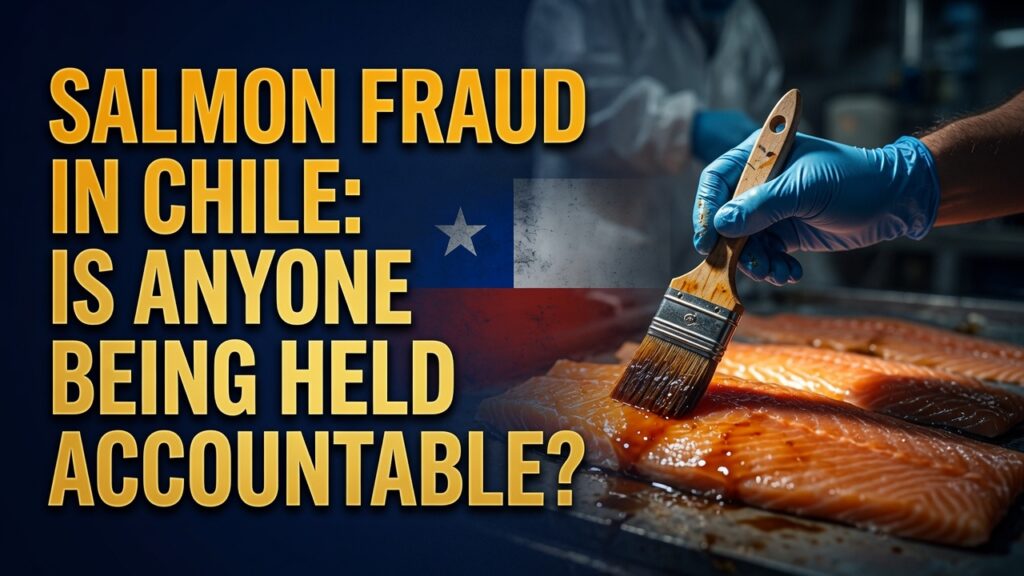
The video, first published by the newspaper El Llanquihue and picked up across Chilean media in early July 2026, allegedly shows workers brushing chemical dye onto salmon fillets, then using a hair dryer to mask decomposition. It matters right now because the United States buys 40 percent of Chile’s salmon exports by value — more than any other country on earth [SalmonChile export bulletin].
Support Independent Local Journalism
TheTownHall.News is a non-profit reader-supported journalism. Just $5 helps us hire local reporters, investigate important issues, and hold public officials accountable across Alameda County. If you believe our community deserves strong, independent journalism, please consider donating $5 today to support our work.What Does the Video Actually Show?
The footage is short, but specific. It allegedly depicts individuals applying colorant to fillets that had turned an unnatural whitish tone, restoring an orange color meant to mimic fresh salmon. A separate worker is seen using a hair dryer to remove excess moisture from the product.
According to Chilean outlets reporting on the case, the fish allegedly originated from farm mortalities and theft from the formal salmon industry, then were processed at unlicensed facilities along the route between Puerto Montt and Calbuco. Chile’s Ministry of Health has publicly stated that selling salmon sourced from mass die-offs is a “serious sanitary crime,” warning that such fish can carry Listeria monocytogenes, toxins, or dangerously elevated histamine levels. No charges have been filed. The investigation is ongoing, and anyone allegedly involved is presumed innocent unless proven otherwise.
If a product on your grocery shelf was dyed to hide spoilage, would you ever know it?
Who Is Really Behind This Scheme?
A retired inspector with Chile’s federal police, Andrés Canelo, told El Llanquihue that salmon theft has evolved into an organized-crime enterprise, no longer a series of isolated incidents. He pointed to weak traceability systems in Chile compared with competitors like Norway as a core reason the practice persists.

SalmonChile’s general manager, Tomás Monge, acknowledged the problem publicly, saying theft targeting drivers and company property continues despite industry efforts to prevent it. That’s a notable admission from the trade group representing the very companies whose product is allegedly being stolen and resold.
“The difference is that they have highly developed traceability systems. In Chile, the damage goes beyond the economic; this activity fuels other crimes like money laundering and tax evasion.” — Andrés Canelo, retired PDI inspector, to El Llanquihue
Why Should US Consumers Care?
Because the numbers make this an American story too. The US bought roughly $2.4 billion worth of Chilean salmon in 2025, and Chile now supplies 55 percent of the entire US salmon market [SalmonChile, UPI reporting]. When one country supplies the majority of a product Americans eat weekly, its enforcement gaps become our exposure.
When a single country supplies over half of America’s salmon, its fraud problem becomes our food safety problem.
$2.4 billion. That’s what Americans spent on Chilean salmon last year alone — and the question no one in Washington seems eager to answer is how much of that supply chain is actually being verified.
Is US Oversight Strong Enough to Catch This?
Here’s where limited-government skeptics of expansive bureaucracy might expect reassurance — and where the record gets uncomfortable instead. A federal watchdog, the Government Accountability Office, found that when the FDA cleared seafood products from import safety alerts between 2011 and 2018, it failed to conduct the sampling meant to justify that clearance in 95 percent of cases reviewed [GAO report, GAO-20-62]. The FDA does not currently monitor whether it’s even meeting its own inspection goals, according to that same review.
Support Independent Local Journalism
TheTownHall.News is a non-profit reader-supported journalism. Just $5 helps us hire local reporters, investigate important issues, and hold public officials accountable across Alameda County. If you believe our community deserves strong, independent journalism, please consider donating $5 today to support our work.This isn’t a case for more sprawling federal bureaucracy — it’s a case for the agency to actually enforce the rules already on the books. Americans don’t need a bigger FDA. They need the FDA that exists to do its job.
What Happens If This Goes Unaddressed?
If fraud like this continues unchecked in a supply chain feeding more than half the US salmon market, the incentive structure doesn’t improve on its own. Criminal operators profit more the longer detection lags behind the scheme. Left alone, a black market selling contaminated fish under a legitimate label doesn’t shrink — it professionalizes.
Key Questions This Story Raises:
- Who is verifying that Chilean salmon reaching US shelves wasn’t processed in an unlicensed facility?
- Why does a federal watchdog find the FDA isn’t completing its own required safety sampling?
- What would it take for US importers to demand the same traceability standards Norway already uses?
What Do Defenders of the Current System Actually Believe?
Industry defenders make a fair point worth engaging honestly: the vast majority of Chilean salmon exports come from large, legitimate producers with real HACCP compliance programs, and four companies account for half of all Chilean salmon exports — firms with far more to lose from scandal than to gain from fraud [SalmonChile]. They argue the theft-and-fraud pipeline is a criminal fringe problem, not evidence the whole industry is compromised.
That argument has merit as far as it goes. But it doesn’t answer why Chile’s traceability systems lag behind Norway’s, why this is reportedly not the first time this specific scheme has surfaced, or why the responsibility for catching it before it reaches American consumers still falls on an FDA that a federal audit says isn’t completing its own inspection requirements. A legitimate industry and a real enforcement gap can both be true at once.
Is This the Accountability Moment We’ve Been Waiting For?
The real question isn’t whether Chile’s formal salmon industry is legitimate — most of it clearly is. It’s whether the systems meant to catch the fraudulent fraction, on both sides of the supply chain, are actually working. Right now, the evidence says they aren’t keeping pace.
The investigation in Chile is still unfolding, and no one has been convicted of anything. But the deeper question it exposes doesn’t wait for a verdict: when a product this widely consumed crosses a border with this little verified oversight, who exactly is accountable if something slips through. That’s the question that should outlast this one video.
What do you think — should US importers demand stronger traceability from foreign suppliers before this becomes a bigger scandal? Share this article and let us know.
Still have questions? Stay informed — subscribe for daily coverage.
Think others need to hear this? Share the article.
Want your voice to count? Contact your congressional representative and ask what oversight the FDA’s Imported Seafood Safety Program actually enforces — and whether it’s funded to do the job.