Cancer Breakthrough: How Radiation Therapy Could Replace Government-Funded Immunotherapy Programs
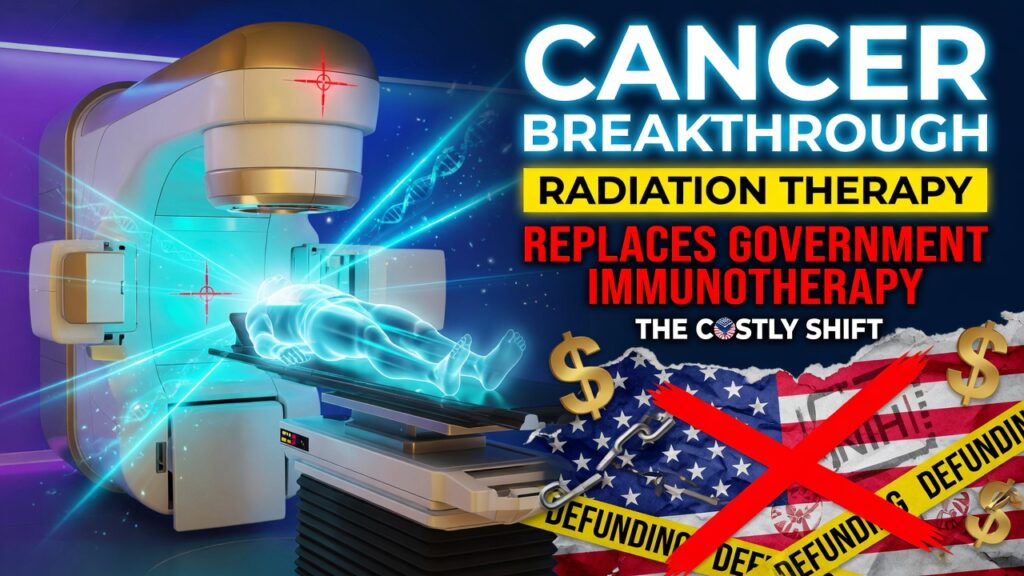
New research shows targeted radiation may eliminate the need for expensive, taxpayer-funded cancer treatments while delivering better outcomes for patients.
The federal government spends billions annually on cancer research and treatment programs, yet breakthrough discoveries often come from innovative researchers working outside the bureaucratic maze of government-controlled healthcare. A groundbreaking study led by Dr. Valsamo Anagnostou has revealed how a simple, targeted approach to radiation therapy could revolutionize cancer treatment—and potentially reduce our reliance on costly, government-subsidized immunotherapy programs that have failed many patients.
This isn’t just another incremental medical advance buried in academic journals. It’s a paradigm shift that challenges the entire premise of how we fund and deliver cancer care in America, offering hope to families while questioning whether massive government healthcare spending is truly the answer to our medical challenges.
Why This Medical Breakthrough Matters for Taxpayers
Dr. Anagnostou’s research, published in Nature Cancer, analyzed 293 blood and tumor samples from 72 lung cancer patients. The results were stunning: combining targeted radiation with immunotherapy activated immune responses in tumors that had never been touched by radiation, even in patients whose cancers were considered “immunologically cold”—meaning traditional immunotherapy had no effect.
Support Independent Local Journalism
TheTownHall.News is a non-profit reader-supported journalism. Just $5 helps us hire local reporters, investigate important issues, and hold public officials accountable across Alameda County. If you believe our community deserves strong, independent journalism, please consider donating $5 today to support our work.The implications extend far beyond the laboratory. Current immunotherapy treatments can cost upwards of $200,000 per patient annually, with much of this burden falling on Medicare, Medicaid, and other taxpayer-funded programs. Yet these expensive treatments fail approximately 70% of lung cancer patients whose tumors are immunologically cold.
What Anagnostou discovered challenges this expensive status quo. By using targeted radiation first, doctors can essentially teach the immune system to recognize cancer’s fingerprint, creating a personalized vaccine effect that costs a fraction of current immunotherapy protocols.
How Innovation Trumps Government Spending
The research demonstrates a fundamental principle that conservative health policy advocates have long championed: innovation and targeted solutions often outperform expensive, one-size-fits-all government programs.
Traditional immunotherapy relies on broadly activating the immune system, hoping it will recognize and attack cancer cells. This approach requires ongoing, expensive treatments with significant side effects and limited success rates. Anagnostou’s method uses the body’s own mechanisms more efficiently, potentially reducing both costs and treatment duration.

The radiation acts like a personalized cancer vaccine, breaking cancer cells apart and releasing signals that train immune cells to recognize tumor-specific mutations. Those trained immune cells then hunt the same cancer throughout the body—including in locations never touched by radiation.
This targeted approach embodies the kind of precise, results-oriented thinking that fiscal conservatives advocate across all areas of government spending.
What Healthcare Bureaucrats Get Wrong About Treatment Access
Government healthcare programs often prioritize coverage expansion over treatment innovation, assuming that spending more money automatically improves outcomes. Anagnostou’s research suggests this approach is fundamentally flawed.
The current system incentivizes expensive treatments that may not work for most patients, while innovative approaches that could be more effective and affordable struggle to navigate regulatory bureaucracy. The FDA’s approval process for new treatment combinations can take years, during which patients suffer and costs accumulate.
Meanwhile, the research shows that for patients whose lung cancer was considered unlikely to respond to immunotherapy, this radiation-first combination may have changed what treatment can offer them entirely. The T cells in these patients were directly recognizing mutation-specific targets from their own tumors—creating personalized, targeted therapy without the massive infrastructure costs of current precision medicine approaches.
Support Independent Local Journalism
TheTownHall.News is a non-profit reader-supported journalism. Just $5 helps us hire local reporters, investigate important issues, and hold public officials accountable across Alameda County. If you believe our community deserves strong, independent journalism, please consider donating $5 today to support our work.The Real Cost of Medical Overregulation
This breakthrough highlights how excessive government regulation can actually impede medical progress. While researchers like Anagnostou make groundbreaking discoveries, the path from laboratory to patient bedside remains clogged with bureaucratic hurdles that delay life-saving treatments.
The current regulatory framework assumes that more oversight equals better outcomes, but evidence suggests the opposite. Countries with more flexible regulatory approaches often see faster adoption of innovative treatments, while American patients wait years for access to therapies that could save their lives.
Consider the timeline: Anagnostou’s research was published in July 2025, yet it may take several more years before this approach becomes standard care due to regulatory requirements. How many patients will suffer or die waiting for bureaucrats to approve what scientists have already proven works?
How This Affects Families and Healthcare Freedom
For families facing cancer diagnoses, this research offers something invaluable: hope backed by science rather than government promises. The personalized approach means treatment decisions can be made between patients, families, and their doctors—not dictated by government healthcare panels or insurance bureaucrats.
The radiation-immunotherapy combination also supports the principle of healthcare freedom by potentially reducing dependence on ongoing, expensive treatments that tie patients to specific healthcare systems. A more effective, shorter-duration treatment gives families more options and greater control over their healthcare decisions.
This approach also validates parental rights in medical decision-making, as families can work with their physicians to determine the best treatment sequence rather than being forced into standardized protocols designed by distant bureaucrats.
Addressing the Opposition’s Concerns
Critics might argue that reducing government healthcare spending could limit research funding or treatment access for low-income patients. This concern deserves serious consideration, but the evidence suggests otherwise.
Private research institutions and pharmaceutical companies have historically driven most major medical breakthroughs, often with greater efficiency than government-funded programs. Anagnostou’s research, conducted at Johns Hopkins, demonstrates how academic medical centers can produce world-changing discoveries without massive federal bureaucracy.
Moreover, treatments that are more effective and less expensive ultimately improve access for all patients, regardless of their insurance status. A radiation-immunotherapy approach that costs less and works better serves everyone’s interests, especially those who currently cannot afford prolonged immunotherapy regimens.
The Path Forward: Innovation Over Bureaucracy
The most encouraging aspect of this research is how it emerged from scientific curiosity and rigorous methodology rather than government mandates or political considerations. This is how medical progress should work: researchers following evidence wherever it leads, without political interference or bureaucratic constraints.
Moving forward, policymakers should focus on removing barriers to innovation rather than expanding government healthcare programs. This means streamlining FDA approval processes for promising treatment combinations, reducing regulatory burdens on medical research, and allowing market forces to drive down costs while improving outcomes.
The radiation-immunotherapy breakthrough proves that American medical innovation remains world-leading when freed from excessive government interference. We need policies that support this kind of discovery, not bureaucratic systems that slow it down.
Conclusion: Science, Freedom, and Hope
Dr. Anagnostou’s research represents more than a medical breakthrough—it’s validation of principles that conservatives have long advocated. Targeted solutions work better than broad government programs. Innovation drives progress more effectively than bureaucracy. Individual choice and scientific freedom produce better outcomes than top-down mandates.
For cancer patients and their families, this research offers genuine hope: the possibility of more effective treatment with fewer side effects and lower costs. For taxpayers, it suggests that medical progress doesn’t require ever-larger government healthcare budgets. For advocates of limited government, it demonstrates how reducing bureaucratic interference can accelerate life-saving innovation.
The question now is whether our political leaders will embrace these lessons or continue expanding failed government healthcare programs that prioritize spending over outcomes.
Call to Action
Stay informed about medical breakthroughs that challenge government healthcare orthodoxy. Share this article with friends and family who believe in innovation over bureaucracy. Support independent journalism that covers stories the mainstream media ignores. Most importantly, engage in civic life to ensure that medical innovation remains free from political interference, because the next breakthrough that saves lives may depend on the freedom to pursue scientific truth wherever it leads.