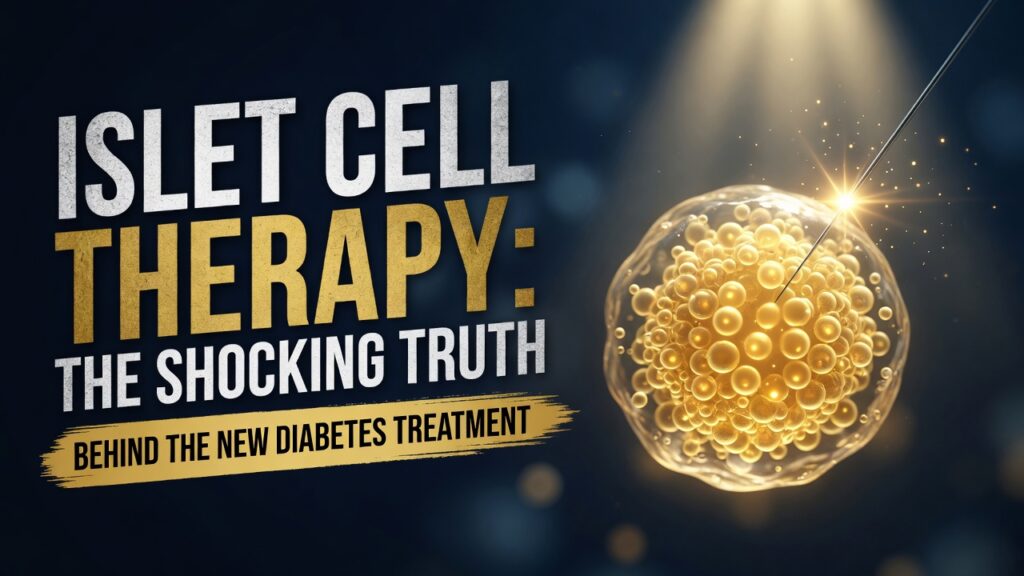
Islet Cell Therapy: The Shocking Truth Behind the New Diabetes Treatment
As the race to cure chronic illness accelerates, millions of Americans are asking: who is actually in charge of our healthcare choices — and who is going to pay for it?
Imagine waking up tomorrow completely free from the relentless cycle of blood sugar checks, insulin injections, and carbohydrate math. For the millions of Americans living with Type 1 diabetes, this vision of absolute personal liberty is the ultimate dream. A social media frenzy recently erupted around a groundbreaking study published in the New England Journal of Medicine, alongside the ongoing rollout of Lantidra, the first-ever FDA-approved pancreatic islet cell therapy. The public relations machine presents this as a flawless victory for modern science, an overnight cure that transforms the human body back into a self-sustaining ecosystem.
But beneath the utopian headlines lies a much more complicated, sobering reality that every independent citizen must confront. This medical advance does not come from a magic wand; it arrives with massive strings attached by the federal government, the pharmaceutical cartel, and the stark realities of biological trade-offs. Before we celebrate the end of a disease, we have to look closely at what this therapy actually demands from the individual. True independence is never free, and in the case of cellular therapy, the price might be higher than many families are willing or able to pay.
Support Independent Local Journalism
TheTownHall.News is a non-profit reader-supported journalism. Just $5 helps us hire local reporters, investigate important issues, and hold public officials accountable across Alameda County. If you believe our community deserves strong, independent journalism, please consider donating $5 today to support our work.Who Is Really Paying for This Policy?
The financial blueprint of this new medical frontier should raise immediate red flags for anyone concerned with fiscal accountability. While the mainstream press champions the science, the financial reality is staggering. Emerging cellular and gene therapies entering the market carry price tags that resemble phone numbers rather than medical bills.
Lantidra, the donor-derived cell therapy manufactured by CellTrans, is estimated to cost approximately $300,000 per patient [industry market data]. That baseline figure does not even account for the mandatory, lifelong specialized care, frequent laboratory monitoring, and continuous anti-rejection medication regimens required to keep the transplanted cells alive inside the recipient’s liver.
If a medical breakthrough costs $300,000 per patient, it is not a public health solution — it is an unsustainable luxury or a massive entitlement trap.
When a single treatment costs as much as a suburban home, the financial burden inevitably shifts to the taxpayer through expanded government programs or skyrocketing private insurance premiums. This is the exact opposite of fiscal responsibility. True medical innovation in a free market should drive quality up and costs down, yet our current system rewards exorbitant pricing structures that depend heavily on government reimbursement and state-subsidized insurance programs.

What Are the Real Strings Attached to Biological Independence?
To understand whether this treatment aligns with the core value of personal responsibility, one must look at the biological contract a patient signs when undergoing islet cell transplantation. Type 1 diabetes is an autoimmune condition where the body’s own defense system mistakenly destroys its insulin-producing beta cells. Infusing healthy donor cells into the liver doesn’t fix the underlying autoimmune flaw; it merely introduces new targets.
To prevent the recipient’s immune system from instantly destroying the newly imported cells, the patient must submit to a permanent regimen of heavy systemic immunosuppressive drugs. This is the trade-off the media routinely glosses over. A patient essentially swaps insulin dependency for immune system dependency, trading a predictable routine of blood sugar management for a lifelong vulnerability to opportunistic infections, organ toxicity, and increased cancer risks.
For an adult suffering from severe “hypoglycemia unawareness”—a terrifying condition where blood sugar drops dangerously low without any physical warning signs—this Faustian bargain may well be worth it. The FDA specifically restricted Lantidra’s approval to this precise, high-risk group of patients [FDA regulatory data]. But for the vast majority of stable, responsible individuals who manage their health through disciplined dieting, exercise, and modern continuous glucose monitors, introducing permanent immunosuppression is an unacceptable compromise of bodily autonomy and personal resilience.
Is trading the disciplined management of a chronic condition for total reliance on powerful, immune-suppressing pharmaceuticals a victory for personal independence, or is it just a different form of medical captivity?
What Do Supporters of This Policy Actually Believe?
Proponents of widespread public funding and accelerated approval for these advanced cellular therapies argue that the high upfront costs are entirely justified by the long-term societal benefits. They point to clinical trial data showing that roughly 30% of Lantidra recipients achieved total insulin independence for five years or more, drastically reducing their risk of long-term diabetes complications like blindness, kidney failure, and stroke [clinical trial data].
Advocates argue that curing a patient permanently eliminates decades of compounding healthcare expenses, emergency room visits, and lost economic productivity. From their perspective, the state has a moral and fiscal obligation to subsidize these cutting-edge therapies, arguing that centralized intervention in the healthcare market accelerates innovation and ensures equitable access for all citizens, regardless of their financial standing.
Support Independent Local Journalism
TheTownHall.News is a non-profit reader-supported journalism. Just $5 helps us hire local reporters, investigate important issues, and hold public officials accountable across Alameda County. If you believe our community deserves strong, independent journalism, please consider donating $5 today to support our work.While the desire to alleviate human suffering is entirely commendable, this collectivist worldview completely ignores basic economic reality and the dangers of government overreach. Bureaucrats cannot subsidize a $300,000 treatment into widespread affordability without triggering massive fiscal instability or implementation of government-run rationing systems.
Furthermore, true innovation does not happen through top-down mandates or massive taxpayer bailouts; it occurs when private companies are forced to compete in a transparent market. When the federal government steps in to guarantee payment for hyper-expensive therapies, it destroys any incentive for pharmaceutical giants to lower costs or streamline manufacturing.
Are Parental Rights at Risk as the Science Advances?
As researchers push beyond deceased donor cells into the realm of stem cell-derived therapies and CRISPR gene editing, a critical cultural battleground emerges. The New England Journal of Medicine study highlights rapid progress toward “hypoimmune” stem cells—cells that are genetically edited to be invisible to the human immune system, potentially eliminating the need for anti-rejection drugs altogether.
While this technological leap sounds miraculous, it opens a dangerous ethical door regarding parental rights and family autonomy. We have already witnessed an alarming trend across the West where public health authorities and legacy medical institutions attempt to override parental consent under the guise of “progressive medical care.” If gene-edited therapies become the standardized, state-sanctioned default for childhood illnesses like Type 1 diabetes, how long before bureaucratic entities begin subtle coercion tactics against families who prefer traditional, time-tested management?
If the state can dictate which experimental cellular therapies your child must receive, do you really own your parental rights?
A free society must fiercely protect the right of parents to make medical decisions for their children based on traditional civic values, religious convictions, and careful risk assessment. No medical breakthrough, no matter how sophisticated, should ever be used by the state as a lever to diminish the authority of the nuclear family.
What Is the Ultimate Verdict on Medical Freedom?
The rapid evolution of islet cell therapy reminds us that scientific progress is a double-edged sword. True health security cannot be manufactured by an FDA press release or funded by printing trillions of deficit dollars in Washington. It is forged through the classic American virtues of self-discipline, rigorous personal responsibility, and a fierce defense of individual liberty against corporate and bureaucratic encroachment.
What do you think — is it time to halt government subsidies for hyper-expensive medical trials and let the free market drive down costs naturally? Share this article on social media and join the debate below.
The real question isn’t whether this scientific breakthrough will alter the landscape of modern medicine — it’s whether we will allow the federal apparatus to use it to compromise our fiscal health, our parental authority, and our personal freedom before we even realize what we have traded away.