Is China’s Painless Cancer Device the Breakthrough American Patients Deserve Access To?
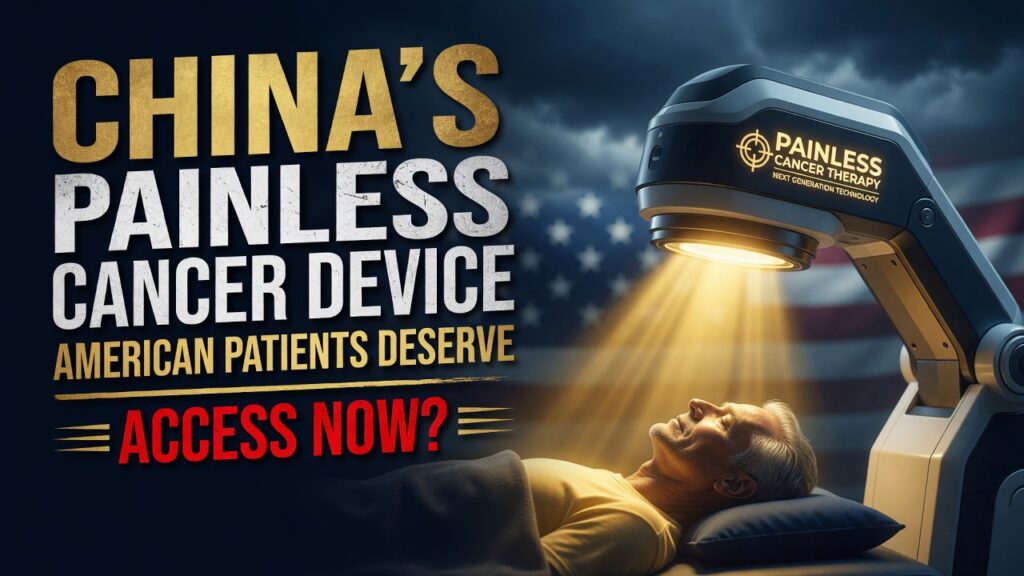
As Chinese hospitals report destroying tumors in under five minutes with a non-thermal electric pulse device, millions of cancer patients and their families are asking a pointed question: why is access to cutting-edge treatment still an accident of geography and bureaucratic timing?
Cancer doesn’t wait for regulators. It doesn’t pause while committees deliberate or while agencies draft new approval frameworks. Yet for patients watching a promising wave of minimally invasive tumor ablation technology spread through South China’s leading cancer hospitals, the gap between what medicine can do and what the system allows feels unconscionably wide. That gap deserves scrutiny — and answers.
What Is This Technology, Exactly?
The device generating attention is not science fiction. The NanoKnife is a tumor ablation technology derived from Irreversible Electroporation (IRE), which destroys tumor cells by delivering high-voltage electrical pulses through electrode probes, creating permanent nano-scale holes in the cell membrane and accelerating their death. The key distinction from older ablation methods is thermal: unlike radiofrequency or microwave ablation, which use heat to burn tissue, IRE uses nonthermal electric energy to irreversibly destabilize cell membranes, resulting in focused cell death without damaging surrounding extracellular matrix, vessels, or nerves. AsiancancerScienceDirect
Support Independent Local Journalism
TheTownHall.News is a non-profit reader-supported journalism. Just $5 helps us hire local reporters, investigate important issues, and hold public officials accountable across Alameda County. If you believe our community deserves strong, independent journalism, please consider donating $5 today to support our work.To ablate a solid tumor of 3 centimeters in diameter, five minutes is more than enough, with each pair of probes releasing 90-microsecond ultra-short pulses that take less than one minute each. This is the “3–5 minutes” claim circulating in patient communities — and for once, it is grounded in peer-reviewed reality, not promotional fiction. Asiancancer
Who Is Leading This Work in South China?
Guangzhou has become ground zero for clinical IRE adoption in China. As of March 2024, Guangzhou Fuda Cancer Hospital had completed 1,007 NanoKnife ablation procedures, leading the nation in both the quantity and quality of ablations, and had published nearly 50 research papers related to NanoKnife, including more than 20 peer-reviewed SCI papers. That is not the output of an experimental fringe program. That is a serious clinical track record. Fudahospital
A newer cousin technology — nanosecond pulsed electric field ablation, or nsPEF — is pushing the boundaries even further. A prospective multicenter trial conducted across five hospitals in China enrolled 192 patients with hepatocellular carcinoma in high-risk locations adjacent to major blood vessels, and achieved a technical success rate of 99.5%, with complete ablation in 91.7% of 217 tumors. These are not marginal gains. They represent a meaningful advance in treating cancers previously considered inoperable due to their proximity to critical structures. nih
99.5% technical success in 192 liver cancer patients at high-risk sites. The question no oncologist in the United States should avoid: when does their patient get access to this?

Is This the Accountability Moment American Cancer Patients Have Been Waiting For?
The NanoKnife system is not unknown to American regulators. It was approved by the U.S. FDA in October 2011 for clinical application in soft tissue ablation, and was subsequently approved in the European Union, Australia, Canada, and China. The device has been in American clinical use for over a decade. Yet its adoption remains uneven, its reimbursement patchy, and its availability concentrated in major academic medical centers — far from the reach of millions of patients in rural or underserved communities. Fudaguangzhou
“A technology that can destroy a tumor in under five minutes without burning surrounding tissue has been FDA-cleared since 2011. Fourteen years later, most American cancer patients have never heard of it. Someone should answer for that.”
The latest news from the regulatory front offers some reason for cautious optimism. Final results from the pivotal PRESERVE trial, published in European Urology, demonstrated that irreversible electroporation with the NanoKnife System is a safe and effective method for prostate tissue ablation in intermediate-risk prostate cancer patients, contributing to the FDA granting 510(k) clearance for that specific indication in December 2024. Progress, yes — but incremental, and years behind the clinical experience being accumulated in South China. Urology Times
What Do Supporters of Gradual Regulatory Approval Actually Believe?
It is fair to ask: are regulators simply being responsible? Proponents of the current approval framework argue that the FDA’s cautious, indication-by-indication approach protects patients from devices whose long-term effects are not yet fully characterized. They note that IRE still requires general anesthesia for most procedures, carries a risk of cardiac arrhythmia if not properly synchronized to heartbeat cycles, and involves a learning curve that can affect outcomes in less experienced hands.
These are legitimate concerns. No credible patient advocate wants a device rushed to market without adequate safety data. The counterargument, however, is equally principled: when peer-reviewed multicenter trials involving hundreds of patients are already published, when the device has been FDA-cleared for over a decade, and when Chinese hospitals are posting complication rates that compare favorably to surgery — the burden of proof has shifted. A 2025 real-world safety analysis of IRE adverse event reports in the FDA’s MAUDE database found that while device malfunctions were a noted issue historically, they have declined in recent years as the technology matures. The data exist. The question is whether the system moves fast enough to act on them. Springer
Are There Real Limits the Headlines Aren’t Telling You?
Every cancer patient deserves honesty, not just hope — and the honest picture of IRE is more nuanced than the “5-minute cure” framing suggests.
Support Independent Local Journalism
TheTownHall.News is a non-profit reader-supported journalism. Just $5 helps us hire local reporters, investigate important issues, and hold public officials accountable across Alameda County. If you believe our community deserves strong, independent journalism, please consider donating $5 today to support our work.Complete ablation rates at one month were significantly higher for tumors under 2 centimeters compared to larger tumors — 90.1% versus 71.7%. Tumor size matters. Location matters. And IRE is administered under general anesthesia with mandatory neuromuscular blocking agents to prevent muscle contractions caused by the electrical pulses — meaning it is a hospital procedure with real anesthetic risk, not a painless office visit in the way a dental cleaning is painless. The “painless” descriptor refers to the non-thermal, non-scarring nature of the ablation itself, not the procedural experience. nihclinicaltrials
None of this diminishes the technology’s promise. It simply means patients need complete information — not curated reassurance — to make decisions aligned with their own values and medical circumstances. That is what personal responsibility in healthcare actually looks like: informed choice, not manufactured enthusiasm.
What Do the Numbers Actually Tell Us About China’s Head Start?
Guangzhou Fuda Cancer Hospital holds the record in Asia for the most number of IRE cases treated, having been the first hospital in Asia to use NanoKnife. Meanwhile, a separate research team at Guangxi University recently published findings in the journal Cell describing a viral therapy that prompted tumor shrinkage or halting in 90 percent of 23 patients with advanced, treatment-resistant cancers, with one cervical cancer patient achieving full remission. China is not running a single experimental thread — it is running several in parallel, with clinical scale that most Western institutions cannot match. demo2Md-eksperiment
The cumulative effect is a country that has made aggressive investment in non-surgical cancer treatment a national priority. Whether one approves of China’s governance model or not is beside the point. The results are being published in peer-reviewed journals, replicated across multiple institutions, and scrutinized by international researchers. American patients should not have to book a flight to Guangzhou to access therapies their own FDA cleared years ago.
Key Questions This Article Raises
- If the NanoKnife has been FDA-cleared since 2011, why do most American cancer patients still lack access to it through their insurance or local hospital network?
- As nsPEF technology achieves a 99.5% technical success rate in Chinese multicenter trials, what is the timeline for U.S. regulatory expansion of these indications?
- Who is responsible for ensuring that advances made in oncology abroad are evaluated and adopted domestically without a decade of delay?
What Happens If No One Speaks Up?
The history of cancer treatment is littered with innovations that spent years trapped in approval limbo while patients who might have benefited ran out of time. Fiscal accountability applies here too: novel checkpoint inhibitors, CAR-T cell therapies, and bispecific antibodies are expanding treatment options for difficult cancers, but their price tags can reach hundreds of thousands of dollars per patient. A minimally invasive ablation procedure that destroys a tumor in minutes, with a low complication profile and no radiation exposure, is precisely the kind of cost-effective innovation a fiscally responsible healthcare system should be racing to deploy — not filing away. The Medical Advisor
Parental rights include the right to advocate for your child’s access to every proven medical option. Law and order in medicine means accountability for institutions that delay while patients suffer. Free speech means patients and physicians should be able to discuss emerging global evidence without being dismissed as fringe voices.
The real question isn’t whether this technology works. The peer-reviewed record from South China’s leading hospitals makes that answer increasingly clear. The real question is whether the system surrounding American cancer care — its reimbursement structures, its approval timelines, its institutional inertia — will move at the speed patients need it to.
What do you think — is it too late to demand the system keep pace with the science? Share this and make your voice heard.
Still have questions? Stay informed — subscribe for daily coverage of cancer treatment innovation and healthcare policy.
Think others need to hear this? Share the article with someone navigating a cancer diagnosis.
Want to make your voice count? Contact your congressional representative and ask what they are doing to accelerate access to FDA-cleared minimally invasive cancer therapies for underserved communities.