Iran War Death Toll: How Many US Troops Have Died So Far?
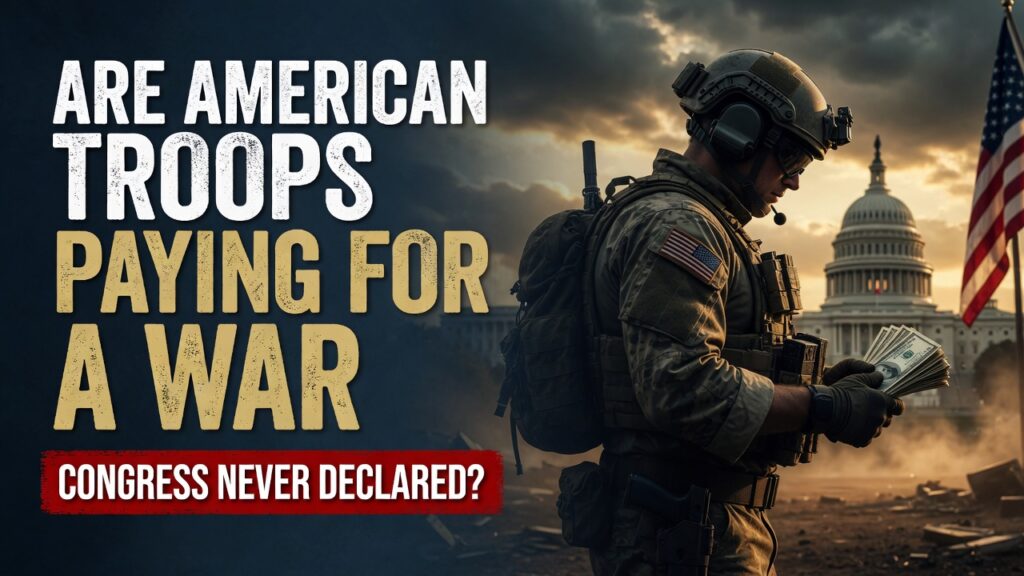
As Iranian missiles and drones kill more U.S. service members in Jordan and Iraq, Americans are asking a question Washington has yet to answer: who is accountable for this war, and when does it end?
Two more American troops are dead. A third is missing, presumed among the fallen.
That grim update landed this weekend, when U.S. Central Command confirmed that Iranian ballistic missiles and drones struck Muwaffaq Salti Air Base in Jordan on July 17, killing two service members defending the base and leaving a third unaccounted for. A day later, CENTCOM disclosed a fourth death, this one in northern Iraq, where a soldier was killed during the controlled detonation of unexploded ordnance from a downed Iranian drone. On Sunday, military personnel recovered unidentified remains at the Jordan attack site, still undergoing forensic examination to confirm identity. The losses bring the confirmed American combat death toll in this five-month conflict to 18. [CENTCOM/wire reporting]
Support Independent Local Journalism
TheTownHall.News is a non-profit reader-supported journalism. Just $5 helps us hire local reporters, investigate important issues, and hold public officials accountable across Alameda County. If you believe our community deserves strong, independent journalism, please consider donating $5 today to support our work.How Did We Get Here?
This war did not start last weekend, and it will not end there either. Fighting between the United States and Iran has escalated for months, following a brief and fragile ceasefire negotiated last month. That truce has now effectively collapsed. Both sides spent weeks accusing each other of violations before resuming open strikes, with U.S. forces conducting eight consecutive nights of airstrikes against Islamic Revolutionary Guard Corps targets believed responsible for the Jordan attack. Iran, in turn, has continued launching missiles and drones at American forces and allied nations across the region, including strikes that reached Jordanian airspace as recently as late February. [CENTCOM/wire reporting]
Who Is Really Paying the Price for This War?
American service members are paying with their lives. Six Army Reserve soldiers were killed in March when Iran struck an operations center at a port in Kuwait. An Army sergeant died soon after from injuries sustained in a separate attack in Saudi Arabia. [CNN reporting] Now four more names will be added to that list, pending official notification of their families. CENTCOM has withheld the identities of the fallen and the missing “out of respect for the families during the notification process,” a standard and appropriate protocol, but one that underscores how raw and recent these losses are.
Eighteen American service members have died in this conflict. The question no one in Washington seems eager to answer: how many more before there is a real accounting?
Beyond the human cost, taxpayers are footing a bill that has never been transparently itemized for the public. Sustained air campaigns, missile defense operations, medical evacuations, and force protection across multiple Middle Eastern bases carry enormous costs. Fiscal accountability demands that Congress and the Pentagon show the American people exactly what this war costs and how long they intend to keep paying it.

Was This War Ever Actually Declared?
Here is the uncomfortable constitutional question hovering over every casualty report: Congress never issued a formal declaration of war against Iran. Under Article I of the Constitution, that power belongs to the legislative branch, not the executive. Successive administrations of both parties have relied on broad interpretations of existing authorizations and commander-in-chief powers to justify sustained military operations abroad without a direct congressional vote on this specific conflict. That is not a partisan complaint. It is a structural one, rooted in the principle that no president, regardless of party, should have unilateral authority to commit American lives to open-ended conflict.
Limited government does not mean weak defense. It means decisions of this magnitude, ones that get American soldiers killed week after week, deserve the accountability of an up-or-down vote by the people’s elected representatives. Right now, that vote has not happened.
If your son or daughter were deployed to Jordan tonight, would you feel confident someone in Washington could explain exactly why?
What Do the Numbers Actually Tell Us?
- The question no one in Washington wants to answer: is that number final, or just where things stand right now?
That total does not include the dozens of service members injured, several of whom were medically evacuated to hospitals in Jordan before being discharged, or the ongoing forensic work needed to identify the remains recovered this weekend. Each entry on that list represents a family now waiting for a knock on the door. Each strike ordered in response, and there have been at least eight consecutive nights of them, represents another step deeper into a conflict without a clearly stated endpoint.
“Eighteen names on a casualty list, and not one formal congressional vote authorizing this war. How is that accountability?”
Are Our Leaders Even Listening to the Public?
Public patience with open-ended foreign conflicts has worn thin before, and for good reason. Americans across the political spectrum have watched previous conflicts stretch from limited operations into decades-long commitments with no clear victory condition. Former senior military officials have already voiced concern that the current trajectory risks the same outcome, with one retired naval officer warning publicly that continued escalation could push the United States toward a far larger and more costly confrontation. [Al Jazeera interview, retired U.S. naval officer]
Support Independent Local Journalism
TheTownHall.News is a non-profit reader-supported journalism. Just $5 helps us hire local reporters, investigate important issues, and hold public officials accountable across Alameda County. If you believe our community deserves strong, independent journalism, please consider donating $5 today to support our work.That warning deserves serious attention, not dismissal. Rule of law and constitutional order exist precisely so that decisions with this much at stake are not made by momentum alone.
What Do Supporters of This Policy Actually Believe?
Supporters of continued military action argue that American forces have a right to defend themselves once attacked, and that failing to respond decisively invites further aggression from Iran and its regional proxies. This is a legitimate position. No one disputes that troops under fire have both the right and the duty to defend their positions, and the service members lost this weekend died doing exactly that.
The fair response is not that defense is wrong. It is that defense and open-ended escalation are two different things, and the American public deserves clarity on which one their government is actually pursuing. Responding to a direct attack on U.S. forces is different from an unauthorized, indefinite campaign with no defined objective or exit criteria. Supporters of a strong response can, and should, still demand that Congress formally weigh in before more names are added to the casualty list.
What Happens If No One Speaks Up?
If this pattern continues unchallenged, the precedent is clear: American forces can be committed to sustained combat operations indefinitely, without a congressional vote, funded by taxpayers who were never given a direct say. That precedent will outlast this particular conflict and apply to the next one, and the one after that.
Accountability requires citizens who ask hard questions before the next casualty report, not after. It requires representatives willing to hold hearings, demand cost estimates, and put their names on a formal vote rather than hiding behind existing authorizations passed years or decades ago for different circumstances entirely.
Key Questions This Story Raises
- Has Congress formally authorized this specific conflict with Iran, or is it operating under older, broader war powers?
- What is the full financial cost to taxpayers so far, and has the Pentagon disclosed it?
- What is the defined military and diplomatic objective that would bring this conflict to a close?
Is It Too Late to Demand Answers?
It is not too late. Eighteen deaths is a devastating number, but it is also a moment that still allows for course correction, transparency, and formal accountability. Every additional week without a clear public accounting of strategy, cost, and legal authority makes that correction harder to achieve.
The real question is not whether this conflict will affect American families. It already has. The real question is whether elected officials will be forced to answer for it before the number climbs higher, or only after.
What do you think? Is it too late to demand a formal accounting of this war, or is there still time to hold Washington to that standard? Share this article and let us know.
Still have questions about how this war has unfolded and where it goes next? Stay informed and subscribe for daily coverage. Think others need to see this? Share the article. Want to make your voice count? Contact your congressional representative and ask directly whether they support a formal, on-record vote authorizing continued military operations against Iran.