ISIS Child Suicide Bombers: What the Tactic Reveals About Terror?
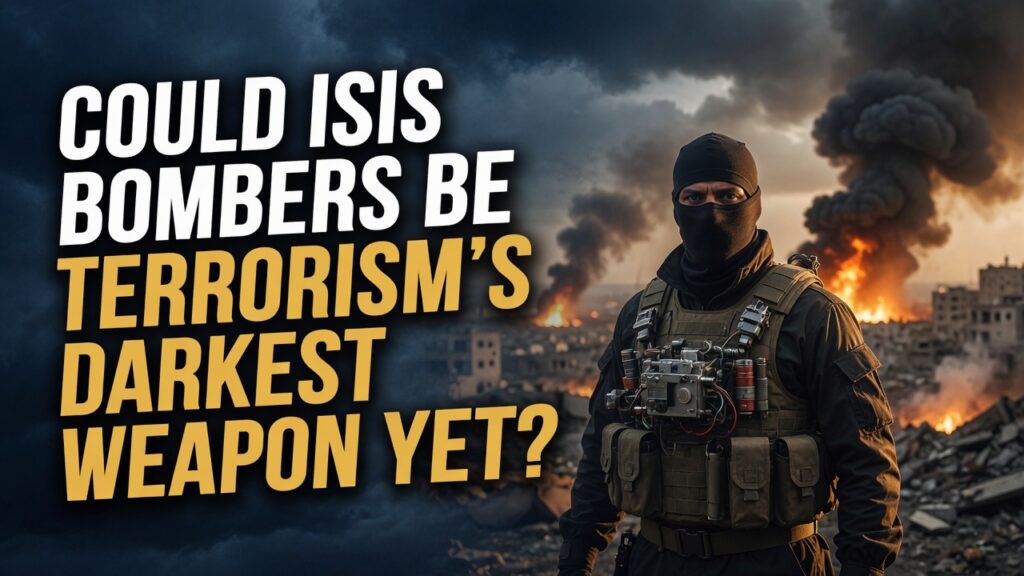
As reports of child suicide bombers resurface, a hard question follows: how far will terror groups go to weaponize the innocence adults are supposed to protect — and are we still paying attention?
A boy stood shirtless in an alley, a bomb strapped to his stomach, sent to kill soldiers who had never met him.
He did not choose this. Someone chose it for him. And the question that should follow every reader through this story is simple: what kind of ideology looks at a child and sees a weapon?
This is not a hypothetical. It is documented. Security forces in Iraq intercepted a boy rigged with an explosive vest after displaced families, who had lost their own homes to the same terror campaign, noticed him acting strangely and reported it. Soldiers carefully removed the device. The child survived. The story did not end there, because the tactic itself has never really gone away.
What Actually Happened to This Child?
The boy was reportedly sent by ISIS handlers to target Iraqi security forces during the fight to retake territory the group had seized. He was found holding his stomach, a detail that gave him away to civilians who had already learned to recognize the signs of a hidden explosive vest. Soldiers moved in, talked him through the moment, and disarmed the device without detonation.
Iraqi security personnel, alongside the Popular Mobilization Forces, are heard on the recording thanking both the units involved and the displaced families who flagged the danger. That detail matters. This was not a rescue accomplished by policy or bureaucracy. It was accomplished by ordinary people paying attention and soldiers willing to act.
Support Independent Local Journalism
TheTownHall.News is a non-profit reader-supported journalism. Just $5 helps us hire local reporters, investigate important issues, and hold public officials accountable across Alameda County. If you believe our community deserves strong, independent journalism, please consider donating $5 today to support our work.Why Does ISIS Send Children to Die?
The tactic is not improvised. The Islamic State built what it called a “Cubs of the Caliphate” program, a structured system for recruiting, indoctrinating, and deploying minors in combat roles [Al-Bayan Center for Planning and Studies]. Children as young as eight have been documented in weapons training. Some are orphaned. Some are abducted. Nearly all are manipulated before they understand what is being asked of them.
A child was sent to kill soldiers wearing a bomb he didn’t choose to wear. If that doesn’t demand accountability, what does?
This is not an isolated tactic. Similar cases were documented in Kirkuk, where boys as young as eleven were intercepted before detonation [NBC News, Reuters]. The pattern is consistent: recruit children with no stable family structure, isolate them from anyone who might intervene, and send them into public spaces where they are least likely to be searched.
Who Actually Stopped This From Becoming a Tragedy?
Not a government agency. Not an international NGO. Civilians who had themselves been displaced by the same violence were the first line of defense, noticing a child behaving unusually and reporting it before he could reach his target. Security forces then did the difficult, dangerous work of talking a frightened child through the removal of a live explosive.
“This child isn’t doing anything wrong. Thank you, my dear.”
That line, spoken to the boy after the vest was removed, is worth sitting with. It captures something this story keeps circling back to: even in the middle of a war built on using children as weapons, the people on the ground still separated the child from the ideology that had captured him.
What Do the Numbers Actually Tell Us?
42. That is the number of children the United Nations verified as killed or maimed by explosive ordnance in Iraq in a single reporting period [UN monitoring, cited by Watchlist]. The question no one wants to sit with: how many more were never counted?
Verified UN reporting has also documented children photographed in military uniforms alongside armed groups, a pattern the UN says persisted even without formal orders to recruit minors. The numbers are not exhaustive. They are a floor, not a ceiling, because conflict zones make full accounting nearly impossible.

Is This Still a Threat, or Just History?
It would be comfortable to treat this as a closed chapter. It is not. ISIS lost its territorial caliphate, but the ideology that treats children as disposable tools did not disappear with the territory. Analysts tracking Iraq-based militant activity continue to document recruitment efforts aimed at minors in displacement camps, where family structures are broken and oversight is thin.
Homeland security officials have separately warned for years that the same radicalization playbook, targeting isolated and vulnerable young people, does not require a battlefield. It requires an internet connection and a target with no one paying attention. That is the throughline from a Mosul alleyway to a conversation happening in an online forum today.
What Do Supporters of a More Hands-Off Foreign Policy Actually Believe?
There is a genuine, serious argument that Western nations should be cautious about entangling themselves in foreign conflicts, and that domestic resources should focus on domestic threats first. That argument deserves a fair hearing. It is rooted in a legitimate concern about endless intervention with unclear objectives and enormous cost to taxpayers.
But that argument does not answer the question this story raises. Recognizing an atrocity and holding the ideology behind it accountable is not the same as calling for military deployment. Reporting on how terrorist organizations weaponize children is clear-eyed awareness, not foreign policy activism. Conflating the two lets an important debate obscure a simpler, non-partisan truth: using children as bombs is indefensible under any framework.
Why Does This Still Matter to Readers Far From Iraq?
Because the moral clarity in this story is not regional. It travels. Every parent reading this understands, instantly and without explanation, what it means to see a child used this way. That instinct, the refusal to look away from a child in danger, is the same instinct that drives parents to demand transparency from schools and fuels every serious conversation about protecting kids from exploitation in any form.
ISIS didn’t just weaponize explosives. It weaponized childhood itself.
That single fact should be enough to keep this story from fading into background noise. The tactic exploited the very things adults are supposed to protect: trust, innocence, and a child’s inability to say no to the adults controlling him.
Key Questions This Story Raises
- How many children have been used this way, and how many of those cases were never documented?
- What responsibility do international bodies have to track and prevent child recruitment in conflict zones?
- Are Western institutions recognizing the same radicalization tactics when they target isolated young people outside a war zone?
Has the World Actually Learned From This?
The honest answer is: partially. International monitoring bodies now track child recruitment more systematically than a decade ago. Militant groups in Iraq have faced increased scrutiny, and some factions have signed formal action plans committing to end the practice [UN reporting]. That is real progress, and it deserves acknowledgment.
But acknowledgment is not resolution. The same tactic, exploiting displaced, orphaned, or radicalized children, remains available to any group willing to use it, wherever conditions allow it to take root. Progress on paper does not disarm a vest.
The Question Readers Should Carry Forward
The real question isn’t whether this happened. It’s documented, verified, and painfully clear. The real question is whether the world is prepared to recognize the same warning signs the next time they appear, whether in a displacement camp overseas or in a vulnerable teenager isolated online closer to home.
The soldiers in this story acted. The displaced families who reported the child acted. This leaves every reader with an uncomfortable question: if you saw the warning signs, would you act too, or would you look away and hope someone else does?
Support Independent Local Journalism
TheTownHall.News is a non-profit reader-supported journalism. Just $5 helps us hire local reporters, investigate important issues, and hold public officials accountable across Alameda County. If you believe our community deserves strong, independent journalism, please consider donating $5 today to support our work.Still have questions about how terror groups target children, and what’s being done about it? Stay informed, subscribe for ongoing coverage. Think others need to see this story? Share it. Want your voice to count? Contact your representatives and ask what oversight the United States supports for international child-protection monitoring in conflict regions, and consider supporting vetted organizations that document child recruitment by armed groups.