China Voter Data Breach: 220 Million Files, Unanswered Questions
As new details emerge about a years-long breach of American voter data, millions are asking the same question: who was supposed to be protecting this information — and why did it take this long to find out?
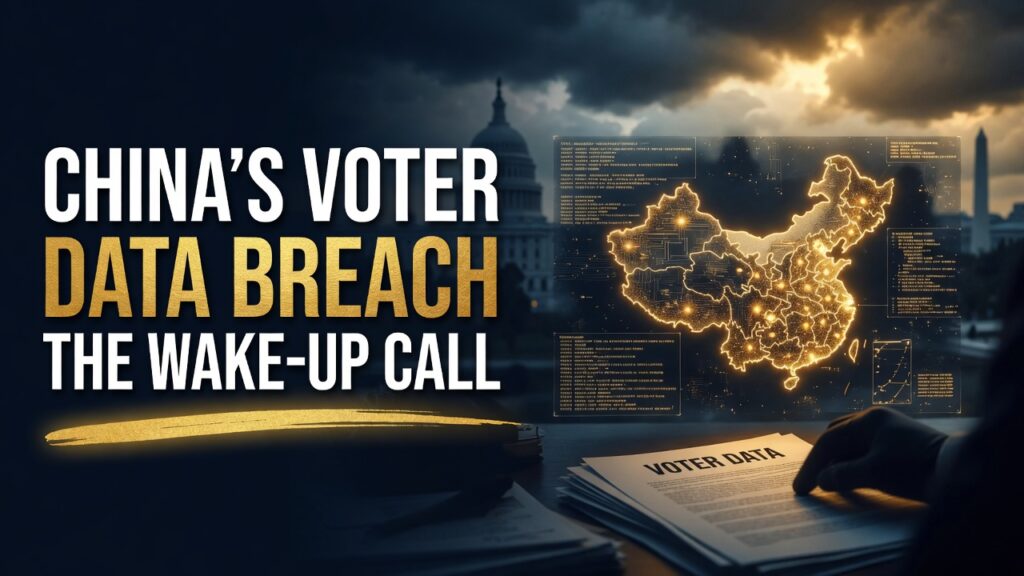
Two hundred twenty million voter files. That’s the number now at the center of a national security controversy.
President Trump announced in a primetime address on July 16 that declassified documents show China accessed 220 million U.S. voter registration files between 2020 and 2023. His administration says it is now notifying governors, senators, and members of Congress in the states affected and pushing Congress to finally act on long-stalled election security legislation.
What Did the Declassified Documents Actually Show?
The documents, released alongside the president’s address, describe what he called the largest compromise of election data in American history. According to reporting on the briefing, the files included voters’ names, addresses, voting history, and party affiliation — much of which is already considered public record in many states. The administration says it is now working directly with affected states to shore up protections.
That distinction matters. Voter registration data is not the same as ballots, vote tallies, or voting machines. No official has alleged that actual votes were changed or that any voting equipment was accessed. The claim is about data exposure — not altered election outcomes.
Support Independent Local Journalism
TheTownHall.News is a non-profit reader-supported journalism. Just $5 helps us hire local reporters, investigate important issues, and hold public officials accountable across Alameda County. If you believe our community deserves strong, independent journalism, please consider donating $5 today to support our work.Is This Actually New Information?
Not entirely. Election security experts note that foreign intelligence services, including China’s, have long been known to collect publicly available voter data as routine practice. The Intelligence Community has briefed multiple presidents, including Trump himself, on this activity for years.
“If everyone already knew this was happening, why is the country only hearing about it now?” That’s the question voters are entitled to ask — and it’s a fair one, regardless of which side of the aisle you’re on.
What Happens Next for the States Involved?
The breach reportedly touches at least 18 states — a significant share of the country’s voter rolls. That raises a practical question beyond the political noise: what happens next for the officials actually responsible for securing this data at the state level?
Secretaries of state, not the federal government, typically administer voter rolls. Any real fix requires coordination across dozens of separate systems, each with its own vendors and budgets. A national notification is a first step. It is not, by itself, a solution.
For county election offices already stretched thin, unfunded federal notifications about a years-old vulnerability create a familiar problem: being told there’s a fire without being given the resources to put it out.
Why Does the Timing Matter Right Now?
The speech landed amid a broader push for the Safeguard American Voter Eligibility Act — legislation aimed at tightening voter roll security and citizenship verification. That bill remains stalled in the Senate, opposed by Democrats and viewed skeptically by some Republicans.
Critics argue the timing is politically convenient. Supporters argue it’s overdue. Both things can be part of the same story: a genuine security question wrapped in an ongoing legislative fight.
“We can never be bought. We can never be hacked. And we can never watch a stolen election again.”
That line, delivered by the president during his address, captures the emotional core of the debate — even as experts caution that no evidence has been presented showing votes were actually altered.

Who Is Actually Being Held Accountable Here?
Despite the severity of the president’s language, no sanctions were announced against Chinese officials, and no new federal investigation followed the speech. That’s a notable departure from how past administrations have responded to confirmed foreign interference operations.
China’s foreign ministry denied the allegations outright. Congressional Democrats called the claims overstated. Where does that leave the millions of voters whose data may genuinely be at risk? Still waiting for a clear answer.
220 million voter files. The question no one in Washington has fully answered: what concrete steps are being taken to make sure this can’t happen again?
Some skepticism traces back to Trump’s years of broader claims about 2020 election integrity, claims reviewed by numerous courts and state officials at the time. That history is part of why this disclosure is being scrutinized closely on both sides — supporters see vindication, critics see a familiar pattern applied to a narrower, technical data exposure. Neither framing should be accepted uncritically. The documents describe data access, not altered vote totals, and responsible reporting keeps those claims separate.
What Do Supporters of This Policy Actually Believe?
Supporters argue that even if this breach didn’t alter vote outcomes, it exposes a real, lasting vulnerability: inconsistent state standards for protecting voter data that adversaries can exploit for future targeting or disinformation. They point to the SAVE Act as a common-sense fix — stronger verification, better security standards, clearer accountability when breaches occur.
That argument has merit. Voter data security is a legitimate governance issue independent of who’s making the case. Where it runs into trouble is the leap from “data was accessed” to “an election was stolen” — a claim a prior intelligence assessment specifically declined to support, finding no effort by China to interfere with election infrastructure or outcomes. Both truths matter here: the security gap is real, and the more dramatic language outpaces the current evidence.
Are Americans Losing Trust in the System Either Way?
Regardless of how this dispute resolves politically, it reflects something bigger: growing demand for transparency about who has access to voter information and how long officials sit on that knowledge before disclosing it. Trust in electoral systems doesn’t recover through speeches — it recovers through consistent, verifiable action.
There’s also a fiscal accountability angle deserving more attention. Every notification, audit, and security upgrade tied to this disclosure carries a cost that ultimately lands on state budgets and taxpayers. If Washington is serious about preventing a repeat, the conversation can’t stop at a speech — it has to include who pays for stronger safeguards, how fast funds reach the states, and whether Congress attaches real enforcement teeth to whatever standard eventually passes.
Support Independent Local Journalism
TheTownHall.News is a non-profit reader-supported journalism. Just $5 helps us hire local reporters, investigate important issues, and hold public officials accountable across Alameda County. If you believe our community deserves strong, independent journalism, please consider donating $5 today to support our work.Key Questions This Story Raises
- If this data exposure was known for years, why weren’t voters notified sooner?
- Why has no formal sanction or investigation followed such a serious allegation?
- What binding, national standard — if any — will actually come out of this?
So where does that leave the country? The real question isn’t whether foreign adversaries want access to American voter data — it’s whether Washington will finally build a system serious enough to stop them, or whether this becomes one more headline that fades without a fix.
That is the version of accountability voters can actually measure: not a single primetime address, but whether the money, the legislation, and the follow-through show up months from now.
What do you think — is Congress moving fast enough on voter data security, or is this another case of all talk and no action? Share this article and let us know.
Still have questions about what this means for your state? Stay informed — subscribe for daily coverage. Think others need to see this? Share the article. Want your voice to count? Contact your senators and ask directly where they stand on the Safeguard American Voter Eligibility Act.