Gaza Ceasefire Violations 2026: What the Data Really Shows?
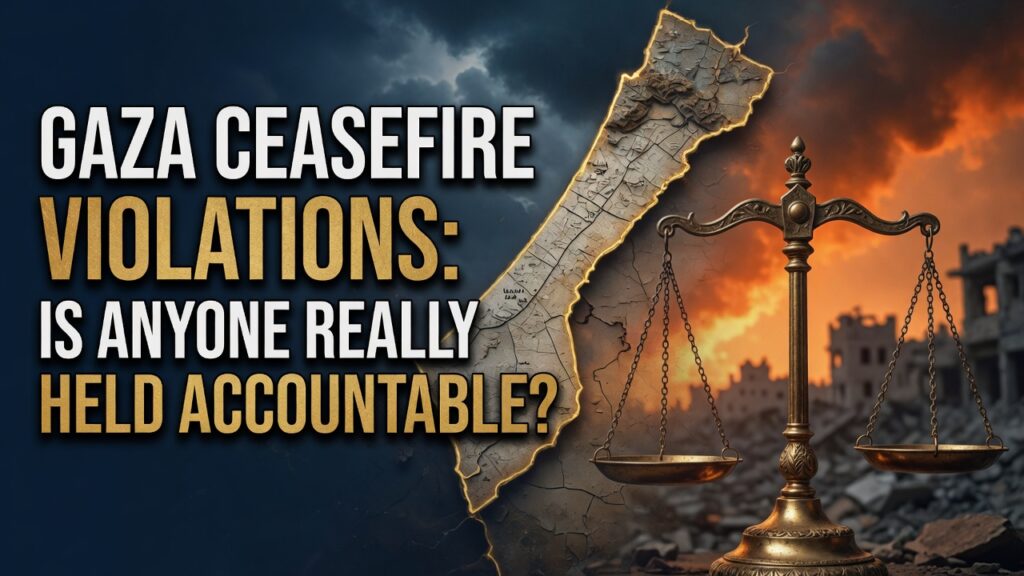
Nine months after Washington helped broker peace, Gaza’s ceasefire keeps producing weekly casualty reports — and no public accounting from the officials who negotiated it.
Gaza’s ceasefire is nine months old. Palestinians keep dying anyway.
That contradiction is now impossible to ignore. On July 20, 2026, Israeli warplanes struck a building known as the former Yemen al-Saeed Hospital in Jabalia refugee camp, which local officials say was being used as a shelter for displaced families, not an active medical facility. Palestinian health authorities initially reported two dead, a figure later revised to four as bodies were identified, according to Palestinian Centre for Human Rights field researchers. The Israel Defense Forces had not issued a public statement addressing the strike as of this writing.
Support Independent Local Journalism
TheTownHall.News is a non-profit reader-supported journalism. Just $5 helps us hire local reporters, investigate important issues, and hold public officials accountable across Alameda County. If you believe our community deserves strong, independent journalism, please consider donating $5 today to support our work.What Actually Happened in Jabalia?
Palestinian officials say the strike hit the first floor of the shelter site at roughly 6:40 p.m. local time, killing four people, including two women and a teenage girl, and wounding around ten others. Wafa, Gaza’s official Palestinian outlet, initially cited “local sources” putting the toll at two dead and 16 wounded before later reporting settled on four fatalities. That kind of revision is common in the immediate aftermath of strikes, but it means early viral casualty numbers should be treated as preliminary, not final.
The United Nations’ human rights office in Geneva has been tracking the broader pattern. A spokesperson said at least 57 Palestinians, including six children and eight women, were killed in Gaza between July 13 and July 20 alone, despite the ceasefire reached in October 2025. “After nine months of a declared ceasefire, there is still no safe place for Palestinians in Gaza,” the spokesperson said — an independent assessment, not a claim from either side of the conflict.
Who Is Supposed to Be Enforcing This Deal?
The Gaza ceasefire was brokered with direct American involvement, which means American credibility is attached to whether it actually holds. A ceasefire that gets violated every week isn’t a ceasefire — it’s a pause with a press release. Nine months in, there is still no public accounting from Washington on enforcement mechanisms, verification, or consequences for violations attributed to either side.
This is where limited-government and fiscal-accountability principles apply to foreign policy, not just domestic budgets. American diplomatic capital, and in many cases American taxpayer-funded aid and monitoring infrastructure, underwrite these arrangements. When a deal this consequential produces near-weekly casualty reports and no visible follow-through, voters have a right to ask what they are paying for.

What Do the Numbers Actually Tell Us?
- That’s the number of Palestinians the UN says were killed in a single eight-day window in July, nine months into a supposedly binding ceasefire. The question no one in Washington has answered on the record: what threshold of violations triggers real consequences?
Neither side disputes that strikes are continuing. The disagreement is over responsibility. Israeli officials have previously alleged, in comments to American media earlier this year, that armed groups operate inside or near specific medical facilities in Jabalia, including the Yemen al-Saeed site — a claim that would complicate any strike there considerably. Palestinian officials and rights groups counter that the site was functioning as a displacement shelter for civilian families at the time of the July 20 strike. Both claims remain, as of publication, unverified by independent wire reporting.
Why Does This Keep Happening Nine Months Into a Truce?
Ceasefires that lack real verification mechanisms tend to erode gradually rather than collapse all at once, and that appears to be what’s happening here. Strikes framed by the Israeli military as targeting individual militants have repeatedly produced civilian casualties in shelters, homes, and near hospitals, according to Palestinian officials and rights monitors. Without an independent, transparent process for verifying claims from either side, the public is left choosing which press release to believe.
“After nine months of a declared ceasefire, there is still no safe place for Palestinians in Gaza.”
That line, from a UN spokesperson rather than either combatant, is worth sitting with on its own.
Are Our Leaders Even Being Asked About This?
Public statements from U.S. officials specifically addressing the July 20 Jabalia strike were not found as of this writing. That silence is itself notable. If a deal this significant produces weekly civilian casualty reports and draws no public comment from the officials who brokered it, who exactly is holding anyone accountable?
Key Questions This Story Raises:
Support Independent Local Journalism
TheTownHall.News is a non-profit reader-supported journalism. Just $5 helps us hire local reporters, investigate important issues, and hold public officials accountable across Alameda County. If you believe our community deserves strong, independent journalism, please consider donating $5 today to support our work.- Who is verifying claims of ceasefire violations from either side, and through what process?
- What specific consequences, if any, exist for confirmed violations of the October 2025 agreement?
- Why has there been no visible public accounting from U.S. officials nine months into a deal bearing American credibility?
What Do Supporters of the Ceasefire Approach Actually Believe?
Defenders of the current arrangement make a genuinely serious argument: a fragile, imperfect ceasefire that reduces large-scale combat is still better than no ceasefire at all, and publicly pressuring either side too hard risks collapsing the whole framework. They point out that large-scale ground offensives have paused since October 2025, and that incremental de-escalation, however messy, has historically been how these agreements survive their first year. Israeli officials have also argued that some strikes target militant infrastructure they say operates near or inside civilian sites, complicating any simple “violation” narrative.
That argument deserves a fair hearing. But it doesn’t answer the accountability question this article raises. A ceasefire can be worth preserving and still require a transparent, public verification process — the two aren’t in tension. Fiscal accountability doesn’t mean walking away from oversight once a deal is signed; it means demanding to see the receipts, especially when American resources are attached to the outcome.
Consider how this works domestically. A federal contract that missed its performance targets every month for nine straight months would trigger hearings or an inspector general review. Foreign policy commitments of this scale rarely get the same treatment, even when they carry comparable stakes. That gap between domestic and foreign oversight standards is worth examining, regardless of where anyone stands on the underlying conflict.
Is This the Accountability Moment That’s Been Missing?
Nine months of intermittent strikes and no public enforcement framework suggests the answer, so far, is no. Would any American agency get away with “the deal is basically working” as its only public accounting after nine months of missed targets? Foreign policy deserves the same scrutiny domestic spending gets, particularly when U.S. credibility and resources underwrite the outcome.
The path forward doesn’t require abandoning the ceasefire. It requires Washington to publish what enforcement actually looks like: who verifies violation claims, what happens when they’re confirmed, and how taxpayers can track whether the deal they backed is holding. Right now, that information doesn’t exist in public form.
The real question isn’t whether the Gaza ceasefire is technically still in effect on paper. It’s whether anyone is actually accountable for what keeps happening underneath it.
Still have questions about how this story develops? Stay informed — subscribe for daily coverage. Think others need to see this? Share the article. Want your voice to count? Contact your congressional representative’s office and ask directly what oversight, if any, Congress has requested on ceasefire enforcement and verification.