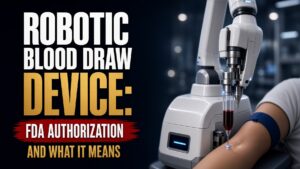
Multiple Myeloma Patch (Sarclisa Escena): What the FDA Approval Means
A wearable device just replaced hours in an infusion chair with a 20-minute skin patch. As patients and taxpayers absorb the cost of institutionalized cancer care, one question keeps surfacing: why did it take this long for the system to get out of the way?
Cancer patients used to lose entire days to a chair and an IV line. Now a patch on the stomach can do the same job in minutes.
On July 9, 2026, the FDA approved Sarclisa Escena, a subcutaneous version of Sanofi’s multiple myeloma drug isatuximab, delivered through a hands-free wearable called an on-body injector [FDA]. It is the first cancer treatment in US history cleared for delivery this way, and it lands at a moment when Americans are asking harder questions about why healthcare costs so much and takes so long to reform.
What Exactly Did the FDA Approve?
Sarclisa Escena is not a new drug. It is the same CD38-targeting antibody, isatuximab, that multiple myeloma patients have received through IV infusion for years, now packaged for delivery under the skin. Patients can receive it through a wearable device called CirCLIQ, built by Enable Injections, or through a manual subcutaneous injection [Sanofi, FDA].
The approval covers every indication already authorized for the IV version, meaning the newly diagnosed and the relapsed alike can now choose the faster option. That matters because multiple myeloma, a cancer of plasma cells in the bone marrow, is widely recognized as the second most common blood cancer in the United States after lymphoma, and it typically requires years of continuous treatment [general medical literature].
Who Is Really Paying for Hours in an Infusion Chair?
Every hour a patient spends in an infusion center is an hour billed to someone, whether that is a private insurer, Medicare, or the patient directly through copays and lost wages. A cancer patient who used to lose an entire day to treatment can now be done in about 20 minutes. If that’s true, why did the system take this long to offer it? That is not a marginal efficiency gain. It is a structural change in what cancer care costs the system.
Infusion centers require staff, equipment, and facility overhead that a five-minute wearable device does not. Multiply that savings across the tens of thousands of multiple myeloma patients who require repeat treatment, and the fiscal case for at-home and outpatient delivery becomes difficult to ignore. Sarclisa-based regimens have already treated more than 70,000 patients worldwide, with approvals in nearly 60 countries [Sanofi].
Support Independent Local Journalism
TheTownHall.News is a non-profit reader-supported journalism. Just $5 helps us hire local reporters, investigate important issues, and hold public officials accountable across Alameda County. If you believe our community deserves strong, independent journalism, please consider donating $5 today to support our work.Does the Data Actually Hold Up?
Skepticism toward drugmaker claims is healthy, and it is fair to ask whether a faster delivery method sacrifices effectiveness. The pivotal IRAKLIA trial randomized 531 patients to receive isatuximab either subcutaneously through the on-body injector or intravenously, both paired with standard combination therapy [FDA]. The subcutaneous version produced a 71.1 percent response rate compared with 70.5 percent for the IV version, a difference the FDA and independent researchers considered clinically insignificant [FDA, IRAKLIA trial data].
71.1 percent. The question patients have waited years to ask: why should effectiveness require sacrificing your afternoon?
Systemic reactions dropped sharply too, from 25 percent of patients on the IV version to 1.5 percent on the subcutaneous version, with injection-site reactions occurring in less than half a percent of doses and mostly mild [Sanofi SEC filing]. Fewer side effects, comparable results, a fraction of the time. If a private company delivered that combination in any other industry, no one would call it a footnote.
Why Did Patients Have to Wait This Long?
The science behind subcutaneous antibody delivery is not new. Other cancer drugs and biologics have used similar formulations for years. What changed with Sarclisa Escena is the hands-free device that automates the injection, reducing the physical strain on nurses who previously had to manually push high-resistance syringes for several minutes at a time [Sanofi, Mayo Clinic].
That innovation came from the private sector, developed by Enable Injections and brought to market by Sanofi, then cleared through a regulatory review process that still took years from the drug’s original approval to this delivery breakthrough. Patients and providers who wanted a faster, less burdensome option did not get one until now, not because the science was unavailable, but because turning private-sector innovation into an approved treatment still runs through a slow-moving federal apparatus.
Is This a Model for Fixing American Healthcare?
The appeal of Sarclisa Escena goes beyond convenience. It represents a broader argument that patient-centered, market-driven innovation, not another layer of government mandate, is what actually reduces the burden the healthcare system places on ordinary people. Multiple myeloma patients no longer need to arrange rides, take entire days off work, or sit tethered to a hospital chair to receive standard-of-care treatment.
“Treatment administration can be a cumbersome experience for patients, while also placing a strain on providers by requiring physical effort to push high-resistance syringes for several minutes.” — Dr. Sikander Ailawadhi, Mayo Clinic Florida, principal investigator of the IRAKLIA trial [Sanofi]
That is a physician, not a politician, describing exactly the kind of institutional friction that drives up costs and drains patient autonomy. Every dollar saved on infusion overhead is a dollar patients and taxpayers do not have to justify to a bureaucracy that rarely explains where healthcare spending actually goes.

What Do Supporters of More Institutional Oversight Actually Believe?
Not everyone will see decentralized, at-home cancer treatment as an unqualified win, and that skepticism deserves a fair hearing. Some clinicians and patient advocates worry that moving treatment out of a monitored clinical setting could delay recognition of rare but serious reactions, since a nurse is not standing beside the patient for the full duration of the dose. Others argue that expanding at-home biologic administration should come with stronger federal guardrails, not fewer, to ensure device malfunctions or missed doses do not fall through the cracks.
These are legitimate clinical concerns, not obstruction for its own sake. But the trial data addresses much of it directly. Systemic reactions were six times less common with the on-body injector than with IV infusion, and the device is used in an outpatient or clinical setting under initial supervision before patients transition to more independent administration [Sanofi]. The evidence suggests the new model does not sacrifice safety. It simply removes unnecessary friction that never made patients safer in the first place.
Key Questions:
- If a wearable patch delivers the same results with far fewer side effects, what does that say about the years spent requiring hospital chairs for treatment?
- How many other therapies are sitting behind slow-moving approval pipelines while patients absorb the cost of an inefficient system?
- Should healthcare policy reward this kind of market-driven innovation with faster regulatory pathways, rather than treating speed as an afterthought?
What Happens If This Becomes the Standard?
If Sarclisa Escena’s approval signals anything, it is that the biggest gains for patients may come not from new government healthcare programs, but from clearing the path for private innovation to reach patients faster. Multiple myeloma patients across nearly 60 countries already have access to some form of this technology [Sanofi]. The remaining question is whether American regulators and insurers will make this kind of efficiency the rule rather than the exception.
Patients who spend less time in a chair spend more time at work, with family, and living something closer to a normal life. That is not a talking point. It is the plain, measurable outcome of an approval that took the system years longer than it should have.
The real question this approval leaves behind isn’t whether patients want less time in an infusion chair. It’s why the system took this long to let them have it.
Still have questions about what this means for patients and the healthcare system at large? Stay informed — subscribe for daily coverage. Think others need to see how innovation is outpacing bureaucracy? Share this article. Want your voice to count on healthcare policy? Contact your congressional representative and ask where they stand on accelerating FDA review timelines for patient-centered innovations like this one.