California Property Tax Revolt: Will Prop 13 Be Gutted in 2026?
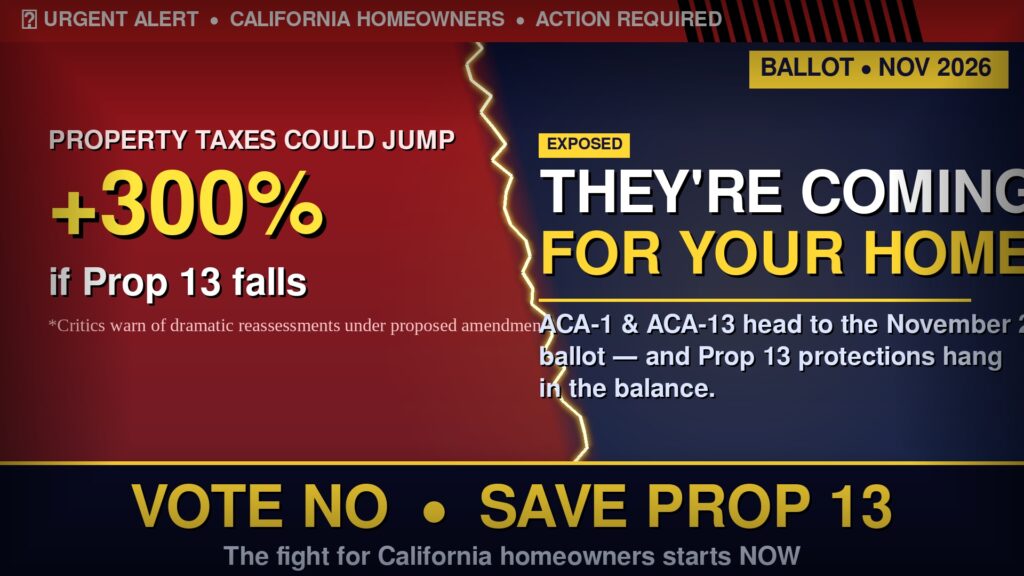
California homeowners face a critical choice in 2026: defend Proposition 13 or risk skyrocketing property taxes that could reshape the state’s economy and communities. Key ballot measures could drastically alter the landscape of property ownership and taxation.
For decades, Proposition 13 has been a cornerstone of California’s property tax system, providing stability and predictability for homeowners, businesses, and communities. But now, this landmark law is under threat. Proposed changes could lead to massive property tax increases, forcing many to reconsider their future in the Golden State. It’s time to understand the potential impact and decide whether to pack your bags or fight for fiscal responsibility.
The Looming Threat to Proposition 13
Proposition 13, passed in 1978, placed strict limits on property tax rates and assessment increases. This has protected countless individuals and families from being priced out of their homes as property values soared. However, various political forces are now targeting these protections, arguing that they create inequities and limit funding for essential services.
Support Independent Local Journalism
TheTownHall.News is a non-profit reader-supported journalism. Just $5 helps us hire local reporters, investigate important issues, and hold public officials accountable across Alameda County. If you believe our community deserves strong, independent journalism, please consider donating $5 today to support our work.Two key ballot measures scheduled for November 2026, ACA-1 and ACA-13, represent the most significant challenges to Proposition 13 in recent history. ACA-1 focuses on public finance, while ACA-13 addresses voting thresholds. Should these measures pass, the consequences for California property owners would be profound. It is imperative to examine their potential impacts and understand what is at stake.
ACA-1: Redefining Public Finance
ACA-1, introduced by Assembly Member Valencia, seeks to amend the California Constitution regarding public finance. Specifically, it targets the Budget Stabilization Account, a critical mechanism for managing state revenues and mitigating budget shortfalls.
The current Constitution requires the state Controller to transfer 1.5% of estimated General Fund revenues to the Budget Stabilization Account each fiscal year. ACA-1 would change this fixed percentage to an undetermined amount. This measure would also increase the limit on the account balance from 10% to 20% of the General Fund proceeds.
“ACA-1’s proposed changes to the Budget Stabilization Account raise serious questions about the state’s fiscal discipline.”

Critics argue that these changes could allow politicians to divert funds more easily, reducing transparency and accountability in state budgeting. This could lead to increased spending without clear oversight, potentially burdening taxpayers in the long run.
ACA-13: Changing Voting Thresholds
ACA-13, authored by Assembly Member Ward, seeks to modify the voting thresholds required for certain types of ballot measures. While the specific details are complex, the central aim is to lower the threshold needed to pass local tax increases and bond measures.
Currently, many local tax and bond initiatives require a two-thirds vote to pass. ACA-13 would lower this threshold to 55% for specific types of projects. Proponents claim this change is necessary to allow local governments to fund critical infrastructure and services more effectively.
However, opponents warn that lowering the voting threshold could lead to a proliferation of tax increases, as it becomes easier for special interest groups to push through their preferred projects. This could disproportionately impact homeowners and small businesses, who already face a heavy tax burden.
How This Affects Families and Communities
The potential consequences of ACA-1 and ACA-13 extend far beyond Sacramento politics. These measures could directly impact families and communities across California. Increased property taxes could force seniors on fixed incomes to sell their homes, disrupting established neighborhoods and eroding community bonds.
Support Independent Local Journalism
TheTownHall.News is a non-profit reader-supported journalism. Just $5 helps us hire local reporters, investigate important issues, and hold public officials accountable across Alameda County. If you believe our community deserves strong, independent journalism, please consider donating $5 today to support our work.Small businesses, already struggling with high costs and regulatory burdens, could face even greater financial strain. This could lead to job losses and reduced economic activity, further weakening California’s economy.
“Stable property taxes are essential for maintaining the economic health and social fabric of our communities.”
The Real Cost of Government Overreach
At the heart of this debate lies a fundamental question: What is the appropriate role of government in managing our economy and our lives? Proponents of ACA-1 and ACA-13 argue that these measures are necessary to fund essential services and address critical needs.
However, critics contend that they represent yet another example of government overreach, infringing on individual liberties and eroding fiscal responsibility. They argue that California already has one of the highest tax burdens in the nation, and that increasing taxes further will only exacerbate the state’s economic problems.
The real cost of government overreach is not just financial. It is also the loss of freedom, the erosion of personal responsibility, and the undermining of traditional civic values. These are the principles that have made America great, and they must be defended against those who seek to undermine them.
Counterargument: Addressing the Other Side
Of course, there are those who argue that Proposition 13 is outdated and unfair. They claim that it creates inequities between long-time homeowners and newcomers, and that it starves local governments of much-needed revenue. They say that ACA-1 and ACA-13 are necessary to modernize California’s tax system and ensure that everyone pays their fair share.
While these arguments may sound appealing on the surface, they fail to address the fundamental problem: California’s government spends too much money. Instead of raising taxes, our leaders should focus on cutting wasteful spending, streamlining government operations, and creating a more business-friendly environment.
The Path Forward: Protecting Property Rights
The upcoming vote on ACA-1 and ACA-13 represents a pivotal moment for California. The choices made will determine whether the state remains a beacon of opportunity and prosperity, or whether it succumbs to the forces of fiscal irresponsibility and government overreach.
It is imperative that voters understand the potential consequences of these measures and make informed decisions based on sound principles of personal responsibility, limited government, and fiscal accountability. We must protect property rights and ensure that California remains a place where families and communities can thrive.
The time to act is now. Stay informed, share this article, engage in civic life, and support independent journalism. Together, we can defend Proposition 13 and secure a brighter future for California.
Key Takeaway:
California’s upcoming vote on ACA-1 and ACA-13 is a pivotal moment for protecting property rights and ensuring fiscal responsibility.