SCOTUS Birthright Citizenship Ruling: What It Means for Birth Tourism in 2026
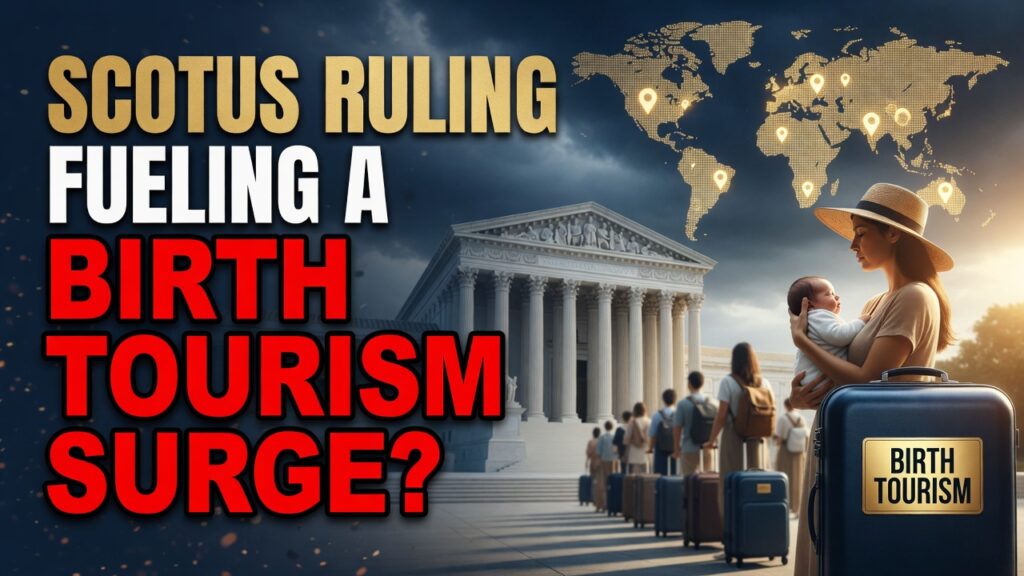
The Supreme Court’s 6-3 decision upholding birthright citizenship has closed one debate and blown open another — and a commercial industry that turns American citizenship into a purchasable product is already responding.
The ruling dropped on June 30, 2026 — four days before America’s 250th birthday. In a 6-3 decision, the Supreme Court struck down President Donald Trump’s 2025 executive order, ruling that children born in the United States to undocumented or temporarily-present parents remain constitutionally guaranteed citizens under the 14th Amendment. The court’s message was clear. What follows may be less so. PBS
What Did the Supreme Court Actually Decide?
The case, Barbara v. Trump, was never simply about illegal immigration. Trump’s executive order would have denied automatic citizenship not only to children of undocumented immigrants, but also to those born to legal temporary residents — including students and green card applicants. The court’s ruling closed that door entirely. In a nationwide poll conducted by Reuters and Ipsos in April 2026, 64 percent of respondents opposed ending birthright citizenship, compared to 32 percent who supported the effort. The constitutional question has been settled — for now. ABC NewsCouncil on Foreign Relations
Support Independent Local Journalism
TheTownHall.News is a non-profit reader-supported journalism. Just $5 helps us hire local reporters, investigate important issues, and hold public officials accountable across Alameda County. If you believe our community deserves strong, independent journalism, please consider donating $5 today to support our work.But the policy question is only beginning.
Is Birth Tourism Now Open for Business?
A viral social media post circulating this week claimed that U.S. hospitals are actively advertising “$5,000 birth packages” in Latin American countries specifically to exploit the ruling. That specific claim, sourced to Telegram aggregator channels with ties to Russian state media outlets, remains unverified by any major wire service or investigative outlet as of this writing. Readers should treat it with caution.
What is verified — and far more alarming — is that a robust, commercial birth tourism industry already exists and is now emboldened by the ruling. Investigative journalist Peter Schweizer detailed how China has industrialized the practice through an organized industry, with Chinese officials estimating around 50,000 Chinese nationals per year give birth in the U.S. More than 1,000 birth tourism companies operate in China focused on the U.S., offering concierge packages costing up to $100,000 that include visa guidance, medical arrangements, and sometimes instructions on concealing pregnancies. Just The News
American citizenship is being sold as a consumer product — and the price tag runs from a few thousand dollars to six figures depending on the market.

Who Is Actually Running These Operations?
The commercial architecture of birth tourism is more sophisticated than most Americans realize. Commercial birth tourism operations typically involve packages including housing in maternity apartments and hotels, medical arrangements, transportation, and document assistance — with clients paying tens of thousands of dollars, often via international wire transfers. Just The News
The legal exposure is real but inconsistent. Visa fraud is the most common charge, covering knowingly misrepresenting travel purpose — claiming tourism or business when the primary intent is to give birth and remain for weeks or months. Wire fraud, money laundering, and healthcare fraud are additional exposure points. Yet enforcement has been episodic at best. Just The News
If the federal government cannot reliably prosecute the operators of a hundred-thousand-dollar citizenship-for-sale industry, what exactly is American citizenship worth — and who decides?
Researchers estimate that between 5,000 and 26,000 foreign pregnant women travel to the U.S. annually to give birth — a figure that represents a small slice of the 3.6 million U.S. births recorded in 2025. The question no one in Washington wants to answer plainly: if the industry is small, why has it proven so difficult to shut down? PolitiFact
What Do Supporters of This Policy Actually Believe?
Defenders of birthright citizenship make a constitutionally serious argument — and it deserves engagement. They contend that the 14th Amendment’s text is unambiguous: anyone born on U.S. soil, with narrow diplomatic exceptions, is a citizen. Birthright citizenship has been part of American legal tradition repeatedly affirmed by courts and legislators for over a century, dating to the Supreme Court’s 1898 ruling in Wong Kim Ark v. United States. ABC News
Supporters further argue that ending the practice would not meaningfully reduce unauthorized immigration. Ending birthright citizenship could actually increase the population of unauthorized immigrants by an estimated 2.7 million by 2045, according to a 2025 joint analysis by the Migration Policy Institute and Pennsylvania State University’s Population Research Institute. The argument is that stripping citizenship from U.S.-born children creates a permanently stateless underclass — and multiplies, rather than reduces, the long-term immigration burden. Council on Foreign Relations
Support Independent Local Journalism
TheTownHall.News is a non-profit reader-supported journalism. Just $5 helps us hire local reporters, investigate important issues, and hold public officials accountable across Alameda County. If you believe our community deserves strong, independent journalism, please consider donating $5 today to support our work.These are serious points. But they do not address the commercial birth tourism industry — the deliberate, for-profit exploitation of the policy — which is distinct from the broader constitutional debate. Defending birthright citizenship as a constitutional right is legitimate. Defending a cottage industry that packages American citizenship for sale to foreign nationals at premium prices is a different matter entirely.
Is it really asking too much to both uphold a constitutional guarantee and vigorously prosecute the commercial schemes designed to exploit it?
Are Lawmakers Finally Ready to Act?
The ruling landed on Capitol Hill like a grenade. Border Czar Tom Homan called birth tourism “a national security issue,” pledging the administration would “triple, quadruple down” on investigations, and called on Congress to address the issue through legislation immediately. Fox News
The Justice Department, in a memo obtained by Fox News, directed U.S. attorneys nationwide to prioritize investigations and prosecutions involving birth tourism schemes, with Assistant Attorney General Colin McDonald instructing DOJ employees to “prioritize the investigation and prosecution of birth tourism schemes.” Fox News
Legislative action is also accelerating on multiple fronts. Sen. Marsha Blackburn’s Ban Birth Tourism Act (S. 1812, 2025) would amend immigration law to deem birth tourists inadmissible on B visas, while Sen. John Cornyn’s BACK OFF Act (2026) would impose criminal penalties on facilitators and create a dedicated enforcement task force. Just The News
3.6 million. That is how many babies are born in U.S. hospitals each year. The question worth demanding an answer to: how many of those births involve deliberate commercial exploitation of a constitutional provision intended to protect the formerly enslaved — and what is it costing the American public?
KEY QUESTIONS
- If birth tourism operators face federal visa fraud and money laundering charges, why have prosecutions remained so rare — and will the new DOJ memo change that?
- Should Congress draw a legal distinction between constitutionally protected birthright citizenship and the commercial industry that monetizes it for foreign nationals?
- Who bears the cost — in hospital resources, Medicaid billing, and enforcement capacity — when birth tourism schemes shift their expenses onto American taxpayers and providers?
What Comes Next — and Who Pays for It?
Homeland Security Secretary Markwayne Mullin said the government can block women seeking to travel to the U.S. specifically to give birth by denying travel visas, while the DHS simultaneously deports approximately 3,200 people a day. That visa-screening approach — executive action rather than constitutional revision — may represent the most viable near-term lever available to the administration. Washington Times
Vice President JD Vance said the administration is reviewing proposals including potential congressional action to redefine who falls “under the jurisdiction” of the United States to exclude those in the country temporarily or illegally. That legislative push would face its own constitutional challenges — but the political appetite is clearly there. Fox News
The SCOTUS ruling did not create birth tourism. It did not invent the industry of attorneys, maternity hotels, and visa coaches that has grown around the promise of American citizenship. What it did was remove the one executive tool the administration believed it had to shut that industry down at the source. Now the burden falls on Congress, the Justice Department, and a visa-screening apparatus that has historically been slow to adapt.
The real question is not whether the 14th Amendment means what it says — the court just answered that. The real question is whether the American government has the political will to close the commercial loopholes that profit from it, before that industry scales beyond anyone’s ability to police it.
Think others need to see this? Share the article and let us know — is birth tourism a genuine national security concern, or an overstated political issue?
Want daily accountability journalism? Subscribe to The Town Hall News for coverage that follows the money and holds the powerful accountable. Want to make your voice count? Contact your representative through congress.gov and ask where they stand on the Ban Birth Tourism Act.