

Cazenovia School Board VP Travis Longo Arrested on Child Sex Crime Charges
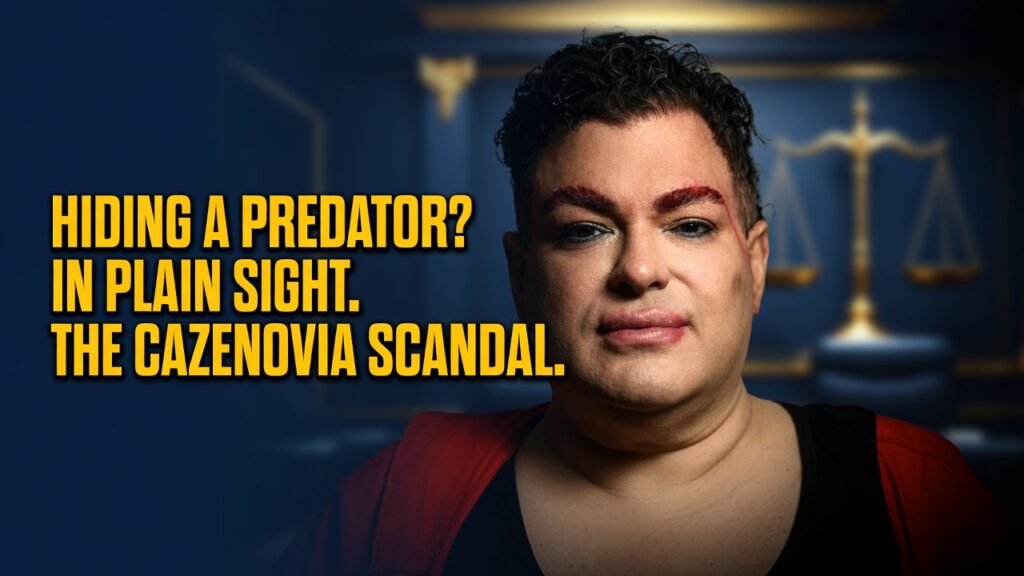
A New York school board vice president has been arrested on child sex crime charges — and now parents across the country are asking who vets the people sitting at the tables that govern their children’s lives.
The school board vice president was still listed on the district’s website the morning after his arrest. That single fact tells you almost everything you need to know about how America’s local institutions are failing parents.
Travis J. Longo, 46, of Cazenovia, New York — who performed as a drag queen under the name “Anita Buffem” and publicly claimed to be “the first drag artist elected to official position in the U.S.” — was arrested by New York State Police on Thursday, June 19, 2026 and charged with four counts of endangering the welfare of a child. Investigators say he engaged in a pattern of sexually explicit communications with a child under the age of 12.
Support Independent Local Journalism
TheTownHall.News is a non-profit reader-supported journalism. Just $5 helps us hire local reporters, investigate important issues, and hold public officials accountable across Alameda County. If you believe our community deserves strong, independent journalism, please consider donating $5 today to support our work.Who Is Travis Longo — and How Did He Get Here?
Longo was not a fringe figure. He was a celebrated local activist who leveraged identity politics into institutional power. He founded Cazenovia Pride Fest in 2021, which later became Cazenovia Pride Inc., and rode that community profile into an elected seat on the Cazenovia Central School District Board of Education in May 2024. He won a three-year term that, absent formal removal proceedings, would have run through June 2027.
As board vice president, Longo held oversight responsibility over every level of the district — elementary, middle, and high school. One of the board’s stated goals, still published on its own website, is to “support and celebrate student engagement in extracurricular activities by increasing board members’ presence at school events.”
A man who allegedly sent sexually explicit messages to a child under 12 held a school board seat responsible for increasing adult presence around children. Read that again.

New York State Police said investigators “believe there may be additional victims” and are urging anyone with information to contact Troop D Headquarters at (315) 366-6000, referencing case number NY2600762245. The case is active. It is expanding.
What Did the School District Actually Know?
The district’s response raises its own uncomfortable questions. Superintendent Kevin Linck issued a statement that described Longo as “not an employee of the District” and noted that a school board member’s role is “not a student-facing role.” Technically accurate. Politically convenient.
What the statement did not address is why, hours after a public arrest on child sex crime charges, the district’s own website still listed Longo in his official capacity. It took public pressure and media attention to trigger even the minimal action of barring him from school grounds.
“The role of a school board member is not a student-facing role.” — If that’s the first defense a superintendent reaches for after a child sex crime arrest, parents deserve to ask what the first priority actually is.
The district later stated it had “retained legal counsel” and would take “all necessary actions.” That is the language of institutional self-protection, not parental reassurance. Parents were not warned proactively. No emergency communication went out to families. The community learned through news reports, not through the institution entrusted with their children’s safety.
Support Independent Local Journalism
TheTownHall.News is a non-profit reader-supported journalism. Just $5 helps us hire local reporters, investigate important issues, and hold public officials accountable across Alameda County. If you believe our community deserves strong, independent journalism, please consider donating $5 today to support our work.4 counts. 1 victim confirmed. Potentially more. The question that demands an answer: how long was this pattern in place before anyone noticed?
What Happens When Activism Becomes a Shield?
This case is not about drag performance as an art form. It is about what happens when an individual’s social identity is allowed to function as a substitute for scrutiny. Longo’s public profile — progressive activist, pride founder, celebrated community figure, first drag elected official in the country — generated goodwill, press coverage, and a Democratic shoutout from New York party officials after his 2024 election win.
That social capital appears to have insulated him from the kind of vetting that any adult working near children should face. When identity becomes the credential, accountability becomes the casualty.
Cazenovia Pride Inc. — the organization Longo built — announced it was canceling its June 27 Pride Festival and dissolving entirely. “I feel betrayed,” said Danielle Synborski, the group’s president, at an emergency board meeting. “We did not know that this was going to happen at all, and we are all blindsided by it.” The group’s statement added: “We will always believe the victim.”
That response, to its credit, was swift and unambiguous. The school district’s was neither.
Are Parents Being Given the Tools to Protect Their Children?
The Longo arrest reignites a debate that has been simmering in school board races across the country: who is actually accountable for the adults granted access to and authority over children in public education?
School board members are elected, not vetted by HR departments. Background check requirements vary by state and often apply only to employees, not elected officials. In New York, a school board member cannot easily be removed simply because of an arrest — criminal conviction or a formal proceeding is typically required. Longo, arraigned and released, technically retains his seat as this article goes to press.
This is not a loophole. It is a structural failure. If a sitting school board member can be charged with sexually explicit communications with a child under 12 and remain on the board the following week, parents have every right to ask what the oversight system is actually designed to protect.
What Do Defenders of This Kind of Community Representation Actually Believe?
To be fair to the argument on the other side: advocates for LGBT representation in local government make a legitimate point that underrepresented communities deserve a seat at the table in the institutions that shape public life. They would argue that Longo’s crimes, if proven, are his own — not a referendum on the community he claimed to represent. Cazenovia Pride itself made this point implicitly when it announced its dissolution, severing all ties with Longo and affirming belief in the victim.
That argument deserves an honest response. No political or cultural movement is responsible for the individual crimes of one of its members. The issue here is not representation. The issue is accountability. The question is not whether LGBT individuals should serve on school boards. The question is whether any adult seeking authority in a school district — regardless of identity — is subject to the same rigorous scrutiny that the responsibility demands. Right now, demonstrably, the answer is no.
Representation without accountability is not progress. It is a vulnerability.
Is This the Accountability Moment Local Elections Demand?
The Cazenovia case should serve as a forcing function for every parent, school board candidate, and local official in America. School board elections routinely see single-digit voter turnout. The people who fill those seats make decisions about curriculum, personnel, student safety policies, and who is allowed on school grounds. Yet most communities pay less attention to those races than to a contested city council seat.
Travis Longo won a three-year term in May 2024. He did it in a small town of roughly 6,700 people. He did it by being visible, engaged, and celebrated. Visibility is not vetting. Celebration is not a background check.
Conclusion: The Question That Lingers
The arrest of Travis Longo is not the end of a story. It is the beginning of a reckoning that every community owed itself before it got here. The Cazenovia school district did not warn parents. The board did not move swiftly. The activist networks that celebrated Longo’s election did not ask hard questions. And investigators are still asking the public to come forward, because they believe there are more victims.
The real question is not whether this will happen again somewhere else in America. History suggests it will. The question is whether parents, voters, and local officials are willing to demand the structural changes — in vetting, in transparency, in removal procedures — that would make it harder next time.
What are you waiting for?
Key Questions
- Why are elected school board members in New York not subject to the same background check requirements as district employees — and who is responsible for changing that?
- How many communities have elected officials with access to school events who have never been formally vetted for criminal history?
- If investigators believe there are additional victims in the Longo case, what does that say about how long this pattern went undetected — and by whom?
Think this story demands an answer from your local school board? Share this article and ask them directly. Want daily coverage of the stories institutions hope you’ll ignore? Subscribe to The Town Hall at thetownhall.news. Want to make your voice count? Contact your New York State Assembly member and ask what vetting standards apply to elected school officials in your district.